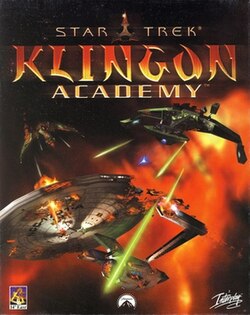
Introduction: The Next Chapter for Star Trek: Klingon Academy
Star Trek: Klingon Academy represents a bold and intriguing departure from previous Star Trek game iterations. Developed by 14 Degrees East and published by Interplay Entertainment, this title flips the script, placing players firmly within the heart of the Klingon Empire. Unlike its predecessor, Starfleet Academy, which offered a Federation perspective, Klingon Academy immerses players in the complex political landscape and warrior culture of the Klingons, offering a unique lens through which to experience the iconic universe. The game aims to capture the essence of classic space combat simulators like X-Wing and TIE Fighter, while simultaneously delivering a compelling narrative centered around Torlek, a young Klingon warrior striving for honor and recognition within the Elite Command Academy. This Masterclass Deep-Dive will dissect every facet of this ambitious project, from its groundbreaking engine to its captivating storyline.
Visual Direction and Graphics Engineering
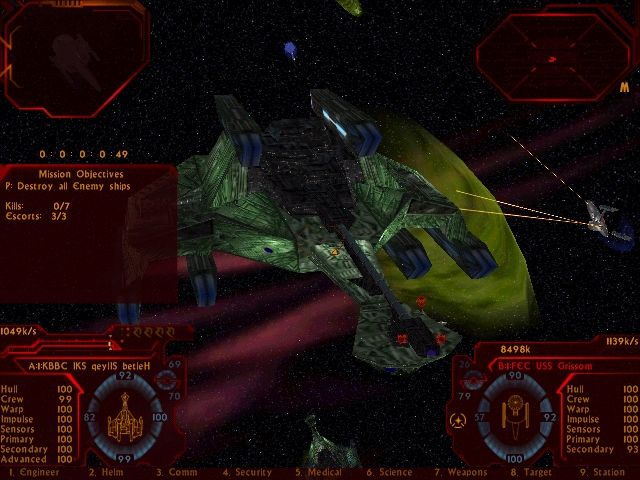
While specific details regarding the "Proprietary Next-Gen Engine" remain scarce, it's evident that 14 Degrees East aimed for a level of visual fidelity appropriate for the late 20th century gaming landscape. The game likely leveraged advanced rendering techniques for its time to create detailed starship models and expansive nebulae vistas. While not pushing the boundaries of modern graphics, the visual style successfully conveys the gritty realism associated with Klingon technology and architecture. The use of particle effects for engine trails and weapon impacts adds a layer of dynamism to the space combat sequences. Furthermore, the character models, while limited by the technological constraints of the era, are expressive enough to convey the intensity and emotion inherent in the Klingon characters.Gameplay Mechanics and Core Systems
Klingon Academy builds upon the foundation laid by games like X-Wing and TIE Fighter, offering a blend of arcade-style action and strategic decision-making. Players pilot various Klingon starships, each with its own strengths and weaknesses, engaging in thrilling dogfights against Federation vessels. The game features intuitive controls that allow players to easily manage shields, weapons, and maneuvering capabilities. A key element of the gameplay is resource management, as players must carefully allocate power to different systems to maximize their effectiveness in combat. Upgrading starships with new weaponry and defensive systems adds a layer of progression and customization. The AI opponents provide a challenging but fair experience, requiring players to utilize tactical maneuvers and exploit enemy weaknesses.Level Design and World Atmosphere
The game's level design is crucial in establishing the atmosphere of the Klingon Empire. Missions range from reconnaissance patrols along the Romulan Neutral Zone to daring raids on Federation outposts. The environments are richly detailed, featuring iconic locations such as Kronos, the homeworld of the Klingons, and various strategic points within the Alpha Quadrant. Nebulae fields provide both visual spectacle and tactical challenges, while asteroid belts offer opportunities for ambushes and evasive maneuvers. The level design effectively conveys the sense of danger and isolation that permeates the border regions between the Federation and the Klingon Empire.Narrative Depth and Character Profiles
The narrative in Klingon Academy is a compelling exploration of Klingon culture, politics, and warrior ethos. Players take on the role of Torlek, a young recruit at the Elite Command Academy, striving to prove his worth and earn the respect of his superiors. The story delves into the complex relationship between the Klingon Empire and the United Federation of Planets, highlighting the tensions that threaten to erupt into open conflict. Familiar faces from the Star Trek universe make appearances, including Chancellor Lorak, a noble but ailing ruler, and General Chang, a stern but respected military leader. Christopher Plummer and David Warner reprise their roles, adding authenticity and gravitas to the narrative.Sound Design and Acoustic Realism
The sound design in Klingon Academy is critical in immersing players in the world of the Klingons. The game features authentic sound effects for starship engines, weapons fire, and explosions. The use of guttural vocalizations adds a layer of realism to the Klingon characters. The soundtrack, composed by Inon Zur, perfectly complements the on-screen action, creating a sense of tension and excitement. The audio cues provide valuable feedback to the player, alerting them to incoming threats and providing information about their own ship's status.Release Expectations and Community Hype
Given its pedigree as an Interplay Entertainment title and its unique perspective within the Star Trek universe, Klingon Academy generated considerable hype prior to its release. The promise of a deep dive into Klingon culture and the opportunity to pilot iconic starships like the D7 battlecruiser fueled anticipation among fans. While specific sales figures are difficult to ascertain, the game was generally well-received by critics and players alike, solidifying its place as a cult classic within the Star Trek gaming community. The game's lasting appeal is evident in the continued discussions and fan creations that surround it.Conclusion: The Future of Star Trek: Klingon Academy
Star Trek: Klingon Academy represents a bold experiment in perspective-shifting gameplay, offering a unique and engaging experience for fans of both Star Trek and space combat simulators. While limited by the technological constraints of its time, the game successfully captures the essence of Klingon culture and provides a compelling narrative centered around Torlek's journey through the Elite Command Academy. The game's lasting appeal is a testament to its innovative design and its ability to transport players into the heart of the Klingon Empire. While a direct sequel may never materialize, the legacy of Klingon Academy continues to inspire new generations of Star Trek fans and game developers.
Source: Wikipedia
Google Preferred Source
Add us to your favorite news sources on Google
Get instant updates and breaking news directly in Google News