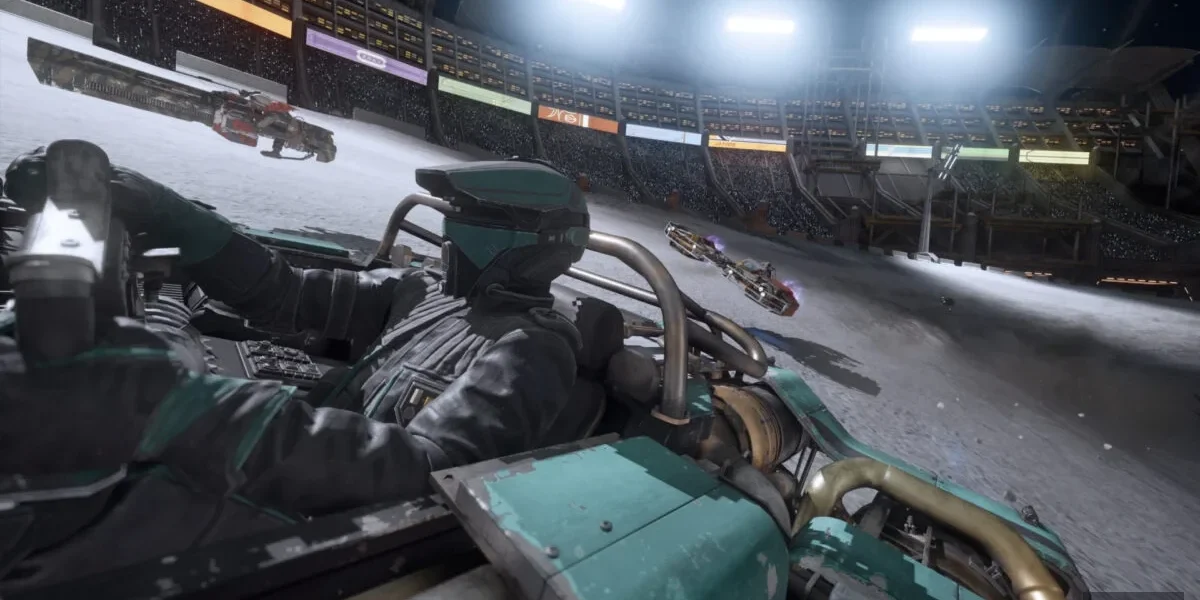
In the golden age of gaming, titles such as Daytona USA and Wipeout set the bar for what a console launch could achieve—flashy visuals, cutting‑edge engines, and a universal appeal that drew in anyone with a controller. That same bold ambition now fuels Star Wars: Galactic Racer, a title that promises to be more than just another racing entry.
I had the opportunity to dive into Fuse Games’ debut at this month’s Summer Game Fest, where the demo ran for a solid 60 minutes—longer than any other showcase on the floor. The experience was a perfect fit for the festival’s high‑energy atmosphere: a straightforward, adrenaline‑charged loop of high‑speed crashes and daring escapes, all wrapped in the unmistakable Star Wars nostalgia that guarantees instant crowd engagement. Yet what impressed me most was the sense that the game is built to endure beyond the initial thrill, hinting at depth and longevity that few racing titles offer.
Set in the aftermath of the Galactic Empire’s collapse, the narrative follows Shade, a shadowy scoundrel who joins the outlawed Galactic League—a racing circuit notorious for its perilous speeds and high‑stakes rivalries. Here, veterans of the war can leverage their combat skills, settle old grudges, and carve out new legends amid the empire’s shattered remnants. Shade’s chief adversary is the aristocratic Caskadag, Kestar Bool, whose tangled past adds layers of intrigue to the high‑octane competition.
Beyond the races, the game invests heavily in its single‑player campaign. Between competitions, players can explore a modest camp on a nearby planet, fine‑tune their speeder, converse with NPCs, and witness short vignettes that weave the story together. The voice acting and writing are unexpectedly polished, giving the title an RPG‑like feel where the battles are, in fact, races. While it’s unclear how far Fuse Games plans to expand this narrative, the snippets I experienced already positioned the game more as a classic racing saga—think Days of Thunder—than a disposable racing title.
The Galactic League is built around a Slay the Spire‑style branching map, where each node is randomly generated to offer unique racing parameters and rewards. This design gives players real agency over their path, letting them choose how to tackle the challenges ahead. As they progress, they travel from Jakku’s sandy wastelands to Lantaana’s lush jungles, then to the icy vonium mines of Ando Prime, and beyond. Along the way, players navigate Races, Eliminators, Field Tests, and Mystery Encounters, gathering resources to upgrade their vehicles. A loss costs a League Token and sends the racer back to the start, but the roguelike structure encourages experimentation with different racing styles and the discovery of new events even after completing the three‑act campaign.
The races themselves are blisteringly fast and unforgiving. Hovering over diverse biomes feels seamless, and the thrill of crashing into a narrow canyon after an aggressive drift is exhilarating. Too many crashes automatically forfeit the race, adding a high‑stakes layer to every risky maneuver. Playing it safe may secure a third‑place finish but avoids total failure, while ramming the last two opponents off the track can yield extra rewards, giving you a crucial edge in tougher races ahead.
Most arcade racers offer only a handful of inputs: accelerate, decelerate, and sometimes drift. Galactic Racer, liberated by its sci‑fi setting, expands this toolkit. In addition to the standard boost that refills after a cooldown, there’s a new secondary booster called the Ramjet. This secondary rocket propels you faster until you release the button, after which it times out. Holding it too long burns your engines, but certain upgrades reward pushing the rocket to its limits before the timeout.
You can also activate modifiers to slow opponents, such as an ion pulse that disables their abilities when you collide with them while active. Or you may want speed boosts for perfect landings after flying over a cliff. Upgrades to stats like armor increase survivability, while a “class‑cannon” build relies on sheer luck that the Force will carry you through the next tight squeeze unscathed.
It’s hard to determine in just 60 minutes whether Galactic Racer can match the depth of build‑crafting and upgrades found in the best roguelikes, but it certainly lays a wealth of potential on top of solid fundamentals.
Beyond the classic trio of Landspeeder, Speeder Bike, and Skim Speeder, Galactic Racer also brings the iconic podracers into play. While they’ll feature prominently in the main campaign, I first encountered them in the arcade mode—a hand‑picked selection of courses and vehicles. The game also offers a “Scenarios” mode, presenting a series of narrative‑driven challenges, and a multiplayer experience that accommodates up to twelve racers on speeders or eight in the podracing arena.
Galactic Racer isn’t an open‑world racer, but it promises a wealth of content that elevates the traditional arcade formula. The title will launch on October 6, 2026 for $60 across PlayStation 5, Xbox Series X/S, and PC, delivering a polished, feature‑rich experience that blends familiar racing thrills with fresh gameplay twists.
Fuse Games is crafting Galactic Racer to be a hybrid of narrative‑rich Star Wars storytelling, classic arcade fun, and a nostalgic nod to millennial gamers. If it succeeds in weaving these elements together, it could become a standout title that transcends its individual components.
❓ Frequently Asked Questions (FAQ)
Where can I find more details about Star Wars: Galactic Racer Looks And Feels Awesome?
Further details and updates can be followed through official game channels and the source link provided in the article.
News Source: Kotaku





Comments
Be the first to comment.