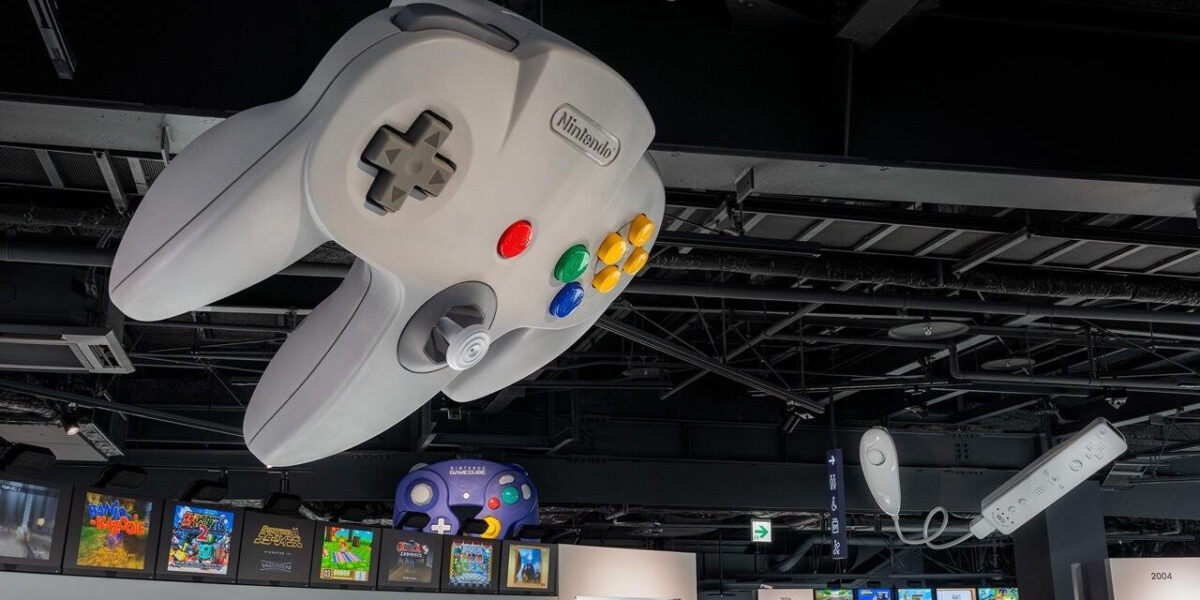
Initially unveiled under the codename Ultra 64, Nintendo’s third flagship console fully embraced the era of polygonal 3‑D gaming, spawning a roster of titles that not only redefined the medium but also remain celebrated as some of the finest games ever produced.
That era also marked the first serious threat to Nintendo’s dominance on the global stage. While the Sega Mega Drive held its own against the SNES in Europe, it was the advent of Sony’s PlayStation that truly eroded Nintendo’s market share across all major regions.
For a deeper dive, the excerpt comes from The N64 Encyclopedia: Every Game Released for the Nintendo 64, authored by Chris Scullion of VGC and available through Pen & Sword (UK), Casemate (US), Amazon (UK), Amazon (US), and other major retailers.
Even before Nintendo’s Wii project popularized the phrase, the Nintendo 64 had already ignited a revolution in gaming.
For those who missed the era, it’s hard to convey the sheer awe of stepping from the modest 2D titles of the early ’90s into a world where you could glide effortlessly around Peach’s sprawling castle, slip between the massive legs of an AT‑AT while piloting a Snowspeeder, and surf the towering waves of Sunset Bay as twilight fell.
While 3‑D had already appeared on PCs and consoles like the Sega Saturn, Nintendo’s Entertainment Analysis & Development (EAD) took the format to a new plane, delivering unprecedented freedom, precision, and confidence. With Super Mario 64, they shattered the prevailing notion that 3‑D games were limited to on‑rails shooters or isometric platformers, redefining movement and camera mechanics and setting a benchmark that would shape the industry for decades.
The legacy of that era is still felt today: Mario’s razor‑sharp analog stick control, the multiplayer thrill of GoldenEye 007, the visceral explosions in Star Fox, the unforgettable soundtrack of Banjo‑Kazooie, and the expansive vistas of Hyrule in Ocarina of Time remain etched in the memories of N64 enthusiasts.
And this is only scratching the surface. The platform also birthed enduring franchises such as Super Smash Bros., Animal Crossing (initially Japan‑only), Mario Party, and Paper Mario, alongside cult classics like F‑Zero X, Bad Fur Day, Pilotwings 64, Majora’s Mask, and Perfect Dark, each contributing to a rich tapestry of gaming history.
Rare enjoyed a golden age, delivering a succession of successes such as Jet Force Gemini, Blast Corps, Diddy Kong Racing, Banjo‑Kazooie/Tooie, and Donkey Kong 64, all complementing Nintendo’s own stellar lineup. And that’s before adding titles like GoldenEye 007, Perfect Dark, and Conker’s Bad Fur Day. Has any other studio produced such a prolific catalog within a single console generation?
The Nintendo 64 gave players a fresh vision of what games could achieve. Beyond its immersive environments, it revolutionized social play, surpassing every predecessor. Thanks to its unique four‑controller ports, the console became the quintessential party machine, spawning some of the finest multiplayer experiences ever released on cartridge.
Titles such as Mario Kart 64, Super Smash Bros., WWF No Mercy, Mario Party, Diddy Kong Racing, Mario Tennis, and GoldenEye 007 created a split‑screen paradise that, even with the rise of online play in later generations, remains unmatched for local multiplayer. While instant global connectivity is handy, it can never quite capture the thrill of clinching a win right beside a teary‑eyed opponent.
Although the Nintendo 64 may not rank as Nintendo’s top system—especially given the lukewarm participation of third‑party studios that eroded the company’s market dominance—its influence on the medium surpasses that of any other console. Its enduring legacy is evident in contemporary games, and for that reason it remains my—and countless others’—all‑time favorite console. Viva la revolución.
Nintendo’s dominance in the home console arena during the early 1990s was undeniable, yet the company knew that sustaining its leadership required forward‑thinking strategy.
While the NES had comfortably claimed the title of the world’s most powerful 8‑bit system, its 16‑bit successor, the SNES, faced stiffer competition. Sega’s Mega Drive/Genesis, propelled by hits like Sonic the Hedgehog, not only challenged the SNES’s market share but also surpassed it in several key regions.
Compounding the pressure, Nintendo’s recent public retreat from a partnership with Sony—who had already begun developing the PlayStation—signaled that another formidable rival was on the horizon. The SNES still had a viable future, but a new generation console was inevitable.
On 23 August 1993, during the Shoshinkai trade show, Nintendo’s president Hiroshi Yamauchi unveiled Project Reality—a bold collaboration with Silicon Graphics, the creators of the high‑end graphics workstations that powered cinematic masterpieces such as Jurassic Park and Terminator 2.
❓ Frequently Asked Questions (FAQ)
Where can I find more details about Nintendo 64: 30 Years of Gaming Revolution?
Further details and updates can be followed through official game channels and the source link provided in the article.
News Source: VGC





Comments
Be the first to comment.