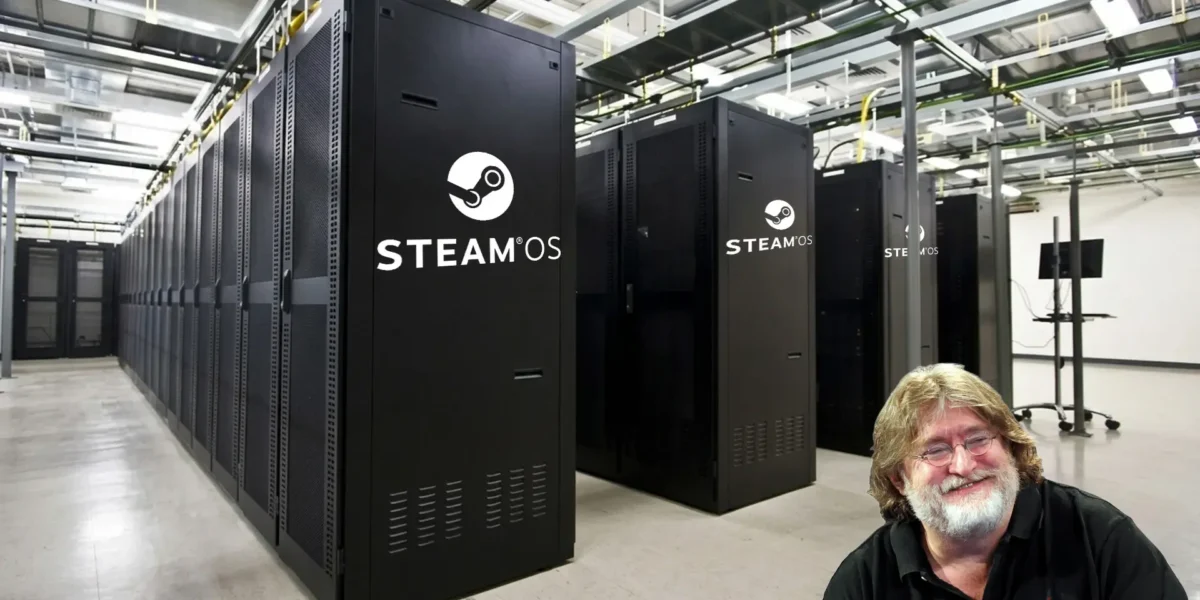
With the launch of Valve’s newest SteamOS 3.8.10, the gaming community has begun to speculate about the company’s future after reviewing the freshly released patch notes.
The update delivers a host of anticipated technical refinements, most notably the transition from the legacy X11 window manager to the modern Wayland compositor, which dramatically smooths the rendering of graphical elements. Coupled with a kernel upgrade to Linux 6.16, Valve has also introduced support for virtual‑machine guest drivers, enabling SteamOS to run natively inside remote servers rather than solely on physical hardware.
This unexpected capability ignited a viral theory on X: Valve may be positioning itself to dominate the cloud‑gaming market by offering SteamOS as a turnkey solution for server providers, allowing users to tap into powerful gaming rigs for a modest $10–$20 per month.
If Valve follows through, it could redefine how players access games, potentially eroding the traditional console market and intensifying competition with existing cloud services.
If the AI economic bubble were to burst, the colossal data centers built for machine learning could be repurposed into a next‑generation cloud‑gaming platform that plugs directly into users’ Steam libraries, delivering speeds and connectivity that would outshine current services such as Xbox Cloud Gaming and NVIDIA GeForce Now.
Yet the gaming community swiftly pointed out the hard technical roadblocks. AI‑optimized GPUs excel at inference but lack the rasterization engines required to render modern 3D games, meaning any attempt to run contemporary titles on those servers would suffer from crippling performance deficits.
Beyond hardware constraints, skeptics questioned the overall player experience. Cloud gaming still wrestles with latency, and Valve would first need to ensure flawless cross‑device save synchronization before such a service could be viable. While running SteamOS in virtual machines is a significant step for developers, the idea of reusing AI servers faces steep hurdles, proving the concept less practical than it initially seemed.
❓ Frequently Asked Questions (FAQ)
What new features does SteamOS 3.8.10 introduce that could support cloud gaming?
SteamOS 3.8.10 replaces the legacy X11 window manager with the Wayland compositor for smoother rendering, upgrades the kernel to Linux 6.16, and adds support for virtual‑machine guest drivers. These changes allow SteamOS to run natively inside remote servers, making it a viable platform for cloud‑hosted gaming.
How might Valve's support for virtual‑machine guest drivers affect the cloud gaming market?
By enabling SteamOS to operate inside virtual machines on remote servers, Valve could offer a turnkey, low‑cost solution for server providers. This could lower entry barriers for cloud gaming services, intensify competition with existing platforms like NVIDIA GeForce Now and Xbox Cloud Gaming, and accelerate the shift toward subscription‑based, server‑based gaming experiences.
What are the potential implications for traditional consoles if Valve launches a SteamOS-based cloud service?
A SteamOS cloud service could erode the traditional console market by providing users with access to powerful gaming rigs for a modest monthly fee. This would shift consumer expectations toward cloud‑based, library‑centric experiences, potentially intensifying competition with console manufacturers and reshaping the industry’s business models.
News Source: Tarreo





Comments
Be the first to comment.