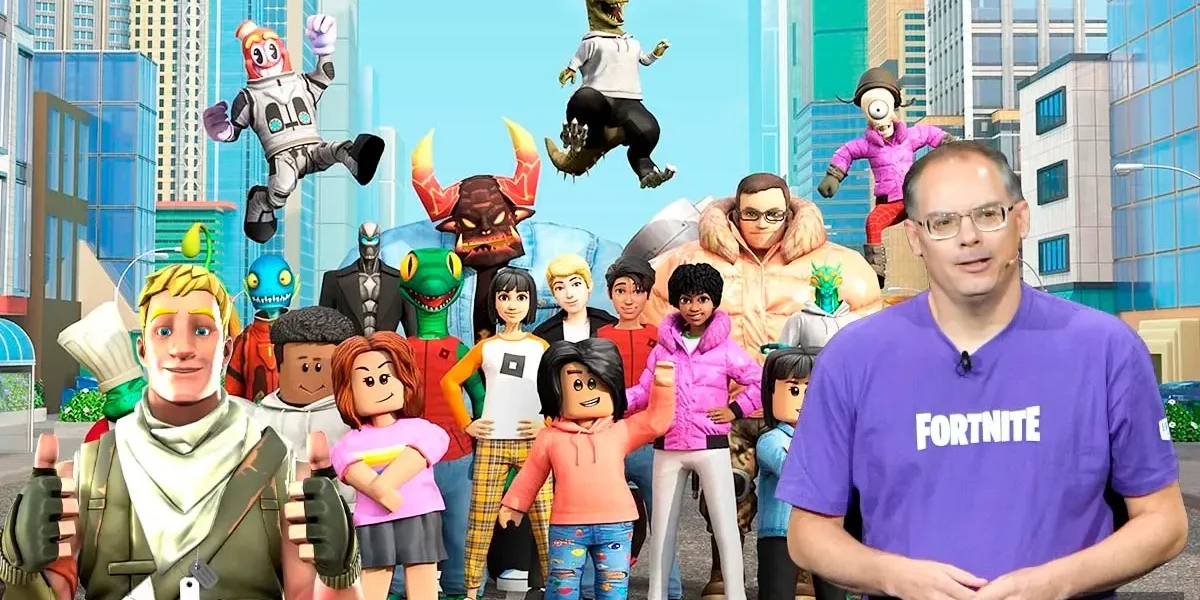
During the Unreal Fest 2026 in Chicago, Epic Games CEO Tim Sweeney warned that the gaming sector is navigating a period of unprecedented risk, yet also of extraordinary opportunity. He noted that the industry’s biggest titles now demand astronomical budgets, a reality that is reshaping how studios approach development.
According to Sweeney, the sheer scale of these investments often fails to yield the expected returns, leading to spectacular failures that were less common in earlier years. In stark contrast, community‑driven games such as Fortnite continue to see their active player base grow daily, illustrating the divergent outcomes of high‑budget projects versus grassroots successes.
Faced with this new landscape, many studios are pivoting away from isolated releases toward building expansive, interconnected platforms. This strategy aims to lock in player communities and sustain long‑term spending, rather than chasing short‑term hits.
“We frequently see development costs climb into the hundreds of millions, followed by revenues that only reach the tens of millions,” Sweeney cautioned. “For many, it feels as though a gigantic wave is crashing over the AAA game industry.”
When we look ahead to the future of gaming, the answer appears to lie in the rise of stable virtual worlds such as Roblox and Fortnite. These platforms have evolved beyond single‑player titles into full‑blown social networks where players spend their leisure time and consume a wide array of content. Yet this new paradigm brings significant economic and distribution challenges for independent creators, as the risk of virtual storefront monopolies imposes harsh terms on those who design experiences.
Epic Games’ chief, Tim Sweeney, offered a stark perspective: “One way to view the future is that Roblox is growing and swallowing the video‑game industry. Many people say that online, but what we have here is a centralized platform with a single intermediary that turns all content into a generic product, takes more than 70 % of the revenue, and boasts 450 million users. That is a real challenge for game developers.”
Consequently, Epic’s strategy extends beyond maintaining a shooter; it aims to transform its universe into an open infrastructure where external developers can harness advanced tools like Unreal Engine 6 to launch their own creations directly within the Fortnite ecosystem. This approach seeks to rebalance commercial dynamics and provide a fairer alternative to the closed market giants.
To navigate this crisis and avert financial collapse, Sweeney emphasized that the solution lies not in producing the same costly games, but in fundamentally rethinking project planning from day one. By prioritizing efficiency and ensuring productions are interconnected, users will feel part of a globalized world.
The ultimate aim of this transformation is to dismantle barriers between titles, enabling continuous interaction among player communities and weaving virtual environments into a seamless, interconnected tapestry.
In a passionate address, the entrepreneur outlined a decisive shift in strategy: “We must craft superior games. We need to develop them more efficiently. From the outset, we should design and build with connectivity in mind, ensuring that every player community is socially linked and that our game worlds interweave seamlessly. Players should no longer perceive these titles as isolated products, but as integral parts of a global ecosystem where all game developers collaborate.”
Ultimately, the future of interactive entertainment will hinge not on relentless, costly graphical upgrades that can bankrupt studios, but on collective collaboration to weave a unified digital tapestry. This approach promises to turn a period of profound uncertainty into a golden age brimming with opportunities for creators worldwide.
❓ Frequently Asked Questions (FAQ)
Why are many studios moving away from single high-budget AAA titles?
Epic Games CEO Tim Sweeney explained that the costs of AAA games are climbing into the hundreds of millions, while revenues often only reach the tens of millions, making them risky and less likely to succeed. Studios are therefore shifting focus to building expansive, interconnected platforms that can lock in player communities and generate recurring revenue over time.
What is the difference in player engagement between AAA games and community-driven titles like Fortnite?
According to Sweeney, community-driven games such as Fortnite continue to grow their active player base daily, whereas many high-budget AAA titles fail to meet expectations and can even flop. This contrast highlights that grassroots successes can sustain long-term engagement more reliably than isolated high-cost releases.
How is the gaming industry’s economic landscape changing, according to the Unreal Fest 2026 remarks?
Sweeney noted that the industry is entering a period of unprecedented risk but also opportunity. The shift is toward creating platform ecosystems that promise recurring revenue and player retention, rather than chasing short-term hits with expensive single projects. This strategy aims to stabilize income and keep communities engaged over the long term.
News Source: Tarreo






Comments
Be the first to comment.