Scotland’s rugged beauty and enigmatic allure make it the perfect backdrop for the next Silent Hill title, offering a landscape that feels both breathtaking and eerily uncanny.
Screen Burn—formerly known as NoCode—has unveiled Silent Hill: Townfall, a title that feels surprisingly close to home for the developer, who noted the irony of traveling thousands of miles to experience a game being crafted just a few minutes from his doorstep.
The story unfolds in 1996, in the fictional coastal town of St. Amelia, situated on Scotland’s northern shoreline. Players follow Simon Ordell, a man who appears trapped in a loop, repeatedly awakening on the damp docks of St. Amelia without any memory of how he arrived or why he is drawn back each time.
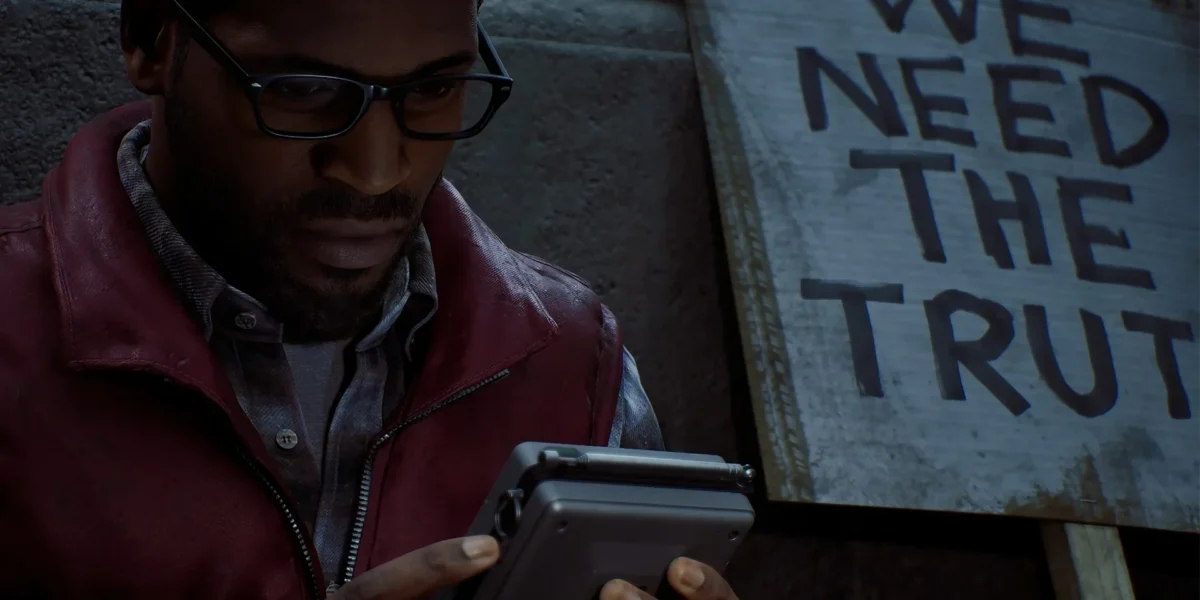
At the heart of Townfall lies the CRTV, a portable television that players can tune into. By adjusting the dial, they unlock cryptic messages, piecemeal video fragments, and even glimpses of lurking enemies, weaving a unique investigative layer into the horror experience.
As the demo launches, Simon is confronted with a fragmented message from an unknown source pleading for assistance. The footage is intentionally grainy and warped, a deliberate choice by the developers. According to John McKellan, the team spent considerable time running game footage through genuine analogue video equipment before reintroducing it into the game, creating a convincing retro‑style distortion.
Within the clip, a mysterious door beckons Simon to discover its location. Though the door is clearly the back entrance of one of the town’s houses, players must hunt for it themselves. This moment marks the first opportunity to explore St. Amelia, a setting McKellan likens to a postcard‑perfect summer scene that, under the veil of fog, mist, and rain, transforms into an unsettling, almost haunting environment.
The contrast is striking: a place that feels familiar yet feels perilously off‑balance. It’s reminiscent of walking home from a night out through a neighborhood that’s safe by day but gains an eerie edge after dark.
The game’s visual fidelity is nothing short of breathtaking. Architectural details are rendered with uncanny precision, and the weathered white walls, scarred by years of coastal rain, lend an authenticity that arguably makes it Scotland’s most realistic depiction in a video title. Poor Scotland, indeed.
After locating the elusive house, the game’s intricate puzzles come to life, echoing the atmospheric challenges of Stories Untold and Observation, the studio’s earlier titles. Players are drawn into a world where antiquated technology becomes a key component of the narrative, and restoring power to a derelict residence is essential to ignite a dormant laptop.
Venturing beneath the stairs, we encounter the power box—a moment that showcases the game’s most authentically Scottish touch. The scene introduces the “leckie card,” a relic of Scotland’s former pre‑paid electricity meters that required insertion into a home box and topping up at a local newsagent when depleted.
The discovery of the card perplexed the American audience during my demo, as a note on the in‑game card directs players to the nearest newsagent. The subtle nod to McKellan’s description of a newsagent as “like a grocery store”—a phrase that resonates only with those familiar with the quirky Scottish reality of aisles stocked with canned juice and Rizla—underscores the game’s commitment to cultural fidelity.
As we step into the bustling streets of the local newsagent, the first adversary materialises—a grotesque figure, its head sprouting an axe, shuffling through the cramped lanes with unsettling deliberation.
Equipped only with a CRTV, we can trace the creature’s movements, but lacking any weaponry forces us to rely solely on stealth. According to Screen Burn, these foes are not confined to fixed routes; they roam their surroundings freely, rendering any attempt to slip past them both unpredictable and perilously risky.
Inside the meticulously rendered, small-town newsagent, we secure a fresh powercard before venturing onto the high street. The demo wrapped up with a concise showcase of the game’s melee combat, revealing that while enemies are resilient to damage, their strikes carry significant force, making each hit a critical decision.
For many players, hand‑to‑hand encounters will serve as a last resort when stealth fails, but witnessing the combat mechanics in action offers a compelling glimpse into the game’s potential depth.
News Source: VGC





Comments
Be the first to comment.