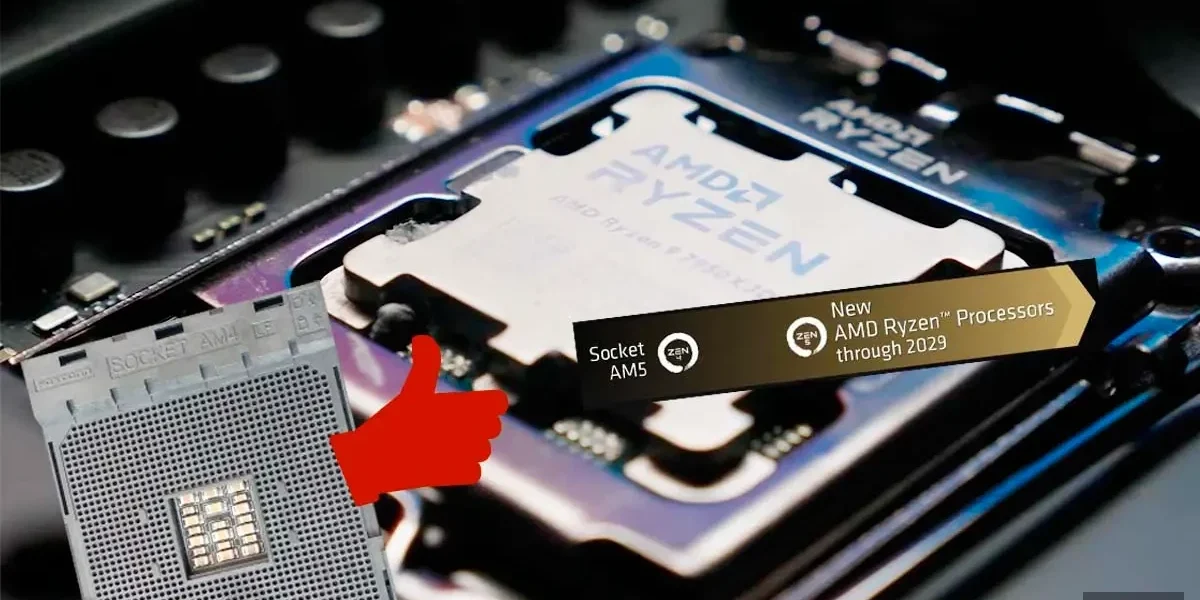
It cannot be denied that for nearly a year now, and as we have been reporting in our notes on the crisis caused by AI demand, building or upgrading a PC today has become a formidable challenge due to the exorbitant increase in component prices, particularly memory components which have seen a 110% surge during this period, forcing 60% of gamers to abandon plans for a new setup in the short term. However, amidst this financially challenging scenario, AMD has chosen to extend the lifespan of its current motherboards to prevent users from incurring unnecessary expenses.
For those unfamiliar with PC terminologies, it’s essential to understand the implications of this news. The AM4 and AM5 sockets by AMD are essentially the physical base or connector found on the motherboard where the processor is installed, serving as the interface that links the computer’s brain with the rest of the components. The AM4 generation revolutionized the market since 2016, while the AM5 is the contemporary version currently in use.
In light of the current challenging market conditions, AMD’s strategy to extend the lifespan of the socket AM5 until 2029 is indeed a crucial move for the company. As reported by Tech4gamers, this decision aims to protect long-term consumer investment, ensuring that future processors will be compatible with current motherboards. This announcement was accompanied by the unveiling of the new AMD Ryzen 7 7700X3D processor for the socket AM5, set to hit the market with an initial price of $329.
Moreover, AMD reassured its long-term supporters by confirming that the AM4 socket still has a significant lifespan ahead. To celebrate this, they announced a special anniversary edition of one of their flagship processors. It’s the AMD Ryzen 7 5800X3D 10th Anniversary Edition, exclusive for AM4 platforms, set to be released on June 25, 2022, with an initial price of $349. This offers a perfect opportunity for those still using older systems to experience a significant power boost in their games without the need for a new motherboard or expensive memory upgrades.
Originally, AMD’s internal plans were to support AM5 boards only until 2027. However, the harsh reality of the current tech industry prompted them to alter course, officially confirming that the next-generation Zen 7 processors will function seamlessly with today’s hardware. In an era where buying a new computer seems unattainable for many, extending the lifespan of existing products undoubtedly presents the most practical and fair solution to keep the community connected and loyal to the brand for the coming years.
News Source: Tarreo





Comments
Be the first to comment.