

When we buy an indie title on Steam or purchase a limited‑edition character skin in a mobile game, the moment we hit the payment button feels effortless. Yet behind that seamless transition lies a vast, real‑time network that stitches together the complex financial systems and regulations of dozens of countries, ensuring every credit‑card number, Toss, KakaoPay, or NaverPay transaction is processed securely.
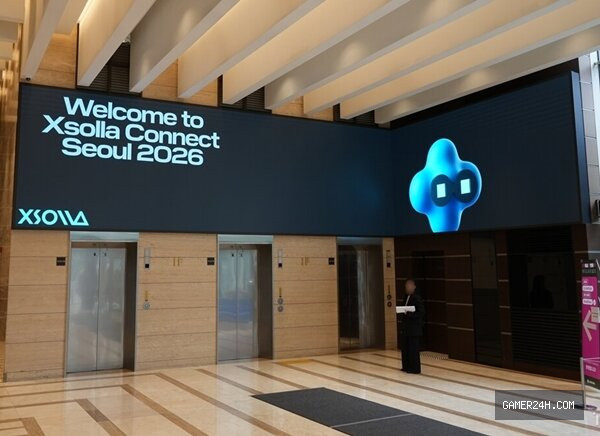
In Seoul’s Seocro Tower, the “Xsolla Connect Seoul 2026” conference showcased how Xsolla—often unfamiliar to casual gamers but a cornerstone for global developers—acts as a colossal, internet‑scale POS system. By offering more than a simple payment gateway, Xsolla has evolved into a comprehensive game‑business engine, supporting everything from content creation to monetisation across every market.
Thanks to Xsolla’s invisible global payment network, indie developers can sell their titles overseas with domestic credit cards or gift vouchers, while local startups can reach North American, Latin American, and European audiences and earn revenue in local currencies. Without such infrastructure, many small studios might have abandoned international expansion due to the daunting maze of country‑specific tax laws.

On May 27, Xsolla Connect Seoul 2026 concluded with a resounding success, addressing industry pain points and presenting a new paradigm for mobile and PC game monetisation. The event focused on the hottest topics of the moment: mobile Direct‑to‑Consumer (D2C) strategies and the adoption of “webshops” to slash the 30% in‑app purchase fees imposed by Google and Apple. As antitrust pressures ease, the conference offered clear guidelines for studios to build self‑sufficient sales channels.
The agenda opened with Xsolla Korea’s welcoming remarks, followed by a deep dive into the future roadmap for webshops, creator‑marketing paradigms, concrete mobile D2C success models, and a case study of JoyCity’s overseas triumph. Attendees were greeted by a towering Xsolla banner on the sixth floor, and even the snacks were a highlight of the day.
During the first session, APAC General Manager Lee Joo‑yeon highlighted the fundamental change in platform fee dynamics and the inevitability of mobile D2C. She noted that what was once a mere workaround to avoid Google and Apple’s 30% cut has become a strategic necessity, as regulatory shifts and anti‑monopoly reforms shift market power back to game studios.
Lee compared the app stores to department‑store entry points, while webshops serve as exclusive, VIP boutiques where studios can customise rewards, loyalty programs, and targeted offers—offering a level of flexibility that the uniform app‑store environment cannot match.
Product Manager Park Jong‑guk unveiled Xsolla’s 2026 roadmap for the next‑generation webshop, emphasizing that third‑party payments and D2C are no longer future concepts but essential tools for survival and profit maximisation.
He introduced the upcoming Xsolla LiveOps Canvas, a visual, drag‑and‑drop interface that eliminates the need for developers to code complex events, allowing marketers to design promotions, set timelines, and target user segments with a few clicks.
Additionally, the Instant Webshop feature promises to generate high‑quality, AI‑driven storefronts in minutes, dramatically reducing the time and cost for indie studios to launch global sales channels.
Park also highlighted the integration of Progressive Web App (PWA) technology, enabling users to add the webshop to their home screen and receive push notifications—effectively creating an app‑like experience without the overhead of native development.
In the third session, Partner Network Manager Han Soo‑bin discussed the evolving landscape of influencer and creator marketing. He pointed out that YouTube, Twitch, and other content platforms now drive more than twice the influence of traditional app‑store featured placements.
Han stressed the importance of moving from vanity metrics to performance‑based KPIs, tracking actual in‑game purchases and revenue conversions generated by creator content.
Han explained that Xsolla’s Partner Network automates the entire process of discovering, contracting, and tracking these creators, providing studios with unique promo codes and tracking links to measure ROI accurately.
After users complete a purchase through the dedicated code, the system meticulously tracks each transaction, while Exsola simultaneously handles the complex tax reconciliation and remittance for tens of thousands of overseas creators—dramatically slashing the marketing burden for game developers to near zero.
Partner Network Manager Han Su-bin of Exsola, representing a major influencer network, acknowledged the undeniable sway of large-scale creators but emphasized the necessity of weighing cost and sustainability in marketing strategies.
Exsola’s performance‑driven creator marketing framework is broken into five distinct chapters, each designed to streamline collaboration with diverse creators. The intuitive dashboard makes rapid campaign setup a breeze, providing a clear advantage for developers.
In Session 4, Senior Business Development Manager Yoo Ye-won unveiled a three‑step, psychology‑based playbook for turning a newly launched web shop into a revenue powerhouse. She warned that even the most polished web shop is useless if players remain unaware of its existence or lack a compelling reason to visit.
Yoo highlighted that the “Discovery → Conversion → Retention” sequence is the linchpin of a successful web shop, demanding a carefully crafted user journey that guides players from first awareness to repeat engagement.
During the “Discovery” phase, the key challenge is to naturally introduce the web shop to players accustomed solely to in‑app purchases. Yoo advised against passive link placement, instead recommending proactive pop‑ups during gameplay and leveraging official community channels such as Discord or in‑game lounges.
She further stressed the importance of a “Daily Reward” system that rewards players for consecutive logins with escalating in‑game currency or buff items. A global partner who adopted this model reported that 67 % of users who logged in daily for rewards went on to make a first purchase, illustrating the powerful conversion trigger.
In the “Conversion” stage, the goal is to instantly communicate the tangible benefits of buying through the web shop. With over 90 % of users accessing the shop via mobile browsers, Yoo suggested placing a bold banner at the top of the page offering a 20 % bonus diamond charge for web‑shop purchases—clear, visual, and compelling.
She also championed the “Offer Chain” technique, which lowers the psychological barrier to purchase by first presenting low‑cost or free items, thereby encouraging users to register payment information and complete their first transaction.
By refining the Offer Chain, the partner achieved an average cumulative increase of over 40 % in new purchases compared to previous methods.
The final “Retention” phase focuses on locking users into the web shop ecosystem, preventing them from returning to in‑app purchase screens. Yoo showcased the “Loyalty Store,” a points‑based system that rewards users with exclusive items—such as limited‑edition profile frames or rare costumes—available only through web‑shop mileage.
“When the reward, offer, and loyalty wheels spin in harmony within Exsola’s one‑stop infrastructure, the web shop transcends a simple checkout and becomes the game’s most potent cash cow,” Yoo concluded, underscoring the transformative potential of integrated monetization.
Joycity’s Director of Business Development, Park Jun‑seong, shared a compelling case study of how Exsola’s payment solution propelled the company’s global expansion.
Park cited Exsola’s all‑in‑one integration of over 130 countries’ alternative payment methods (APMs) as the decisive factor for adoption. While Korean players rely on credit cards or Naver Pay, emerging markets in Latin America and Southeast Asia often lack traditional banking infrastructure, turning to prepaid cards or local convenience‑store payment apps.
Exsola’s single‑API integration absorbed these diverse local payment demands, a feat that Google and Apple’s single‑payment models could not accommodate.
Within just five months of launching “Biohazard Survival Unit” in November 2025, Exsola’s infrastructure generated a staggering 400 % increase in payment revenue compared to pre‑integration figures.
Moreover, the share of global sales attributed to Exsola’s platform tripled, significantly diversifying Joycity’s revenue streams and boosting profit margins.
Park praised Exsola’s global Customer Success Management team for their relentless support during the technically challenging integration, noting that 24‑hour standby support enabled real‑time problem resolution—even during overnight regulatory changes.
He also highlighted Exsola’s comprehensive handling of complex tax filings and currency compliance, which freed Joycity’s internal teams to concentrate on content quality and user satisfaction.
Following the presentation, a lively Q&A session covered practical insights on web‑shop deployment, user flow design, and regulatory considerations across markets such as China.
Attendees also enjoyed a networking session and a lucky draw featuring iPads, Apple Watches, and Logitech gaming peripherals.
At the pre‑conference for the upcoming “Exsola Connect Seoul 2026,” I had the privilege of meeting Lee Joo‑yeon, the APAC Managing Director of Exsola. With 18 years of experience in the volatile gaming industry, Lee has been steering Exsola’s Korean and broader Asia‑Pacific operations since 2016, building deep relationships with partners across the region.
Lee explains that Exsola Korea is the most historic and respected hub among the company’s global offices, reflecting the high regard the headquarters holds for Korea’s mature gaming ecosystem and its technological prowess. She highlighted how Korean developers, when expanding internationally, face real‑world pain points and regulatory hurdles that only someone with her long‑standing engagement with the local scene can truly grasp.
Today’s hot topic for Korean mobile studios is the shift toward web shops and direct‑to‑consumer (D2C) sales models. Yet, the lure of platform giants like Google and Apple—along with their fluctuating fee structures—creates a cautious atmosphere. “When studios build a web shop, they must weigh whether users will actually pay despite the inconvenience, and whether the system can operate safely under strict platform compliance,” Lee noted, underscoring the delicate cost‑benefit calculus many are navigating.
Despite these concerns, Lee insists that D2C is no longer a mere cost‑saving tactic; it has become a strategic imperative for long‑term survival. The mobile market has pivoted from chasing short‑term hype with new releases to sustaining a single title over years of live service. In a climate where acquisition spend is skyrocketing, studios must focus on retaining core players and delivering personalized value—an area where Exsola’s solutions shine.
For Korean studios eyeing emerging markets such as Latin America, Southeast Asia, and Eastern Europe, integrating local alternative payment methods (APMs) and aligning with country‑specific tax regulations can be prohibitively costly. Exsola offers a unique, streamlined solution that handles these complexities, allowing developers to focus solely on creating engaging content.
“Our mission is crystal clear,” Lee declared. “We let studios offload all the administrative, financial, and technical headaches—taxes, currency conversions, fraud prevention—so they can pour every resource into crafting fun, compelling games.” This promise positions Exsola as a one‑stop provider of the legal and financial infrastructure that studios need to thrive globally.
What sets Exsola apart from other payment platforms is its human‑centric support model. With a dedicated, 24/7 technical and customer success team, the company ensures that even a ten‑minute outage can be swiftly resolved, safeguarding revenue for studios that run continuous live services.
Exsola Connect Seoul 2026 was more than a showcase; it was a strategic briefing on how Korean mobile and PC developers can navigate the rapidly changing landscape of global financial regulation and platform monopolies. The era of gatekeepers like Google and Apple is eroding under government mandates and landmark lawsuits, prompting top‑tier studios to build their own payment infrastructures to maximize profitability.
The conference distilled its insights into three core principles for mobile D2C success:
First, timing is everything. The global D2C market is already open, and the pace of transition to open payment ecosystems is faster than many anticipate. Companies that act swiftly to establish their own web shops and capture user payment data will reap the rewards of future market growth.
Second, a web shop is more than a 30% fee avoidance channel; it is a strategic asset for building deep, long‑term relationships with engaged players. While traditional marketplaces attract broad user bases, a proprietary web shop allows studios to lock in loyal customers and drive sustained revenue.
Third, sophisticated operation design rooted in player psychology is essential. Even the best technology fails without a clear understanding of user behavior. Successful studios will create daily incentives, lower the barrier to first purchase, and continuously deliver value that turns casual players into repeat customers.
In an era where a single great game is no longer enough to guarantee survival, D2C strategies that grant studios control over their user relationships and revenue streams have become the most powerful business weapon. Exsola’s integrated global financial infrastructure and performance‑driven live‑ops guidelines promise to be a decisive compass for Korean studios aspiring to scale beyond their domestic market and achieve sustainable global success.
News Source: Co
Have thoughts, questions, or benchmarks on this topic? Join the discussion on our forums.
Join Discussion ➔






















Join the conversation