For many PC gamers, the dream of upgrading to the latest hardware—such as NVIDIA’s RTX 40 or RTX 50 series—has become increasingly unattainable as prices surge. The relentless rise in costs, a trend we have been reporting on for months, is largely driven by the scarcity created by the booming demand from AI data centers.
Consequently, a growing number of players are turning back to older GPUs, questioning whether they truly need to shell out thousands of dollars for each new generation to experience the latest titles as the developers intended.
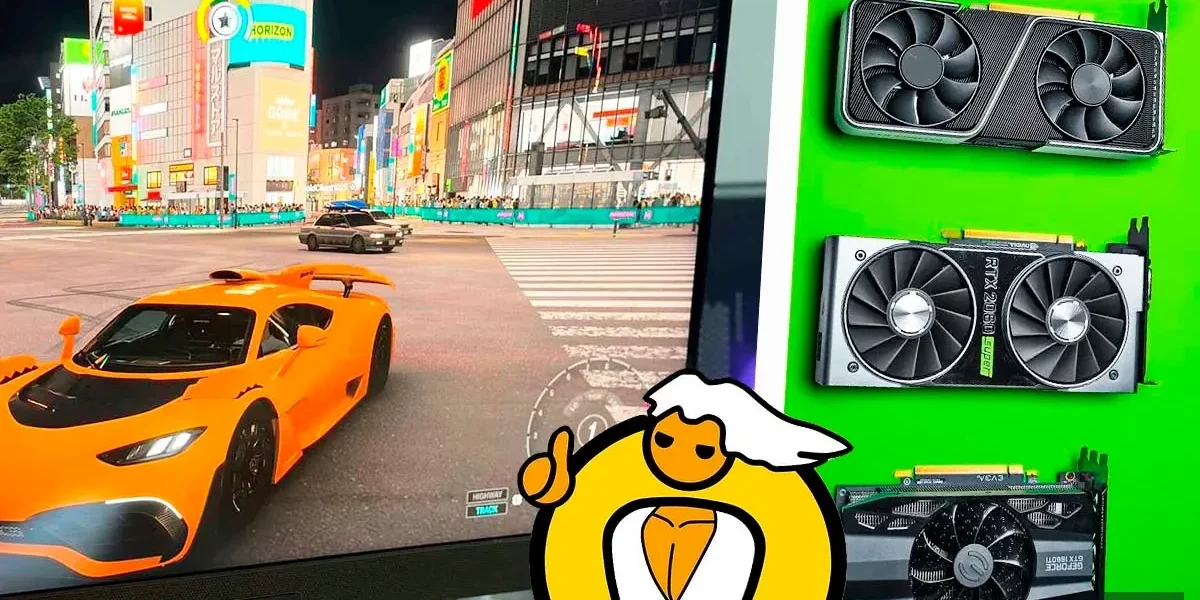
According to Samarveer Singh, a seasoned gamer and contributor to XDA Developers, this belief is not necessarily warranted. Singh has reinforced his stance with recent tests that put several “old‑school” graphics cards to the test against the year’s heaviest AAA releases—Forza Horizon 6, Pragmata, and Resident Evil Requiem.
In his documented experiment, Singh spotlighted the GTX 1660 Ti, a seven‑year‑old card that remains a formidable contender for 1080p gaming. Paired with a Ryzen 5 3600X processor, the setup demonstrated that, with AMD’s FSR scaling technology, it can comfortably surpass the 60 fps threshold while delivering vibrant visuals—proving that legacy hardware can still hold its own in 2026’s demanding gaming landscape.
Continuing its in‑depth benchmark series, the review turned its focus to the RTX 2070 SUPER. Nearly seven years after its debut, this card still delivers exceptional value, dominating 1440p gaming with ease. According to the XDA Developers report, the 2070 SUPER excels at high‑quality settings—far surpassing the ultra tier—thanks to the powerful DLSS technology that keeps frame rates steady while preserving stunning visual fidelity.
In the benchmark suite, the RTX 2070 SUPER achieved 57 fps in Forza Horizon 6 at Ultra (no ray tracing) and 63 fps with DLSS B, while Pragmata ran at 51 fps (no ray tracing) and 66 fps with DLSS Q. Resident Evil Requiem delivered a solid 54 fps (no ray tracing) and an impressive 95 fps with DLSS Q + FSR, underscoring the card’s versatility across a range of titles.
AMD’s RX 5700 XT also received a thorough evaluation. Built with slightly more VRAM than its contemporaries, the card ages gracefully and offers a compelling price point for 1440p gaming. Leveraging FSR in quality mode, titles such as Pragmata run smoothly without sacrificing visual detail, proving that AMD still remains a viable choice for budget‑conscious players.
Among the lineup, the RTX 3070 emerged as the standout performer. Even after more than five years on the market, it continues to impress with its ability to deliver gorgeous graphics at 1440p. The card even tackles demanding ray‑traced titles like Forza Horizon 6, maintaining respectable frame rates with the aid of DLSS technology.
In closing, the XDA Developers expert emphasizes that modern GPUs no longer age as precipitously as they once did. Real‑world testing demonstrates that when developers optimize game engines and employ mature, intelligent scaling systems, the performance curve of a graphics card can remain robust for years, offering gamers enduring value.
Older GPUs are no longer becoming obsolete as quickly as they once did, and this trend only holds when both developers and GPU manufacturers fulfill their responsibilities, the industry analyst noted.
He emphasized that hardware from five, six, or even seven years ago can still deliver genuinely enjoyable gaming moments, underscoring a shift in the sector toward a future that embraces legacy systems rather than discarding the machines users invested in just yesterday.
News Source: Tarreo





Comments
Be the first to comment.