

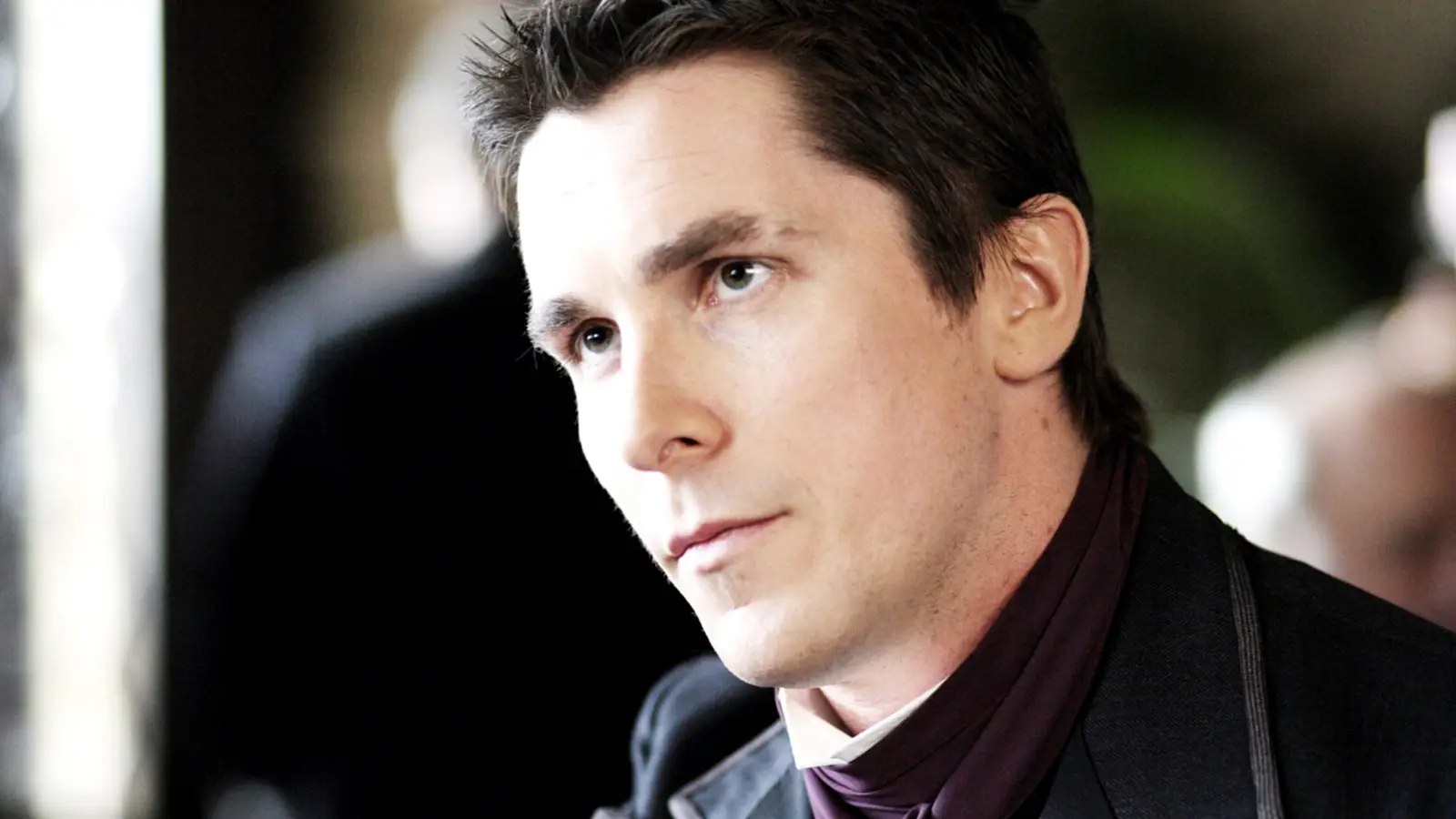
Christopher Nolan’s cerebral period thriller
The Prestige wraps an intricate, dual-narrative mystery around a deeply personal story about two rival magicians in turn-of-the-century London who destroy their lives trying to outwit one another. Nearly two decades on, the film remains cerebral without becoming overly dense, spectacular without losing its emotional core, and fantastical in ways that feel historically plausible—qualities that make it arguably the most “Nolanesque” of his films without veering into overtly extreme territory.
A Trick in Three Acts
The film opens on dozens of identical top hats scattered across a forest floor before cutting between two performances: stage engineer John Cutter, played by Michael Caine, makes a bird disappear for a young girl, while Hugh Jackman’s Robert Angier performs an apparently impossible teleportation act for a packed theater. None of it makes sense at first glance, but Nolan has already planted the seeds of his elaborate tragic magic trick.
Within the story, Cutter explains that every magic trick consists of three parts. The first is “The Pledge,” in which the magician presents something ordinary—here, two talented young magicians working under Cutter in Victorian London. Jackman plays Robert Angier, a natural showman who performs as “The Great Danton.” Charming and boisterous, he reads audiences instinctively; once the curtain closes, however, that warmth curdles into grief and obsession until the man and his act become indistinguishable.
Crossing him is Christian Bale’s Alfred Borden, a working-class magician with enormous technical talent but little flair for presentation. Performing as “The Professor,” Borden understands how illusions work yet lacks Angier’s polish—and appears to be withholding something from everyone around him. Bale plays that secrecy as an alternating mixture of warmth, hostility, and distraction, making the character seem increasingly cruel and capricious.
Nolan Disguises Science Fiction as History
The second act of a trick is “The Turn,” where the magician takes something ordinary and makes it do something extraordinary. Desperate to uncover Borden’s secret, Angier follows a misleading clue to Colorado Springs, where Nikola Tesla—brilliantly cast in one of his final roles with David Bowie—has been conducting experiments with electricity. Here, The Prestige quietly transforms from historical drama into science fiction, though its sci-fi feels closer to dark magic that corrupts the soul.
The transition is less jarring than it should be, aided by Tesla’s peculiar place in cultural memory as a documented genius surrounded by tales of suppressed inventions. Bowie’s Tesla is soft-spoken and otherworldly, a man who understands forces ordinary people can barely perceive. Angier spends a fortune commissioning a teleportation machine, only to discover that instead of transporting matter it creates copies—leading to the film’s surreal pile of duplicated top hats and eventually somewhere far darker.

“Simple, maybe. But not easy.”
Alfred Borden (Christian Bale), on his signature trick
The Monsters Change Places
The final act of a trick is “The Prestige,” where something that disappeared must return. Angier begins as a tragically human man and effectively sells his soul for one great trick, launching his own Transported Man show in what he believes to be the cracking of Borden’s secret. Each time he performs, he falls through a trapdoor into a locked water tank and dies, while a perfect copy materializes across the theater to receive the applause.
Borden’s trick has nothing to do with science fiction. As it turns out, “Alfred Borden” is actually a set of identical twins living a lifelong con: the brothers alternate between Borden and his assistant Fallon using disguises, and when one loses two fingers during a trick involving a gun, the other removes the same fingers. That secret explains why Sarah (Rebecca Hall), Borden’s wife, grows so suspicious—her husband’s wounded fingers do not heal as they should, and there are days when he is completely indifferent to her.
The supporting cast reinforces every beat: Caine grounds the film as the weary Cutter who knows that every impossible feat has a practical explanation, Rebecca Hall supplies its emotional weight, Scarlett Johansson plays Olivia, an assistant entangled with both rivals, and Piper Perabo appears as Angier’s wife Julia, whose drowning during an escape act ignites the magicians’ vicious rivalry.
A Rewarding Illusion to Revisit
Nolan ultimately returns to the images with which he began. Cutter’s disappearing-bird trick contains the entire answer—one bird is crushed inside the collapsing cage so that another can be triumphantly produced—while a young child sees through the trick immediately and asks where the bird’s brother went, even as adults applaud because they prefer the illusion.
“Going in blind, it is virtually impossible to predict where the story will lead, even as Nolan bombards us with clues,” reads contemporary analysis of the film. “Knowing the truth doesn’t ruin the illusion; it reveals how meticulously everything was constructed.” The Prestige remains one of Nolan’s most personal and precisely engineered twists—one that shows its secrets from the first scene but asks viewers to look more closely before they believe what they see.
The film is now available to stream on Netflix, offering a convenient moment to revisit the director’s obsession with sacrifice, identity, and the price of wonder long before his later works pushed those themes toward their most inscrutable extremes.























Join the conversation