

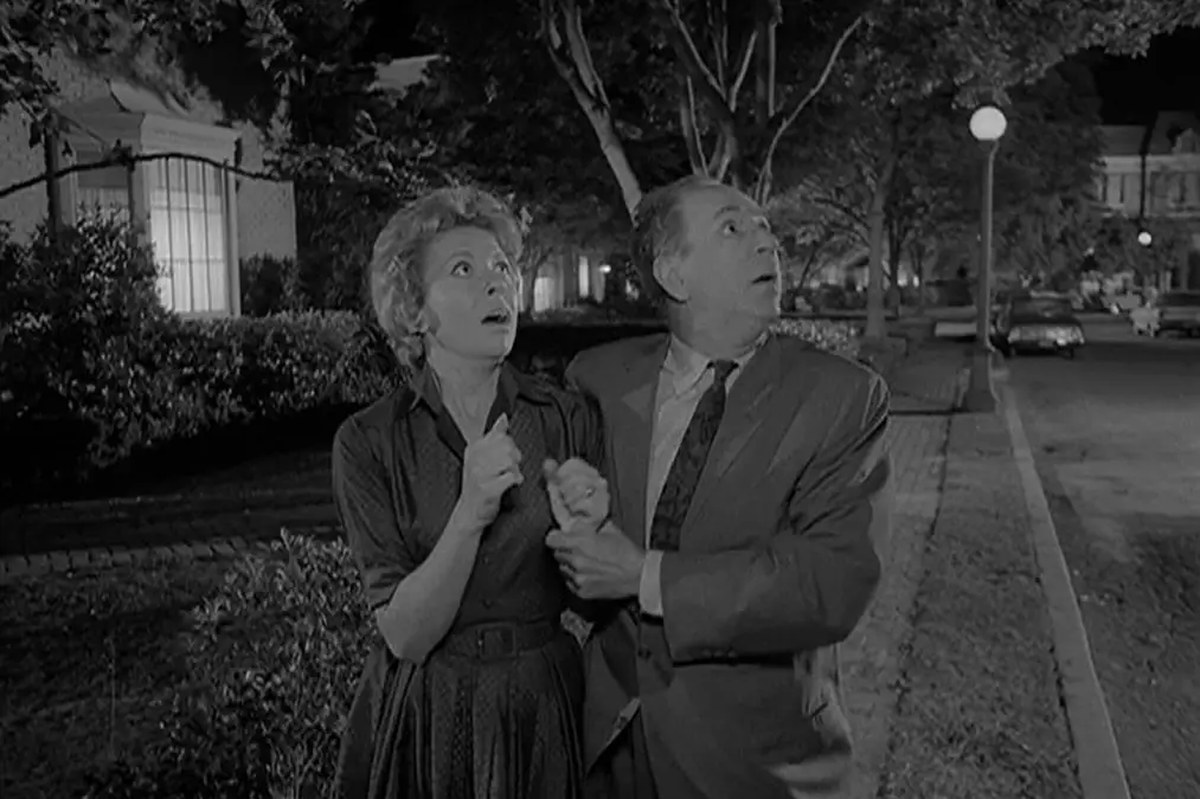
Sixty-five years after it first aired in the fall of 1961, “The Shelter” remains one of the most chilling installments of The Twilight Zone, an anthology series that ran from 1959 to 1965. Written by host and creator Rod Serling, the Season 3 episode deliberately abandoned the show’s usual supernatural trappings to deliver a story about nuclear anxiety, prejudice, and the fragility of civilized behavior during times of crisis.
The Twilight Zone is very much a product of its time. While the celebrated series continues to be deeply influential in science fiction and horror, it has aged alongside the decades that have passed since it aired. The creature effects and production design that felt groundbreaking at the time now read as dated by today’s standards. Yet the show endures not because of those technical achievements but because of the deeper human emotions its stories touched upon—emotions that remain timeless even when their specific circumstances do not.
A Birthday Dinner Turned Nightmare
The episode opens with a handful of neighboring families gathered for a birthday dinner honoring Dr. Bill Stockton, played by Larry Gates, who has long served as the family doctor for all of them. The warmth of the celebration is abruptly shattered when an announcement arrives on the radio: unidentified objects have been detected in the nearby skies, signaling that a nuclear attack may be imminent and urging everyone to seek shelter immediately.
The only household equipped with a bomb shelter belongs to Dr. Stockton—a fact his neighbors had teased him about even during the birthday dinner itself. Believing in being prepared, he built the shelter for himself, his wife, and his child, leaving no room for anyone else. As panic sets in outside, all of Stockton’s neighbors begin to plead with him to let them join. He apologetically refuses and locks himself and his family inside.
The Descent Into Hysteria
Once locked out, the neighbors descend into chaos as they argue over who deserves a place in Stockton’s shelter. The base emotions and prejudices that had been suppressed during the dinner surface without restraint. One neighbor argues that another man, being foreign-born, deserves safety less than his American-born counterparts. The hysteria reaches its breaking point when the group resolves to drag a nearby flagpole toward the shelter and use it as a battering ram to force open Stockton’s door.
The episode contains none of the supernatural elements for which The Twilight Zone is known. Even its signature twist ending avoids anything otherworldly, grounding the terror entirely in human behavior—a choice that made “The Shelter” break all of the show’s own rules while somehow capturing its true essence.

The show was never really about aliens and killer dolls or even the fear of nuclear holocaust. It was about human nature, which is forever timeless.
Gamer24h analysis
In 1961, when schoolchildren routinely rehearsed what to do in the event of a nuclear attack and families across America built bomb shelters in their backyards, the threat felt genuinely real. With the benefit of hindsight, we know that America’s Cold War enemies never ended up striking domestic soil—but for audiences at the time, “The Shelter” presented a truly terrifying scenario.
Why ‘The Shelter’ Is Still Relevant
More than 60 years later—and even a quarter-century after September 11—nothing resembling a nuclear attack on American soil feels plausible. In that respect, the episode is undeniably dated. Yet like so many other installments of The Twilight Zone, what it appears to be about isn’t really what it’s about at all.
The most poignant message within “The Shelter” was never the bygone Red Scare but rather prejudice and human nature. At the episode’s beginning, Dr. Stockton is a celebrated friend and neighbor to everyone in attendance. By its end, his neighbors are cursing his name for refusing to share shelter space they knew could not accommodate them, while simultaneously tearing one another apart along ethnic lines.
This underlying theme explains why The Twilight Zone continues to resonate today. Even though modern audiences cannot fully relate to the fear people felt during the Cold War, hatred and bigotry remain constants visible on the news every single day. That enduring relevance is precisely what has kept the series alive across generations.
Looking Ahead
New viewers can experience “The Shelter” and the rest of The Twilight Zone’s catalog today, with the anthology series available to stream free on Pluto TV. As audiences continue to discover Rod Serling’s masterful storytelling, episodes like “The Shelter” serve as a powerful reminder that some of our most profound terrors lie not in what might fall from the sky but in how quickly civilization can unravel among us.























Join the conversation