
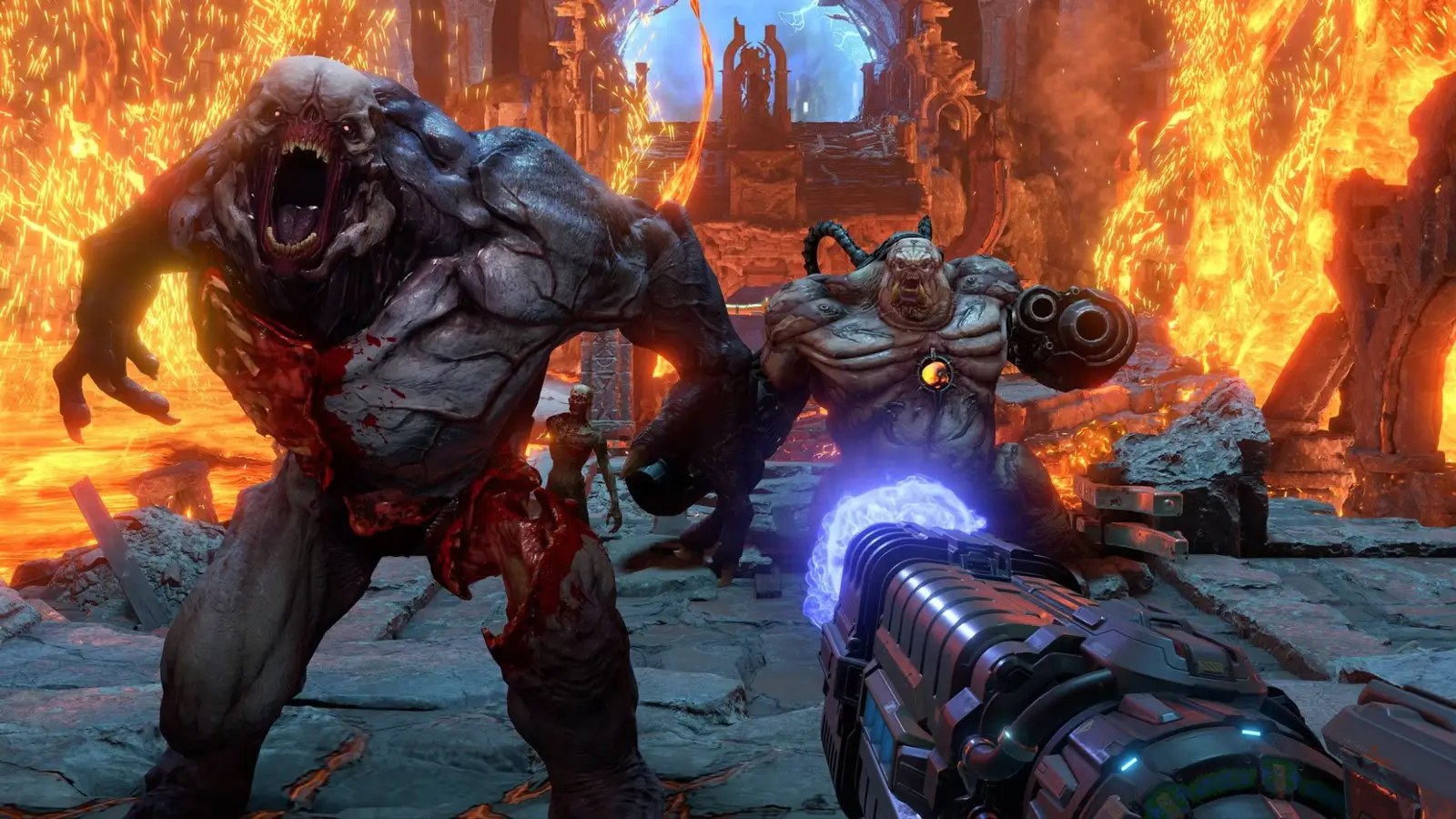
Bethesda Softworks is reportedly moving toward legal action against the creator of “Doomsol,” a browser-based game built on id Software’s open-source Doom engine that was used to promote a memecoin called $DOOM. The confrontation, first reported by Kotaku in early September, follows the collapse of the cryptocurrency project and raises fresh questions about how Bethesda enforces its intellectual property rights even as it maintains an unusually permissive stance toward fan creations.
The dispute traces back to early August, when a token known as $DOOM launched alongside Doomsol, a playable version of Doom accessible directly through a website. Players who reached the top of the game’s leaderboard were promised rewards in Sol, Solana’s native cryptocurrency. The project appeared more polished than many low-effort memecoins and quickly drew attention from both crypto enthusiasts and gamers, though the site has since been taken down.
A Memecoin Built on an Open License
Doom’s open-source license has long allowed the gaming community to experiment with it in creative ways, from fan-made modifications to porting it to unusual devices. Bethesda has generally welcomed these efforts, but the company maintains a clear line between non-commercial creativity and personal financial gain. According to reports, that distinction is precisely what Bethesda says Doomsol crossed.
While the license permits fans to reuse Doom for creative purposes, using the game’s infrastructure to promote a tradeable cryptocurrency falls outside those boundaries. A Bethesda representative speaking with Kotaku cited “a risk of confusion around affiliation or endorsement” as one of the motivations behind the company’s legal action, suggesting the studio is concerned that players may have believed an official connection existed between the project and Bethesda.
“A risk of confusion around affiliation or endorsement.”
Bethesda representative
A Prominent Developer’s Involvement
The situation has been complicated by the involvement of Sandy Petersen, a well-known game designer who worked on several Doom titles. Petersen extensively promoted this memecoin on social media, posting videos of himself buying $DOOM and playing Doomsol. His name appears as the game’s creator on the now-archived Doomsol website, though his actual role in the cryptocurrency venture remains unclear.

Petersen reportedly defended the project by arguing that Doom’s open license made it legally safe, a claim Bethesda clearly disputes. He mentioned the initiative briefly once more at the end of August before falling silent. The creator of $DOOM pulled the rug as early as Aug. 4, sending the memecoin’s price into a steep decline.
A Broader Pattern of Crypto Scams
This is not the first time video game franchises have been swept up in cryptocurrency schemes. Recently, official Pokémon X account was hacked as part of a memecoin scam and used to promote $POKEMON, with many fans mistakenly believing it to be legitimate because it appeared through an official channel. Observers note that the Doomsol situation shares similarities with those incidents, particularly regarding how easily players might have been misled about official involvement.
According to According to Kotaku, Bethesda has not specified who is being served legal papers, leaving open the question of whether Petersen or someone else connected to the project will face consequences. The studio’s decision to pursue action against a game built on an openly licensed engine signals that it intends to draw firm boundaries around commercial exploitation.
Looking Ahead
As Bethesda continues its legal efforts, fans and industry watchers are watching closely to see how the case develops and what precedent it may set for future fan projects. The outcome could clarify exactly where the line lies between the studio’s celebrated openness toward creativity and its protection against commercial misuse of Doom’s enduring legacy.























1 comment