

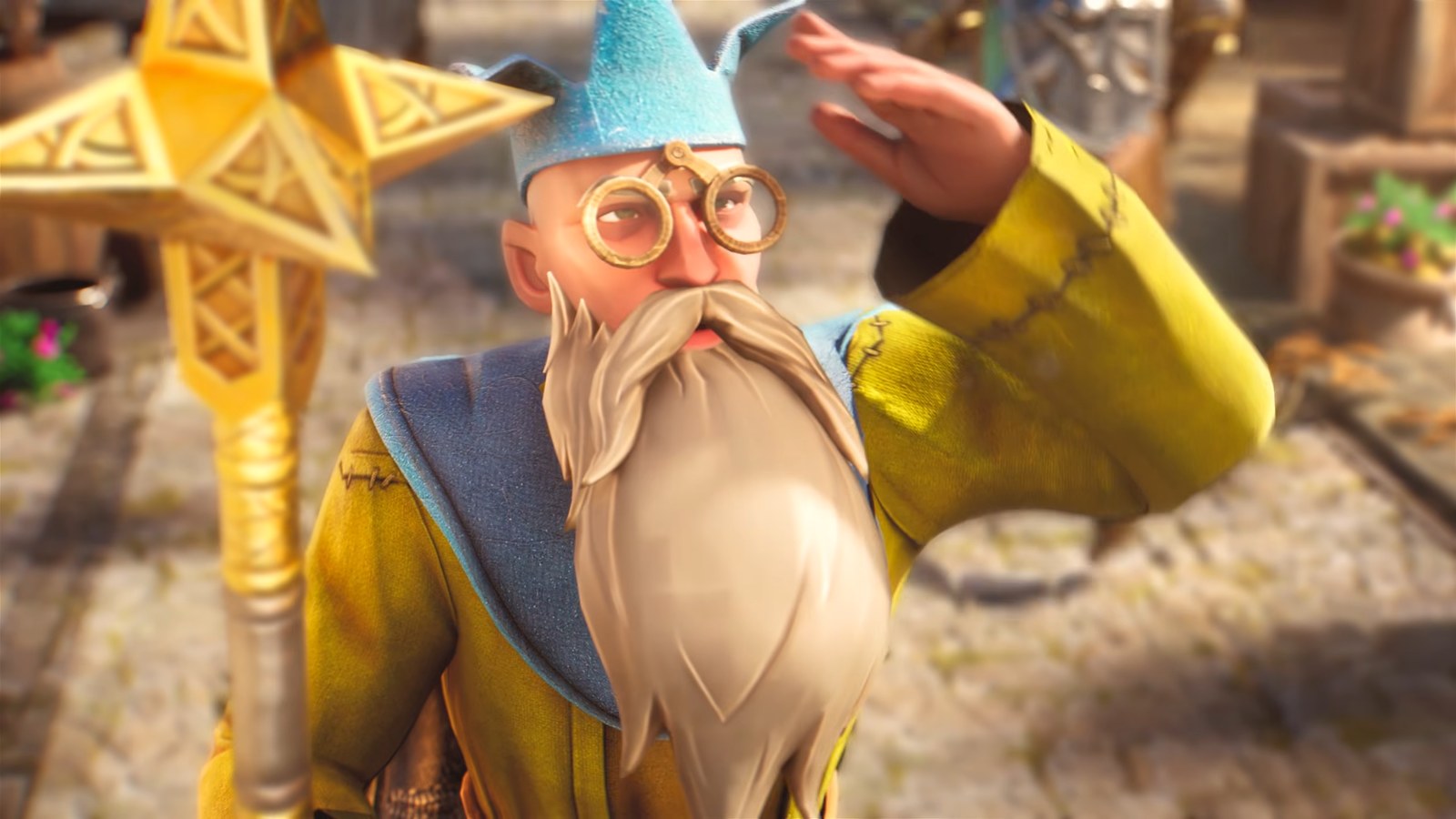
Jagex has officially announced a new massively multiplayer online role-playing game, working under the title “RuneScape 4,” during this weekend’s annual RuneFest convention. The studio revealed that the ambitious sequel actually began life as an expansion to its recently released survival title Dragonwilds before evolving into a standalone MMO following overwhelming player demand for a more traditional MMORPG experience set within that world.
The announcement, delivered at the developer’s flagship yearly event, was accompanied by a brief teaser trailer offering the first look at RuneScape 4’s art direction. The footage suggests a visual hybrid drawing from both corners of Jagex’s franchise: it blends the polished presentation of the current mainline RuneScape 3 with the nostalgic charm of Old School RuneScape, which captures the series’ early-2000s aesthetic. In the trailer, viewers are treated to a medieval town nestled in a verdant valley beneath floating islands, where an adventurer mounted on a dragon comes under attack by a three-headed wyrm while a wizard observes from below before welcoming a newcomer into the city.
An Expansion That Grew Into Something Larger
According to details reported by MMORPG.com, RuneScape 4 emerged directly from what was originally planned as an expansion for Dragonwilds. A Jagex developer explained that playtesters repeatedly requested a more traditional MMO approach to the survival game’s setting and visual style, prompting the studio to expand its ambitions considerably. Beyond this origin story, confirmed technical details remain limited: RuneScape 4 is being constructed on Unreal Engine, though it remains unclear whether the team is targeting version 5 or the upcoming version 6.
RuneScape 4 apparently emerged out of a planned expansion for Dragonwilds. A Jagex developer said that playtesters kept asking for a more traditional, MMO take on the survival game’s setting and aesthetic.
MMORPG.com
The original iteration of RuneScape 4—still operating under its Dragonwilds expansion designation—was reportedly targeting a 2027 release window. Scaling the project up into a full, standalone game has almost certainly pushed that timeline further out, though Jagex has not yet provided an updated launch date for the title.

Understanding RuneScape’s Numbered Legacy
For players curious about where the “4” fits within the franchise’s long history, Jagex maintains a specific numbering scheme across its numbered releases. The original RuneScape launched in 2001 as the reason for the season’s celebration of the series’ debut. RuneScape 2 arrived in 2004 and introduced full 3D rendering to the game; Old School RuneScape is essentially based on RuneScape 2 circa 2007. The most recent numbered entry, RuneScape 3, overhauled both the art direction and underlying systems in 2013 and remains the current mainline fork of the franchise.
While Old School RuneScape will continue to thrive as by far Jagex’s most successful game, questions linger about how the studio will handle its numbered lineage moving forward. Fans are wondering whether RuneScape 3 will be preserved in any form with this version shift, or whether RuneScape 4 will seamlessly carry over character progression from its predecessor—much like RuneScape 3 did for RuneScape 2.
Looking Ahead
As the developer continues to flesh out details about RuneScape 4’s development and eventual release, more information is expected to surface in the coming months. Coverage from this year’s RuneFest remains ongoing, with PC Gamer features producer Mollie Taylor reporting directly from the event as Jagex unveils further announcements throughout the convention.
Until then, players will need to follow upcoming coverage closely for updates on the game’s revised timeline and any additional gameplay reveals. The evolution of a modest survival expansion into a flagship MMO sequel represents one of the most notable franchise developments in recent memory, and Jagex appears poised to deliver something that honors both its heritage and its ambitions.























1 comment