
When the UK’s National Film and Television School opened submissions for its recently concluded Game Poem jam, it did so with a deliberately loose theme—”the other one”—and within 24 hours had drawn roughly 90 entries from developers worldwide. Running on the 7th-8th of September, the event was co-organised by Magnuson alongside an academic panel that includes former PlayStation Indies boss Shuhei Yoshida as one of its judges.
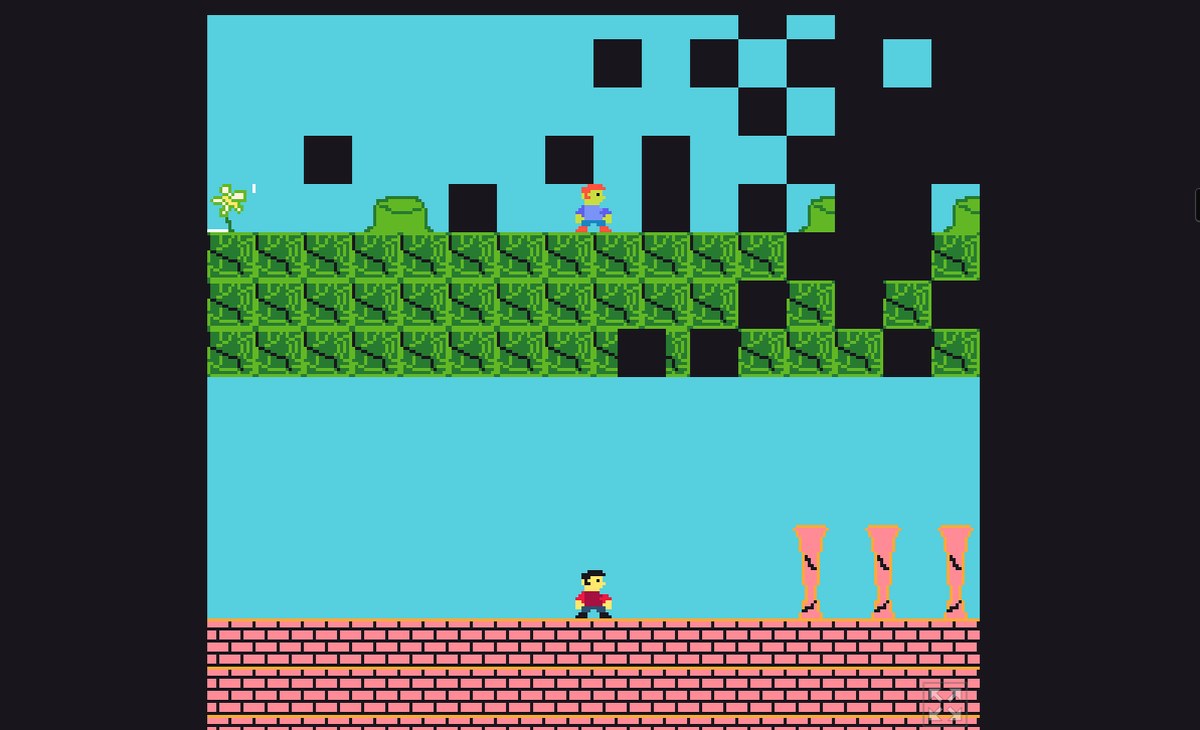
The jam’s output has already prompted a rich wave of critical reflection on what games can achieve when they lean into poetic rather than purely functional design. Among the standout entries is Sometimes I Wonder About The Other Me, a 2D platformer by “small game” developer Luis “Ludipe” Díaz Peralta, whose other works include A Place For The Unwilling.
A small game that reimagines choice
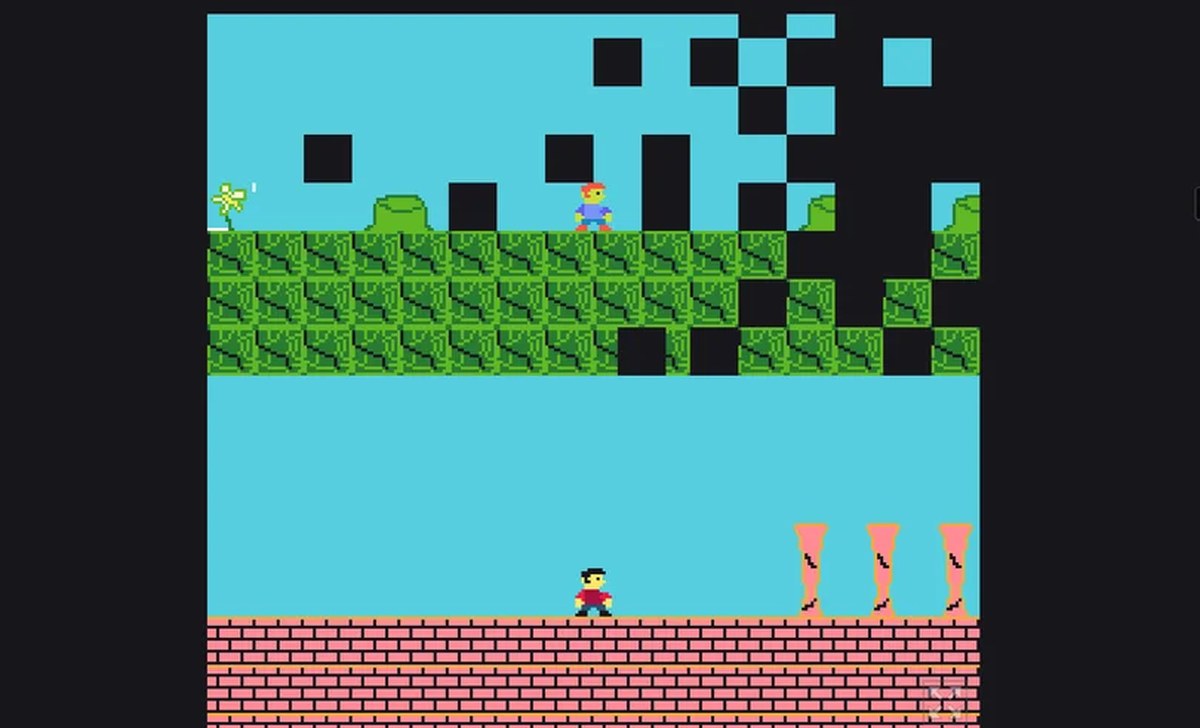
Ludipe’s entry is broken into a handful of single-screen maps. On each screen sits a Mario-brand exclamation mark block that burps out a text fragment, together forming an overarching monologue that begins with the jam’s titular phrase. As players move between screens they encounter a signpost pointing left and right; heading in either direction leads to a split-screen area where the player controls duplicate characters. Guiding these charges rightward causes one half of the screen to flake away into darkness, after which the surviving character returns to the starting screen to wonder anew about the Other Me.
The result is a meditation on alternatives that overwrite themselves rather than offering branching narratives with distinct endings. As Ludipe himself put it: “I think the choice of theme has been very useful, in that it speaks to how videogames and poems might continue to be productively and critically estranged, even as they grow closer.”
The theory behind the jam
The concept draws directly on Magnuson’s open access book Game Poems: Videogame Design as Lyric Practice, in which he defines a game poem as offering a “ritual space” and a “forum” for ambiguous participation in an event or feeling, rather than serving merely as a vehicle for transmitting content. The category is defined loosely by family resemblance rather than hard boundaries—games that are generally short and subjective, use poetic address, exist in ritual space, are hyperbolic and bound to metaphor, and juxtapose signified meaning with material meaning.

Magnuson, who founded TIGSource back in 2005 as a spawning ground for projects such as Minecraft, QWOP and Fez, has spent the years since creating shortform poetic exercises including Loneliness. His book invokes a menagerie of developers, writers and scholars—Anna Anthropy, Maya Angelou, Jason Rohrer, Robert Frost, Emily Dickinson and Pippin Barr—to identify common ground between videogames and older works of written poetry.
A collection of chimeras
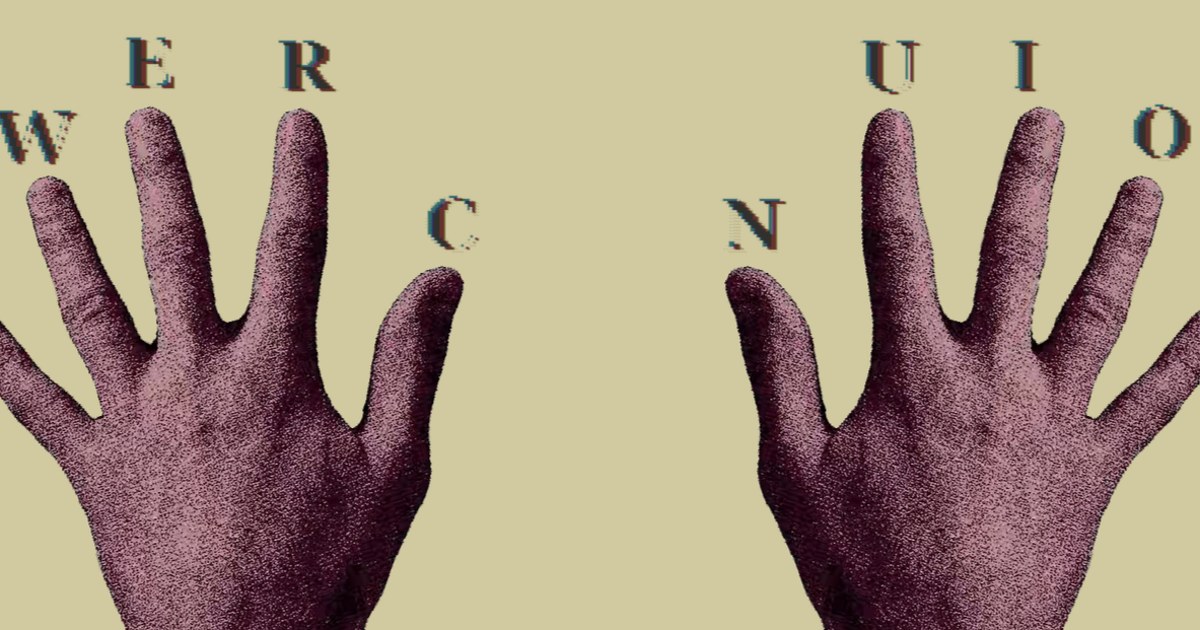
The jam’s submissions reveal a spectrum of approaches to the theme. The Other Line, from the five-person Sunfarer team, tasks players with controlling a block switching between two queues that only move when you aren’t standing in them, while other blocks squeal “yippee” as they reach the front. Faulty Mirror by New Zealand’s Chris Barrett has players operating a pair of hands with the keyboard, trying to match their reflection as a rising Shepard’s tone constricts the throat.
Still Life, described as a “stress toy/stim gadget/poem” from tabletop publisher Misery Tourism, is built on Conway’s Game of Life, letting players grow and sculpt faces by meddling with cellular automata patterns across two grids labelled life and death. Even Magnuson’s own earlier work, Portraits of My Child, an ongoing portrayal of his relationship with his son during the child’s first year, feels like a project that inspired the jam itself.
Looking ahead
The 90 submissions gathered over those two days now stand as a collection of poetic experiments—short, subjective works that probe how games and poetry might remain productively estranged even as they draw closer together. As Magnuson’s framework suggests, these entries occupy a ritual space where the question of “the other one” can be explored not through branching quests but through rhythmic, speculative play.
The jam has already seeded broader conversation about the direction indie games might take when they embrace lyric rather than purely commercial design. Whether developers respond to Magnuson’s open access book and this inaugural event remains to be seen, but the entries collected so far demonstrate that poetic intervention in videogames continues to produce work of potent irresolution.






















Join the conversation