

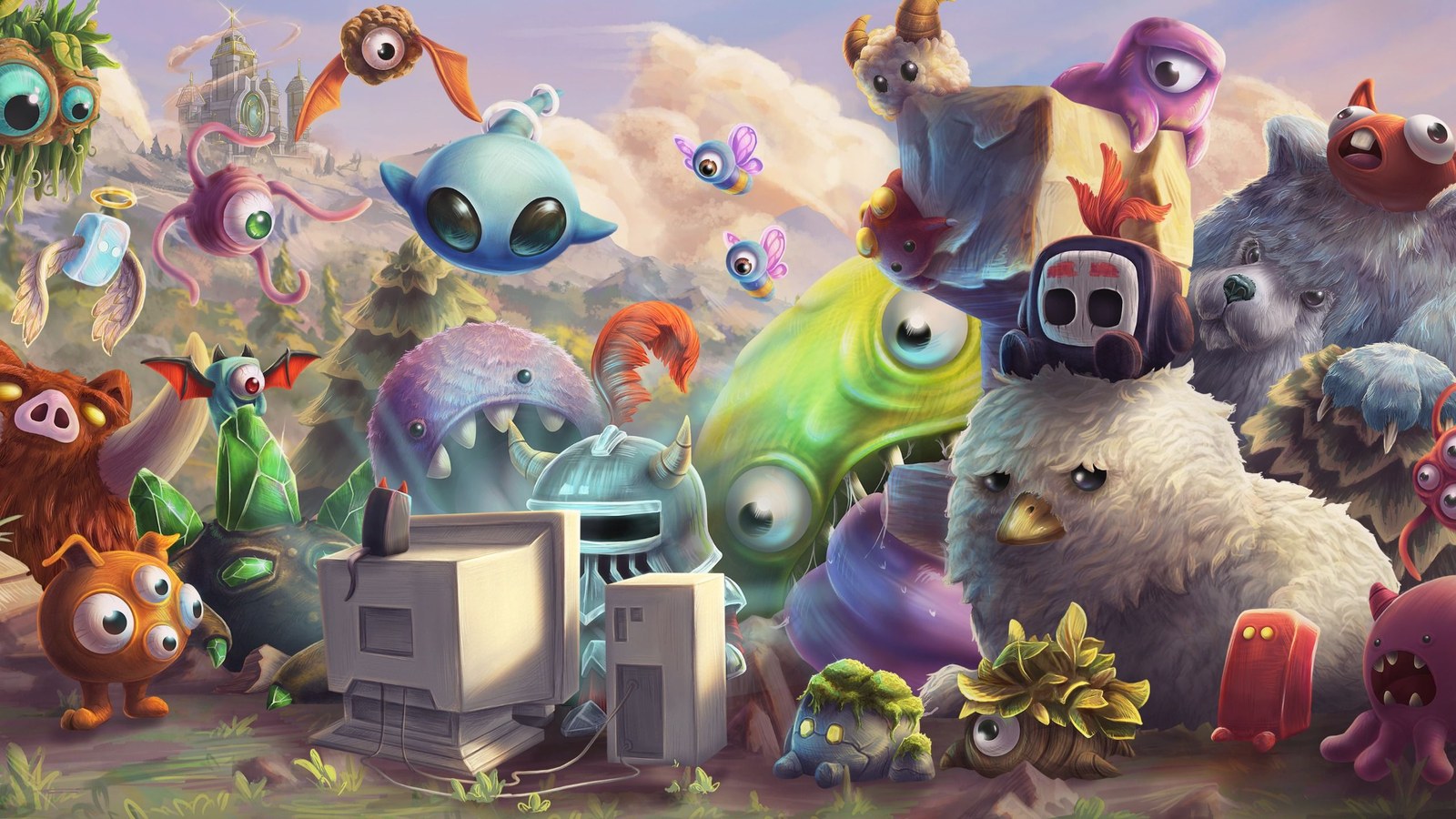
Springloaded, the studio behind Let’s Build a Zoo and its upcoming title, has revealed new details about Let’s Build a Dungeon, a game-development simulation so intricate that your in-game creation can be hacked and leaked by an in-game antagonist. The announcement arrived alongside a preview session and interview with Springfounder and lead developer James Barnard, who walked through the staggering depth of a sim where you dig dungeons, populate them with monsters, traps and loot, design quests, and watch simulated players—and even real players—experience what you build.
The premise taps into a fantasy many have entertained: what if you could make your own videogame? But according to Barnard, the studio’s ambition was never limited to just making a game. “It’s not just about making a game,” he said, “but all the stuff you have to deal with while making a game.” That means running a development studio—hiring devs, managing investors and finances, courting the public and press, surviving crunch, attending gaming conventions, fending off hackers, and even fielding text messages from your mother.
Hundreds of fictional games populate your competitive reality
One of the most striking revelations is the sheer scale of the simulated market. Springloaded has invented roughly 700 fictional, unplayable games to populate the world you operate in, simulating Steam’s backend and sites like SteamSpy where you can see your title ranked alongside the competition. “We have all these games,” Barnard said, noting that the studio’s concept artist spent enormous effort drawing them every one.
These titles feed a detailed simulation of commercial performance. “You can see sort of how your game is doing with the wishlists and things like that,” Barnard explained. The objective is to get into events, where attending delivers massive impressions. “We really use the impressions, click through rate, conversions, wishlists, and all of that stuff feeds into the chart.”
A full history of computing at your fingertips
The game you build runs on fictional hardware, and as it grows, so do its demands. Time passes in the sim, meaning PC hardware advances alongside rising spec requirements for your title. “When you go from CGA to VGA, you have to upgrade some of your computers,” Barnard said, adding that higher-resolution assets suddenly demand more hard drive space.
The studio went to extraordinary lengths to render this progression authentically. “We drew every single component of every computer, so there’s about 150 components that we drew from, and it goes through the history of computing.” The immersion extends to sound as well: the soundtrack shifts based on the audio card your simulated machine is using.

“We have, like, 700 fictional games or something, and the list keeps on getting longer. We drew every single component of every computer, so there’s about 150 components that we drew from, and it goes through the history of computing.”
James Barnard, Springloaded founder and Let’s Build a Dungeon lead developer
The cyberleek: hackers hold your game to ransom
Not everything threatening comes from the market. Among the most memorable systems is a hacking event that recalls Cyberleek, the notorious leak of an unreleased title. “This is some super nerd who’s basically hacked your computer,” Barnard described. The intruder has been tracking your investors’ flights worldwide, concluded you are building an MMO, reviewed both your and a competitor’s financials, and now holds you to ransom.
“He’s either going to leak the game, or he’s going to convince you to put him in the game,” Barnard said. “There’s lots of different outcomes.” The scenario underscores how deeply the sim models the peripheral chaos of modern development rather than merely its creative core.
The absurd minutiae of attending events
Booking travel for staff to showcases is described as a “ridiculous minigame” that even simulates layovers. Sending employees to an event removes them from your design board for days, disrupting production schedules. Prices curve upward as the departure date nears, though last-minute bargains sometimes appear when airlines and hotels have unsold seats.
“We calculate where you started your company and where the event is,” Barnard said. “We actually calculate the distance and how long it takes and we do the stopovers in the right cities.” Location therefore matters: landing a deal at EGX Rezzed while based in London means the event sits just down the road.
Mom’s pie recipes
If the threats above sound stressful, your mother offers gentle support. “Your mum calls you. Have you eaten?” she asks, nudging you toward different foods and sending desktop screenshots as rewards to cheer you up. She also sends a pie along with its recipe, which inspires your designers to invent their own pie formula—one that can then be added to the game for players to enjoy.
Looking ahead
If running a studio isn’t quite your taste, Let’s Build a Dungeon still lets you focus purely on designing games. A campaign mode, build mode and creative mode are available, alongside the option to play titles created by other players. The game is coming soon across platforms, and a demo is available now for those who want to sample its depth before launch.























2 comments