

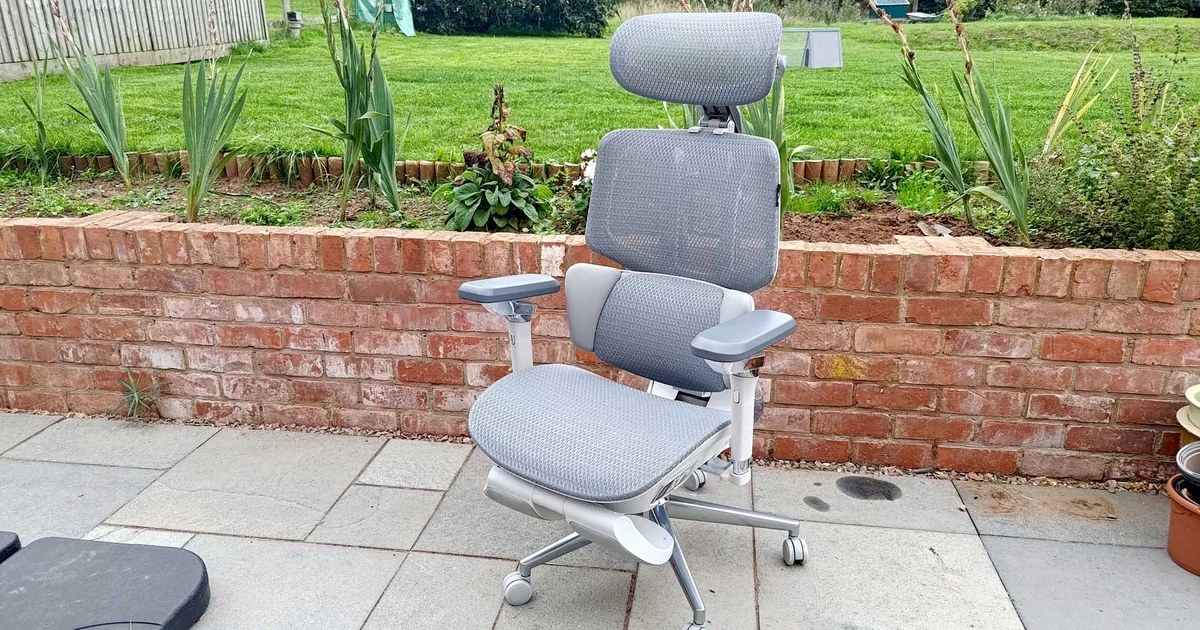
After spending a week with HBADA’s new X7 gaming chair, the verdict is clear: its machine-learning lumbar support genuinely improved my posture and eased recurring back pain. The chair uses magnetic pressure sensors to detect how much force you’re applying against the lumbar pad, then automatically retracts or extends it in real time—responding whether you are lounged back, leaning forward mid-fight, or shifting around your desk. It is a genuinely useful piece of hardware, even if calling it “artificial intelligence” stretches the term considerably.
The X7 arrives at a moment when AI has become both ubiquitous and increasingly associated with generative models that scrape media and consume vast amounts of energy—creators often dismiss these as harmful to games. But narrower, less demanding forms of machine learning can still play a quietly useful role, particularly on the hardware side. HBADA’s X7 is an unexpected place for such technology, which makes it worth examining closely.
A chair loaded with features
The X7 does not skimp on its spec sheet. It comes standard with 720-degree adjustable armrests, a built-in footrest, a 4D adjustable headrest, an “8D bionic” back massager, a cloud-ventilated seat cushion with cooling fans, and a graphene heating plus red light therapy system. At the time of writing it is on an Autumn sale for £1,169—a steep price that nonetheless feels justified given how historically expensive PC components tend to be.
The headline feature, however, is HBADA’s “Automotive grade” AI-based smart lumbar system. Given the sheer volume of buzzwords attached to the chair, scepticism was warranted: does anyone truly need artificial intelligence to manage their lumbar support? And if they did, what would it actually do?
How the “AI” actually works
The answer turns out to be high-tech for a chair but relatively simple by today’s AI standards. The automatic adjustment relies on magnetic sensors that measure the pressure you are placing against the lumbar pad at any given moment, then react accordingly—retracting or extending the support to match your movements. In theory this means consistent lower-back support no matter how you sit.
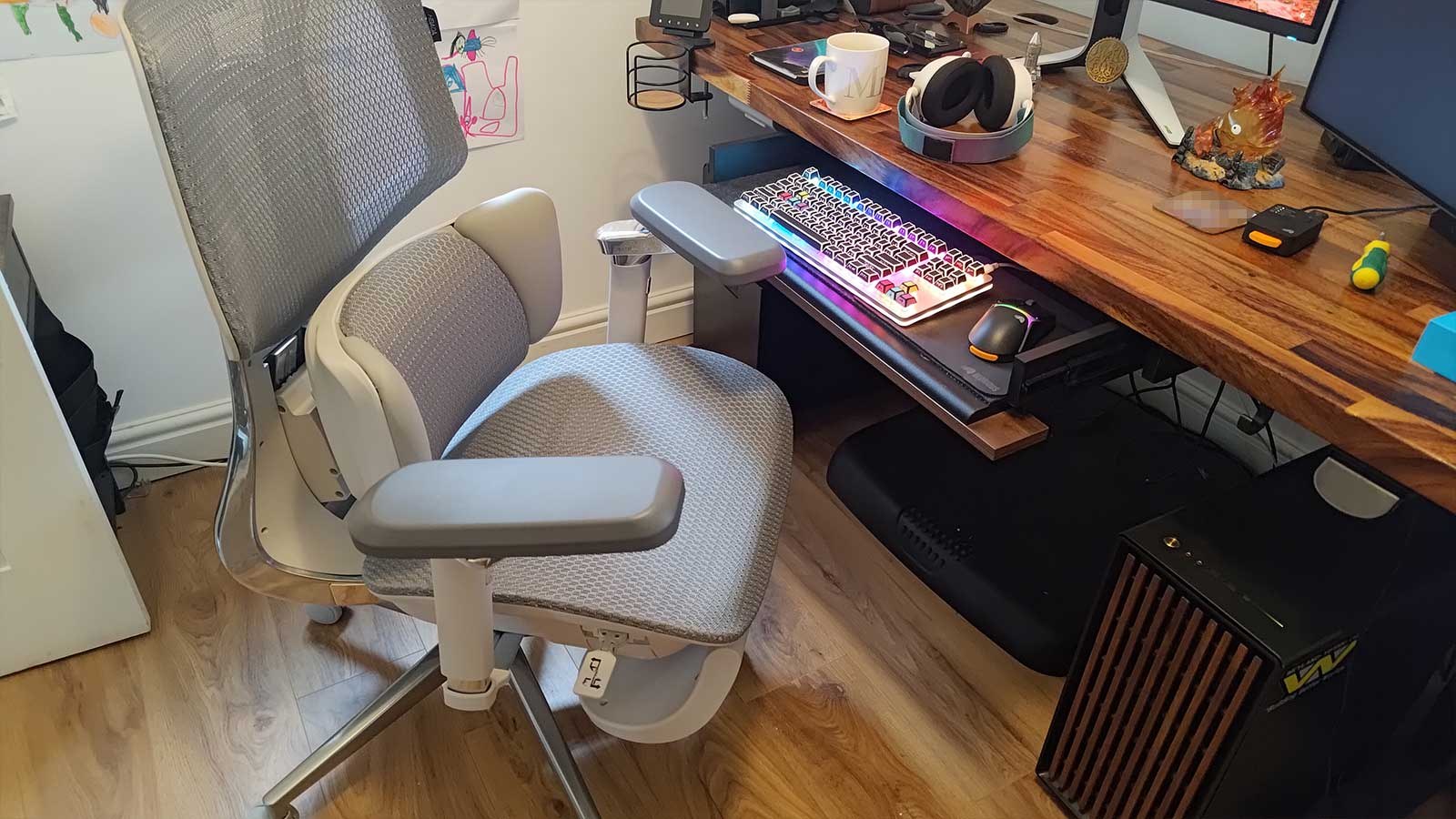
“It’s less some kind of large language model for your back, and more just a smart pressure sensor. Still useful, still effective—but if there is anything truly artificially intelligent about this chair, it likely falls outside the modern colloquialism. ChatGPT on wheels, this is not.”
Gamer24h Review
The catch emerged during my first session. As I unboxed the chair I laughed at the idea of an AI lumbar system and switched it on while my wife sat down; the support promptly pushed her forward, nearly shoving her off. No matter how low or high I set the sensitivity via the tethered remote, the pad would extend to its fullest. Flexing my abdominals drove it back like a shy dog, but relaxing sent it pushing forward again—the motors and sensors rumbling as they fought to locate me.

A lesson in user error
The problem was not the chair so much as my own habits. My previous office chair had only static lumbar support positioned too high for someone 5’5″ tall, leaving my spine misaligned. I repeated that mistake with the X7 until I finally lowered the pad to suit my stature—and suddenly understood the point of all the technology.
Unlike most gaming chairs whose manual lumbar supports remain static once placed, taking a one-size-fits-all approach, the X7 is proactive. Sitting normally, it presses into my lower back and holds its position; leaning forward moves with me, and pushing deeper relaxes it—maintaining consistent support on just the right spots.
There is one caveat: at stiffer settings it can also prop you up in poor posture, which over time could harm your back. But sitting properly—with shoulders rolled back and forearms resting at 90 degrees—it proved remarkably comfortable and supportive, revealing how poorly my lower back had actually been supported all along.
The rest of the experience
Beyond the lumbar system, several other features shine. The massager rotates and kneads rather than merely vibrating, working in tandem with the heating element that both engage automatically after a while—handy when you forget to pay attention to your back during long sessions. The seat-mounted fans are somewhat loud at higher settings, though they could prove invaluable in a hot office packed with high-wattage gear.
Not everything lands perfectly: the side wings interfere with tucked-in elbows, the lean-back auto-tensioning feels too loose when unlocked, and the headrest comes across as clunky and imprecise compared to the rest of the chair. But since the lumbar support genuinely improves wellbeing, these shortcomings feel forgivable.
Looking Ahead
The HBADA X7 is available now at its current Autumn sale price of £1,169. While it is not a foolproof system and cannot undo years of bad sitting habits on its own, it stands out as the most effective and reactive lumbar support this reviewer has used—worth saving up for if you value your posture above all else.























1 comment