

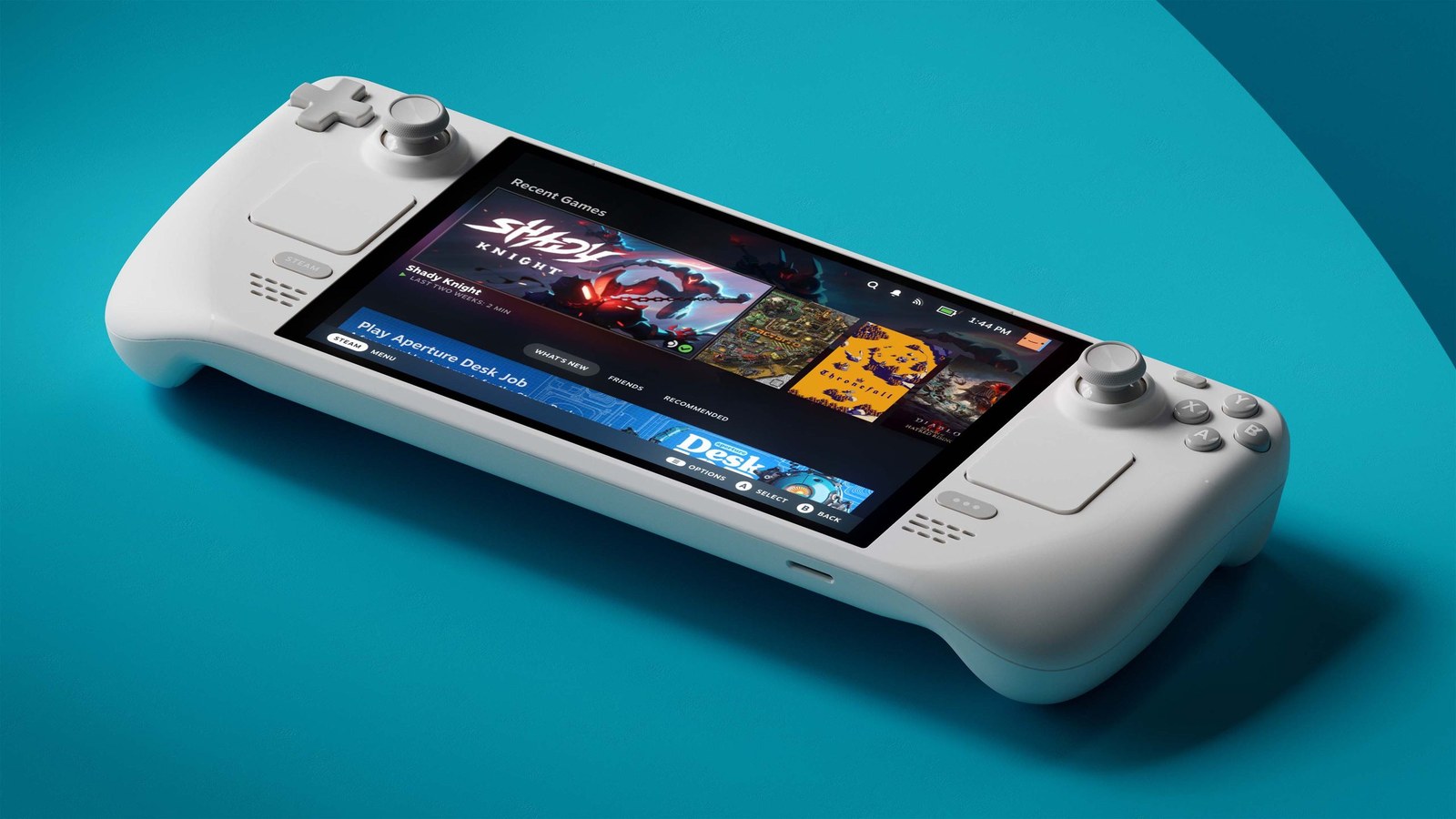
A new wave of rumors suggests that AMD’s next-generation “Gainsborough” APU may be the silicon destined to power Valve’s long-awaited Steam Deck 2 handheld. Reported by the YouTube channel Moore’s Law is Dead, the leak points to a chip built on TSMC’s cutting-edge N3P process node and built around AMD’s upcoming Zen 6 CPU and RDNA 5 GPU architectures. The timing arrives after more than four years since the original Steam Deck launched, a period during which Valve has offered little concrete indication that a true second-generation handheld was imminent.
The codename itself appears to follow Valve’s established tradition of naming its handheld processors after characters from Final Fantasy VII. The original Steam Deck APU was internally known as “Aerith,” and Gainsborough refers to Aerith Gainsborough, the beloved character from the classic role-playing game. This naming continuity lends a degree of credibility to the rumor, even as the technical details remain thin.
A More Efficient Chip for a Handheld
While comprehensive specifications have not been confirmed, one crucial detail has emerged: the Gainsborough APU is reportedly built on TSMC’s N3P node. This represents TSMC’s most advanced and efficient variant within its N3 family of chip production processes. For a battery-dependent handheld device, such efficiency matters enormously, as it could translate into longer play sessions and better thermal management under load.
The choice of N3P raises an interesting question given Valve’s stated ambitions for the next-generation device. Late last year, Valve explained that it wanted the Steam Deck 2 to represent a major leap forward rather than a modest incremental improvement. The company made its intentions clear in an official statement.
“We’re not interested in getting to a point where it’s 20 or 30 or even 50% more performance at the same battery life. We want something a little bit more demarcated than that.”
Valve
Some observers have wondered whether N3 technology is advanced enough to satisfy those ambitions, particularly since Apple recently unveiled its A20 Pro and M6 chips on TSMC’s newer N2 silicon. However, it is worth noting that the original Aerith chip in the first Steam Deck was built on TSMC’s 7nm process, placing it two full node generations behind N3. That gap suggests the performance jump could be substantial.
Next-Gen Architectures and Console Parity
Beyond the process node, the report indicates that Gainsborough will adopt AMD’s Zen 6 CPU and RDNA 5 GPU architectures. These are AMD’s next-generation designs, expected to power not only AMD’s own upcoming PC hardware but also the forthcoming consoles from Microsoft and Sony. This positioning hints that the Steam Deck 2 could share technological DNA with the next generation of home consoles.

One useful reference point is the AMD “Canis” APU, reportedly the chip behind Sony’s rumored PS6 handheld. That processor is said to feature four Zen 6c CPU cores, two low-power Zen 6 cores, 16 RDNA 5 GPU compute units, and a 192-bit memory bus. The Steam Deck 2 could plausibly adopt a similar specification, which would represent a dramatic increase over the original device.
The original Aerith APU, along with the slightly revised Sephiroth variant, shipped with eight RDNA 2-spec compute units. Given that RDNA 5 is expected to deliver significantly more performant compute units, combined with a potential doubling of the CU count and higher clock speeds, the resulting mobile GPU appears well positioned to deliver the step change in performance that Valve has demanded.
Looking Ahead
As for when these rumors might materialize into a purchasable device, Moore’s Law is Dead suggests that the Gainsborough chip itself should be ready in late next year or early 2028. Valve, however, does not appear to be in a hurry to release the handheld, particularly amid the ongoing AI-driven memory price surge and broader market volatility.
In many ways, a later launch could benefit Valve, giving the computer chip and memory markets time to recover from the AI-fueled price inflation. A release in late 2028 now looks like a reasonable expectation, assuming memory prices normalize by then. Enthusiasts will be watching closely to see whether these rumors hold up and whether Valve finally pulls the trigger on the long-awaited successor to the original Steam Deck.























Join the conversation