

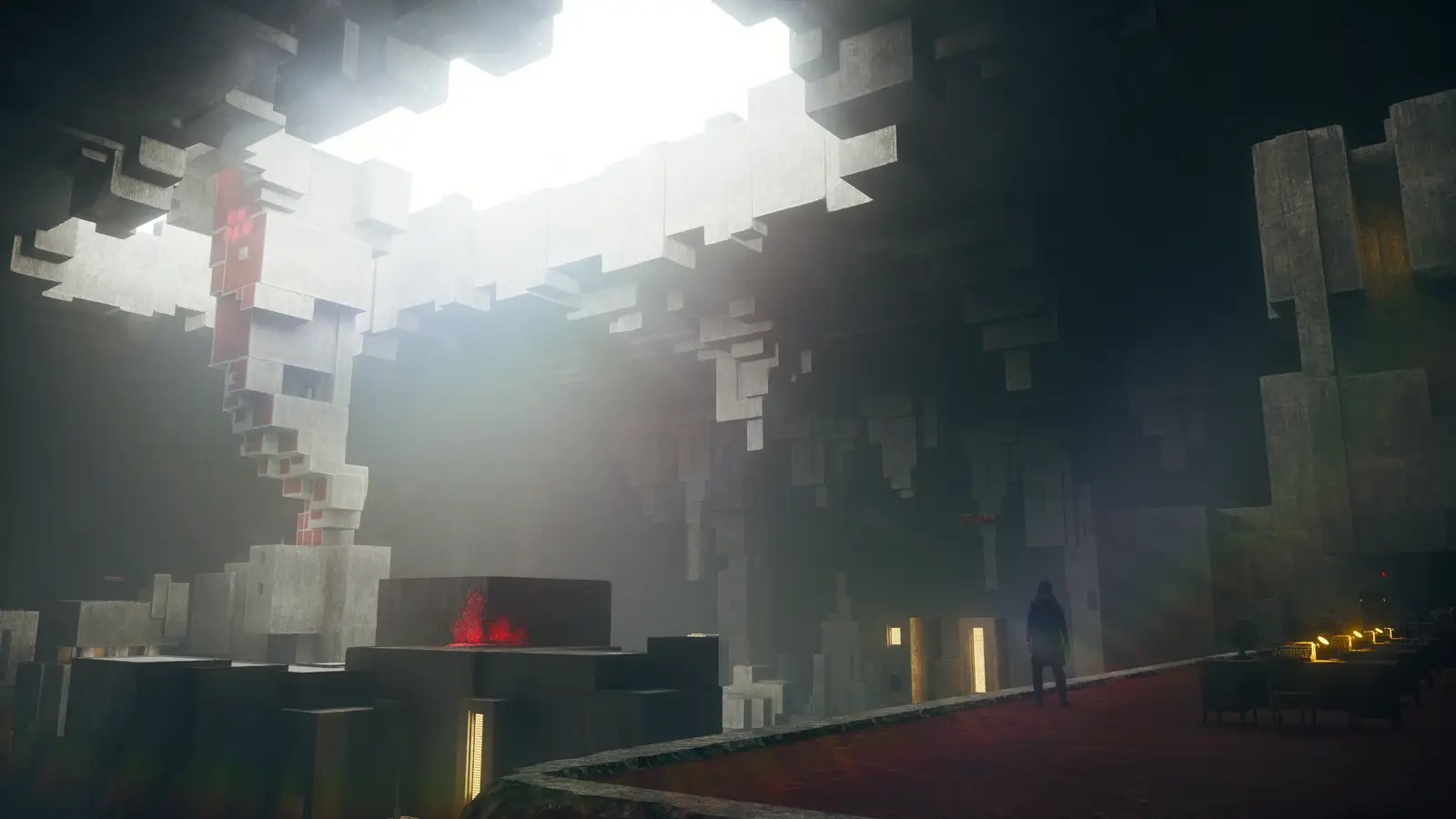
After 15 hours of navigating the surreal, mold-choked streets of a fractured Manhattan, Control Resonant quietly delivers its most accomplished stretch of gameplay in a deconstructed underground realm known as The Underpass, a section that shifts the game from a visually dense open-world action title into something closer to a refined 3D platformer. The revelation, according to early impressions from the game’s playthrough, marks a creative turning point for Remedy Entertainment’s supernatural sequel and one of the most memorable segments in the entire Control franchise.
Resonant, the long-awaited follow-up to Remedy’s acclaimed supernatural thriller Control, has spent its opening hours rewarding players with a series of striking set pieces. From the cotton candy-like mold blanketing Manhattan’s twisted streets to an astonishing boss fight against a floating head, the game offers plenty of moments designed to captate. Yet the most praised portion of the experience strips away nearly all of that visual spectacle, trading the by-the-book open-world exploration of the early game for a stripped-down, puzzle-heavy environment that emphasizes traversal over combat.
A Deconstructed City Beneath the Streets
After spending a dozen or more hours exploring Manhattan, Resonant plunges protagonist Dylan Faden far below the subway stations and sinkholes into a strange location dubbed The Underpass. The first glimpse of the area stands in stark contrast to everything that precedes it. Players have grown accustomed to a world lined with buildings, billboards, and dense packs of enemies roaming the streets, with abundant detail stretching to the horizon. In The Underpass, virtually all of that disappears.
Instead, players are left staring into a surreal, black abyss. The area is little more than a series of disconnected stone platforms and exposed pipes floating in dead space, surrounded by a deep blackness on all sides that removes the sense of time and place established throughout Manhattan. It feels like an area that should not exist, a mistaken draft of Manhattan crumpled up and discarded. Remedy has played with liminal spaces throughout Resonant, but The Underpass is where the team appears to find its stride amid some of the game’s loudest visual twists.
The Underpass marks what I see as a real turning point in Resonant, and perhaps in the entire Control series going forward. It’s where the by-the-book, open-world exploration of the early game takes a backseat to something much more creatively stimulating.
Control Resonant playthrough review
Story and Movement Converge
The area’s memorability extends beyond its unnerving aesthetic. It serves as the setting for some of Resonant’s most compelling story moments, with Dylan stumbling onto a floating platform containing an FBC testing site that feels tethered to humanity within the alien maze. This discovery kicks off the area’s primary missions, in which Dylan learns more about the out-of-control experiments the FBC has been running beneath the city. While players previously witnessed the results of that carelessness in The Oldest House, The Underpass makes clear that the bureau’s scientists are irreparably damaging the very fabric of reality.

Combat takes a backseat to traversal throughout the section, as Dylan must carefully chain together his powers to jump between islands. The movement in Resonant emerges as a genuine highlight, with air dashes, grapples, and hovers allowing Dylan to cover vast distances in ways that feel almost exploitable. The Underpass is purpose-built to showcase this system, letting players fall into a Super Mario Odyssey-like flow state within a surreal jungle gym.
This revelation raises an intriguing question about the studio’s capabilities: Who knew that Remedy could craft such an effective 3D platformer? The studio has long been celebrated for narrative-driven action titles, yet this segment suggests a talent for platforming design that had previously gone largely unnoticed.
Looking Ahead
The city, already looking fragile throughout the early game, finally begins to come apart at its seams from this point onward. Players uncover a level of unreality that seeps out of The Underpass, a development crucial for selling some of the best surprises in Resonant’s final stretch. This includes one jaw-dropping sequence that will convince players that anything is now possible in the compromised Control universe.
Wherever Remedy Entertainment decides to take the franchise from here, the creative direction signaled by The Underpass suggests a bold new chapter. The studio has proven it can balance its signature atmospheric storytelling with inventive gameplay systems, and the reception to this hidden gem may well shape the future of Control titles. For now, players are left eager to see how the studio builds upon the momentum established beneath the streets of Manhattan.























1 comment