

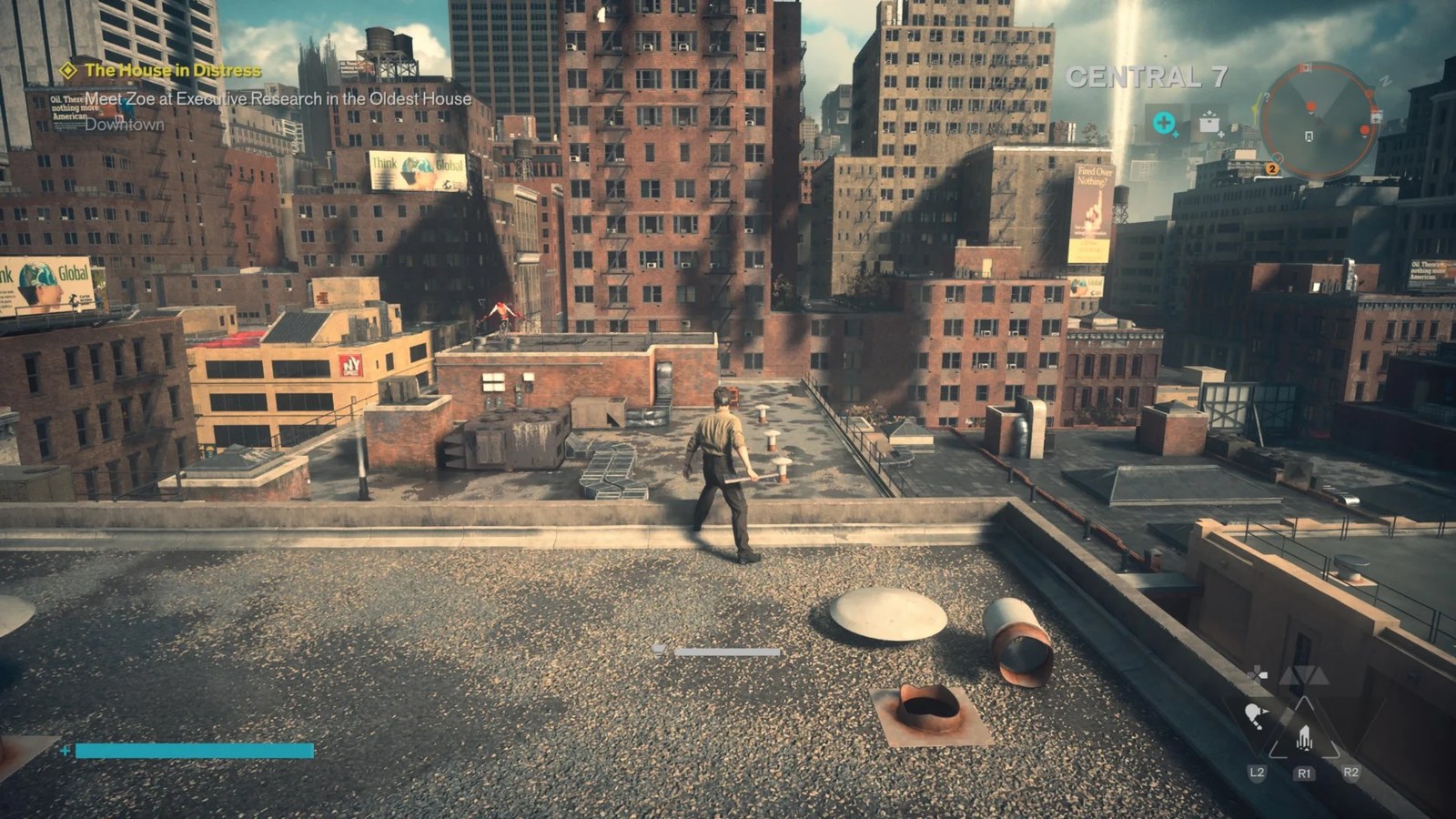
Remedy Entertainment’s long-awaited sequel Control Resonant, which picks up the story of the 2019 action-RPG seven years after its predecessor, has drawn sharp criticism from reviewers for anchoring its sprawling open-world chapters in a bland, cookie-cutter version of Manhattan that reviewers say fails to capture the eerie brilliance of the original game’s setting, The Oldest House.
While the game’s second half reportedly delivers moments as strange and memorable as anything in the original Control, critics argue that reaching that point requires slogging through what many consider the weakest stretch of the title—a sprawling urban landscape that simply cannot compete with the brutalist office complex that made the first game an instant classic.
A Setting That Defined a Game
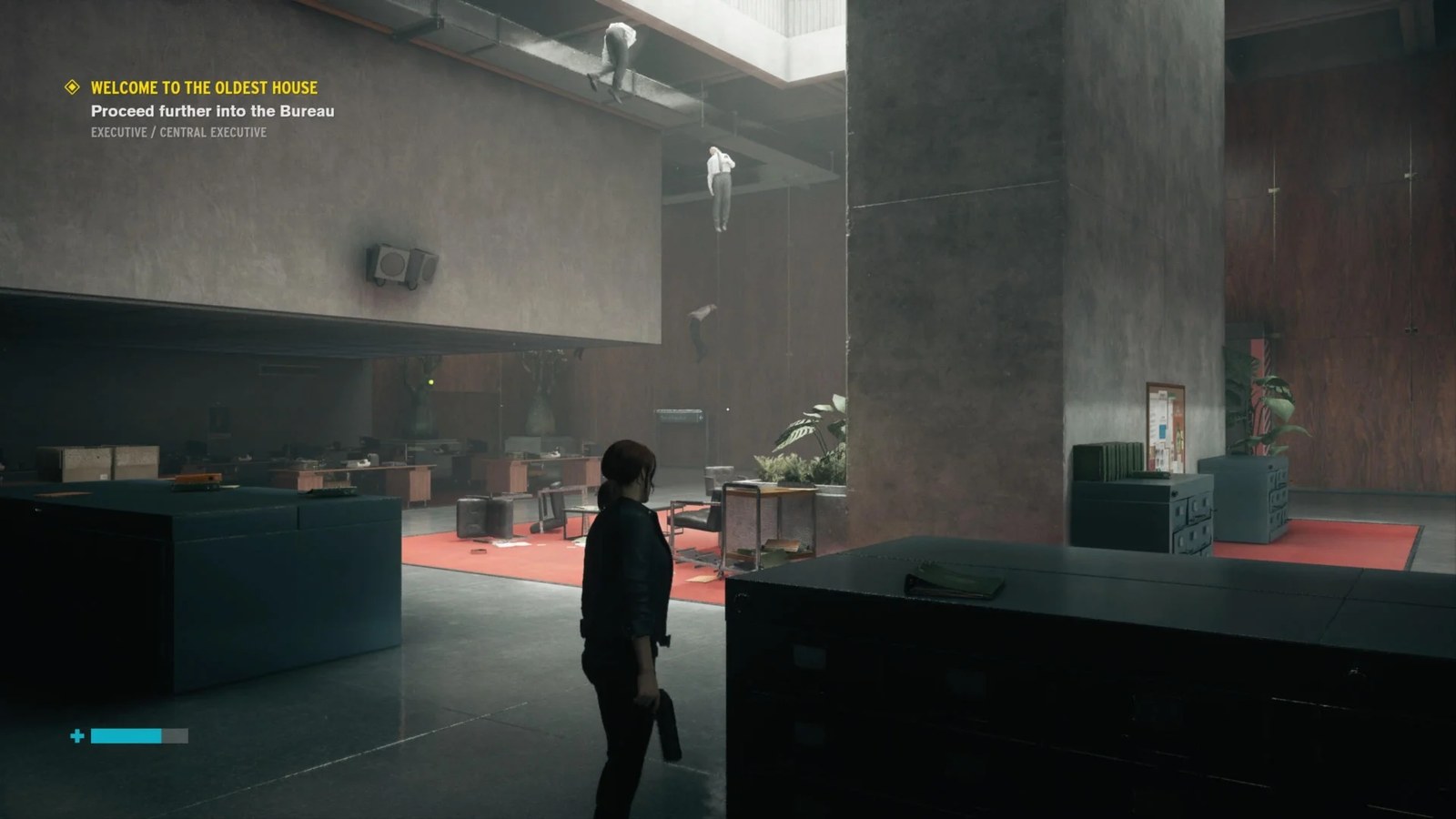
The Oldest House, the office building where the original Control is set, serves as the headquarters of the Federal Bureau of Control, a secret department devoted to investigating unexplainable phenomena. The building is a textbook example of brutalist architecture, the style of concrete structures erected across America throughout the 1960s and 1970s, reminiscent of Boston City Hall, the FBI headquarters in Washington D.C., and much of downtown Atlanta.
Within the game, The Oldest House becomes the primary vector for the surreal weirdness that defines Control. It evokes the feeling of every mundane office job imaginable, except with all the laws of physics suddenly abolished. This sense of the uncanny familiar is widely credited as the single biggest reason the 2019 game felt like an instant classic.
The setting also shares striking similarities with the viral Backrooms creepypasta, which exploded into mainstream consciousness earlier this year. The concept originated on a 4chan thread roughly three months before Control’s release, with the YouTube videos that creator Kane Parsons turned into a box-office hit arriving later, in 2022. Both Control and the Backrooms are prime examples of the liminal space aesthetic, a term that has become overused but accurately describes the atmosphere of both works.
The Slow Unspooling of Weirdness
What makes the Backrooms so unsettling is precisely how dreadfully mundane it appears at first. Its rigorous lack of weirdness is what makes any element that is even marginally off seem powerfully strange, before that strangeness grows increasingly prominent. The same technique operates within Control, where The Oldest House begins as a drab, stifling, overly familiar office building—a home for dead-end jobs and careers that leave no mark, defined by concrete, muted colors, functional office furniture, and a distinct absence of life.
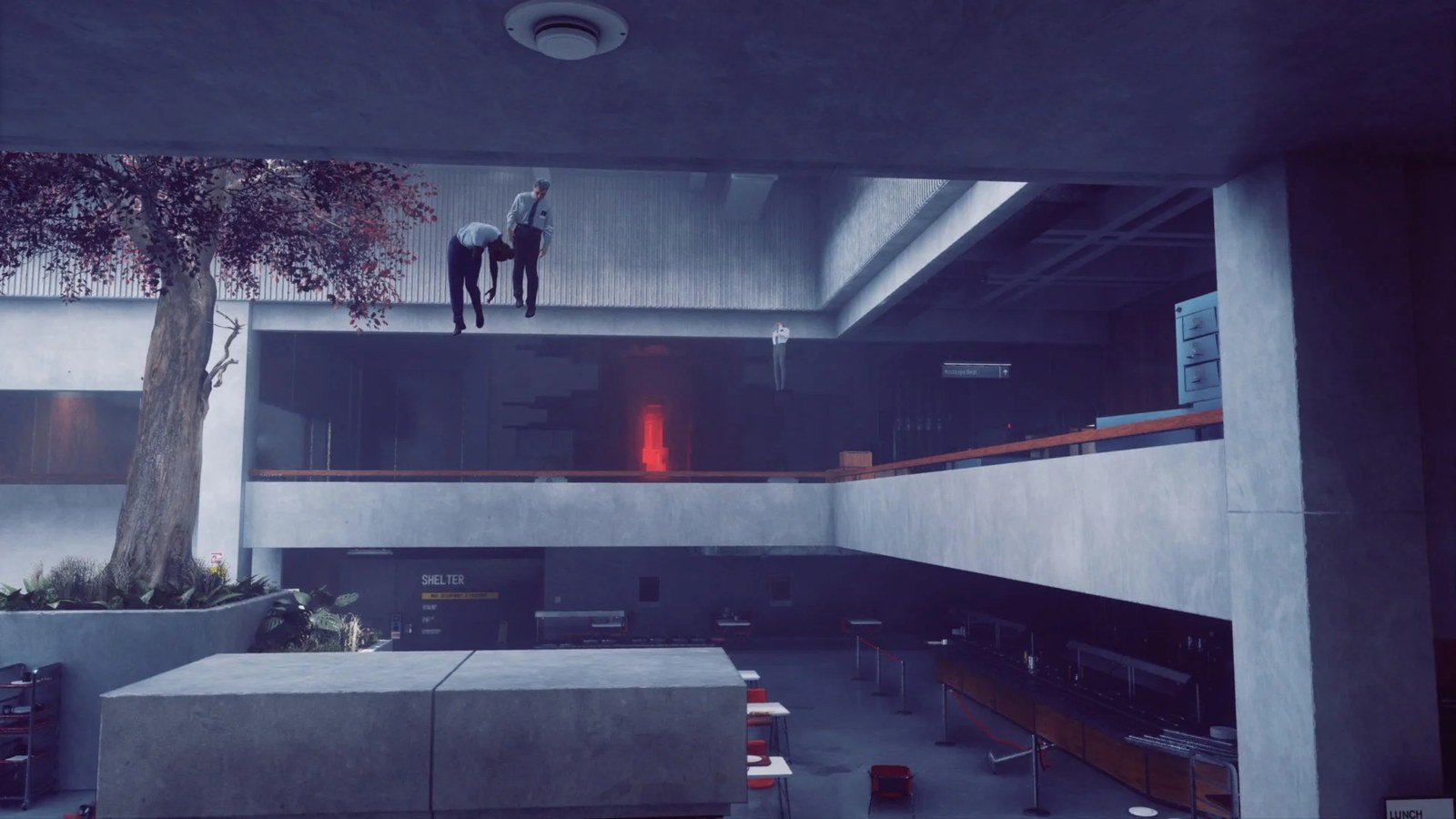
As players venture deeper, the weirdness begins to trickle in. Players will enter a large hall to find tie-wearing office workers suspended in midair, their bodies slumped yet twenty feet off the ground. A deep, vivid red often casts contorted spaces in a crimson shadow, while walls begin to twist in impossible ways and rooms seem to fold in on themselves. Eventually, players confront architecture that is impossible and yet somehow mundane, with the contrast between the everyday environment and the escalating unexpected mirroring both the game’s increasing difficulty and the way weirdness seeps into its very structure.
Manhattan Falls Short
Control Resonant picks up the narrative from Control, maintaining the same seven-year gap that separates the two games in the real world. It begins in the still-familiar Oldest House, in the same rooms where Control originally started, but quickly ventures outside—not to the astral plane where the otherworldly Board from the first game resides, but to a version of Manhattan that should feel roughly as familiar as the office corridors of The Oldest House.
The problem, according to reviewers, is that this slice of New York feels less like a real city and more like the generic, anonymous open-world cities that video games have been producing for over two decades. The same signs repeat too often, a handful of stores recur every other block, and almost none of the buildings possess an architectural style distinct from one another. Nothing is even recognizable as New York City, instead exuding the bland, unsettling vagueness of a movie or television show that could not afford to film in Manhattan and settled for another city as a stand-in.
Reviewers describe standing atop cookie-cutter buildings to survey cities sprinkled with objectives, only to find them empty and lifeless. While some of this may be intentional—a commentary on quiet city streets during the pandemic, or an attempt to expand on Control’s signature strangeness on a larger palette—it reportedly drains Resonant of both the charm and power of its predecessor.
Remedy’s games usually have a strong, quickly established identity. In a medium that rarely seems inspired by anything other than whatever best-selling game it’s ripping off, there’s nothing wrong with being a little too blatantly in love with Twin Peaks. Control Resonant doesn’t have that, not at first.
Reviewer assessment of Remedy Entertainment’s track record
No matter one’s opinion on the quality of Remedy’s games, the studio is not typically known for producing interchangeable or uninspired titles. Resonant, however, reportedly takes far too much time and labor to reach its best moments, labor that feels like the busywork of a rote open-world game. Its heights may be as special as Control’s, but the patience and persistence required to reach them makes the experience a difficult bargain for many players.
Looking Ahead
In response to initial reactions, Remedy Entertainment released a day-one patch for Control Resonant that makes enemies easier to kill and reduces the health of certain bosses, addressing complaints that enemies possessed too much health. The studio has also highlighted the game’s nuanced accessibility tweaks, which allow players to experience the game as intended before granularly adjusting settings when necessary.
As the game continues to draw attention, the comparison to the original Control’s unforgettable setting remains a central point of discussion among critics and players alike, with many wondering whether Remedy can recapture the magic of The Oldest House in future installments.



Join the conversation