

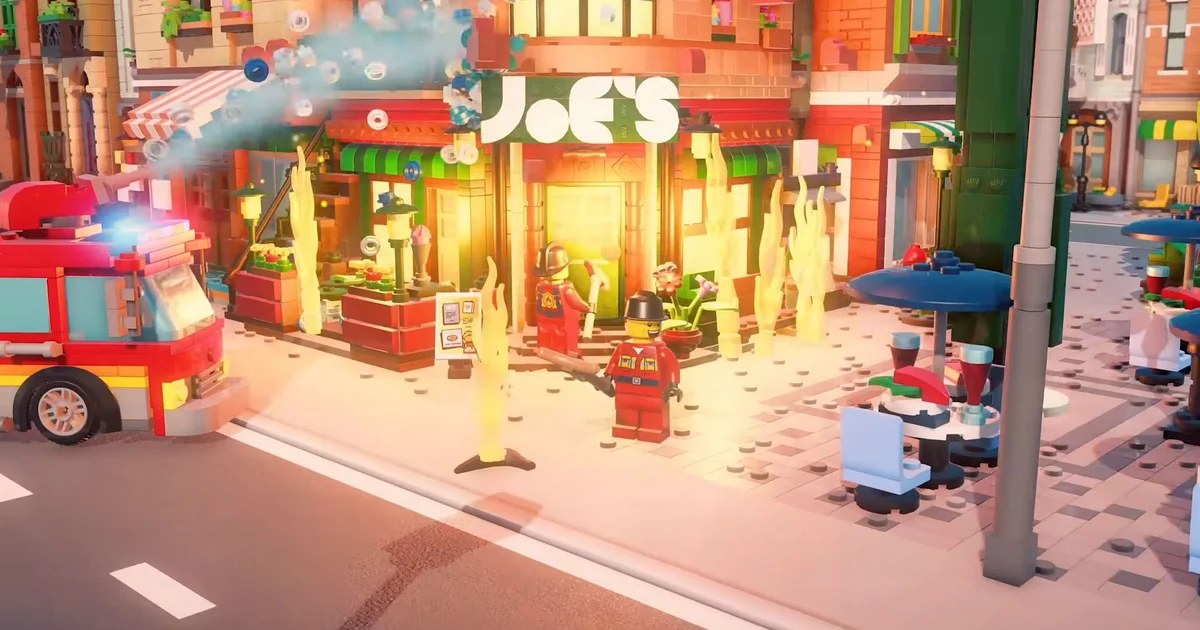
LEGO Skylines, the new plastic city-builder from Iceflake Studios and published by Paradox Interactive, will not offer true brick-by-brick construction, the developers confirmed during a Gamescom demo this year. Iceflake, the studio behind Cities: Skylines 2 and Surviving the Aftermath, deliberately chose a template-based customization system instead, a decision the team describes as a deliberate compromise designed to keep the experience accessible while players manage a functioning city.
The studio has been showcasing the game at Gamescom, where producer Joanna Ronkanen and game director Lasse Liljedahl spoke about the design philosophy shaping LEGO Skylines. The game casts players as master planners tasked with linking residences, businesses, and utilities together by roads, with citizen happiness tracking the prosperity of their growing metropolis. But the way players actually place structures marks a notable departure from the granular building found in the studio’s earlier simulation titles.
A Deliberate Design Choice
According to Ronkanen, the idea of letting players assemble buildings one brick at a time did surface during development, but the team concluded it would place too heavy a burden on players who also need to keep a city running. She illustrated the point during the demo by waving a LEGO model of a park bench taken from the exhibition booth.
“We did discuss brick by brick building and things like that, but we realised that it is quite a lot of work for even just players to place brick by brick. Even just this little thing has like probably 50 bricks. We wanted to make sure that we’re on the correct level of customisation.”
Joanna Ronkanen, producer, Iceflake Studios
Ronkanen characterized the template-based approach as the right balance for the game. “It’s a quite beautiful compromise, in my opinion. You get to do a lot of stuff, you get to customise a lot.” Rather than stacking individual elements, players place pre-built structures and then personalize them at length with additions such as hot tubs, flowerbeds, and letterboxes.
More Depth Expected Later
Game director Lasse Liljedahl offered reassurance that the game’s approach to bricks grows more elaborate as players progress, hinting that additional features remain under wraps. “There’s more things we will show a little bit later, and talk about other features that we’re not yet ready to talk about,” he said. “This is a Paradox game and this is a LEGO game, so the customisability is one of the core pillars in this game. What you can do yourself with LEGO bricks in the game is something that will come a little bit later.”
The developers also floated the prospect of official modding support, which could unlock even deeper building possibilities, though they stopped short of committing to anything concrete. Ronkanen added that the team is “not really talking about any modding solutions at this point yet,” leaving the door open for community-driven tools in the future.
For many lifelong LEGO enthusiasts, the current building model may feel like a half-measure. The game gives players prefabricated templates to customize rather than the freedom to construct structures piece by piece, a choice that some players view as a glorified compromise compared to the unbounded creativity of physical plastic bricks.
Looking Ahead
LEGO Skylines represents Iceflake’s foray into the brick-licensed genre, building on the studio’s established expertise in urban simulation. The developers have signaled that the full scope of customization will unfold over time, with further features and possibly modding support on the horizon as the game moves toward release.
As the community continues to react to the preview build, the tension between authentic LEGO building and streamlined city management remains a defining question for the title. Whether Iceflake’s “beautiful compromise” satisfies both simulation veterans and brick purists will become clearer as more details emerge in the months ahead.



1 comment