

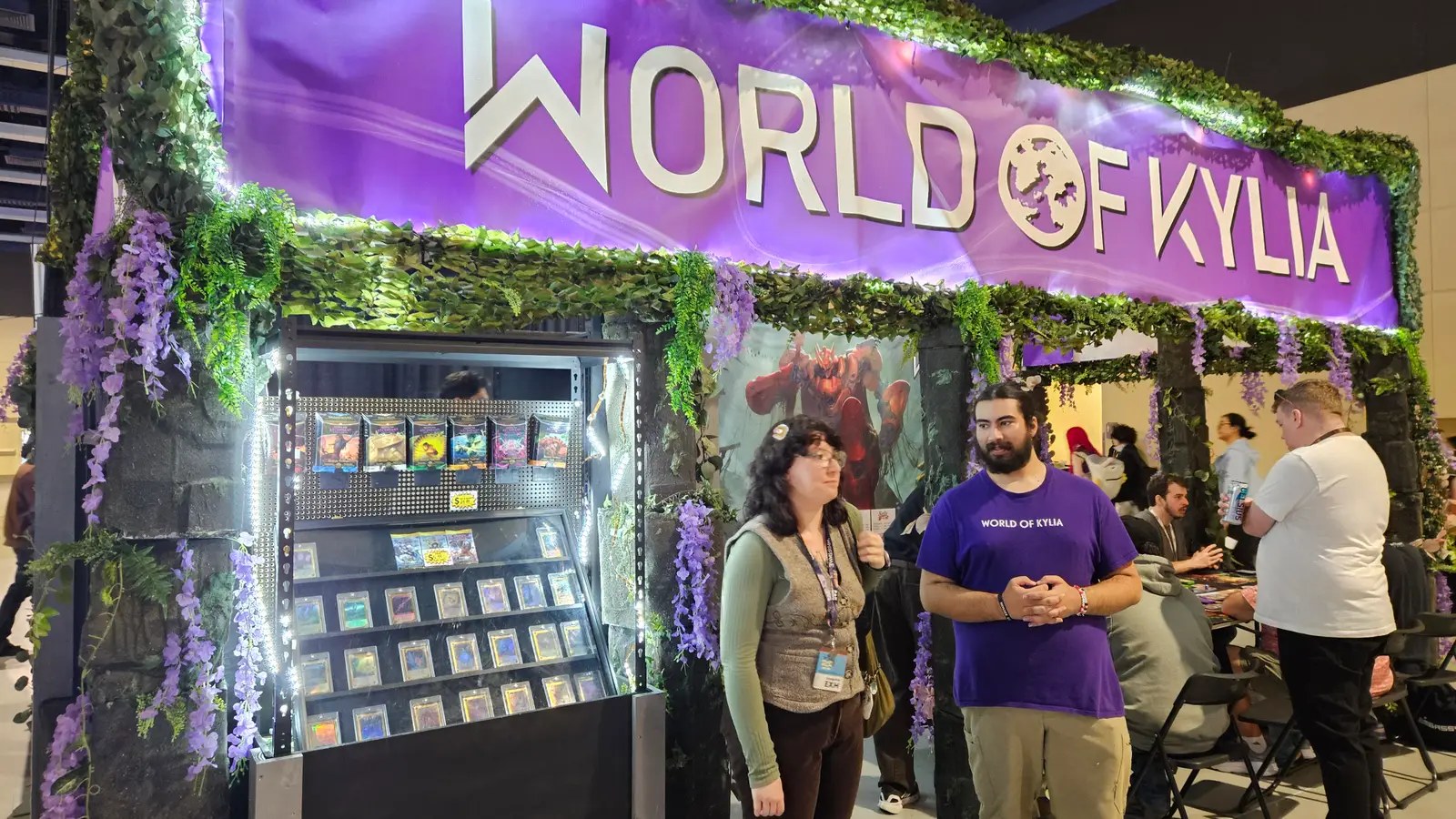
While the tabletop floor of PAX West 2026 in Seattle was dominated by established collectible card giants, a second-anniversary showcase from a local Washington studio quietly signaled a shift in the competitive TCG landscape. iQ Pictures unveiled its card game Ascendant, set in the distant galaxy of the World of Kylia, where players resolve combat using 20-sided dice rather than the traditional card-only combat systems that have long defined the genre. The reveal, staged at the Arch building’s expo hall, offered a fresh hybrid of deckbuilding strategy and tabletop dice mechanics, positioning the title as a genuine challenger to Magic: The Gathering’s dominance at the convention.
The game’s creator, Chase Lambert-Crittenden, first began developing Kylia as a side project while pursuing an animation degree in California. Originally intended as the setting for a series of cartoons or a feature-length film, the card game took priority and was funded through iQ Pictures’ animation work. The result is a fast-paced, accessible system that blends familiar deckbuilder conventions with a resource economy and dice-based combat that reward both planning and luck.
A Resource Economy Built for Speed
Ascendant can be played 1v1, 2v2, or as a battle royale, and the developer has deliberately kept the learning curve low for newcomers. The cost printed on each card represents the number of copies required to bring it into play, functioning in the spirit of auto-battlers rather than the single-copy system players may expect from other games. Hands carry no upper limit, and every player draws a card at the start of each turn, ensuring that even decks without rapid card draw cycle through their arsenal quickly.
Some cards additionally require players to generate an auxiliary resource called Genki through Generators, which can be tapped each turn to fuel special abilities. However, the design also permits entirely Genki-free decks, a choice the author demonstrated at the event with a steampunk, equipment-focused build centered on dual-wielded energy revolvers. In a world populated by wizards, summoned monsters, and alien warlords, the author was effectively playing as “Cowboy Batman.”
It’s easy to pick up, it moves quickly, and the randomness of the dice rolls means that there’s always room for a newer player to do well at it.
Chase Lambert-Crittenden, Creator of Ascendant
Dice Roll Combat and the Late-Game Complexity
The defining innovation of Ascendant lies in its combat resolution. When one player attacks another, both sides roll a 20-sided die, and the higher roll wins. The successful attacker deals damage equal to the numerical difference between the two rolls, with all players beginning at 70 life. The tension emerges from the numerous ways a player can modify their roll: every card on the field offers its own potential bonus or penalty, so a single attack can be shaped by tapping one card, burning another, and layering in passive abilities before committing to the dice.
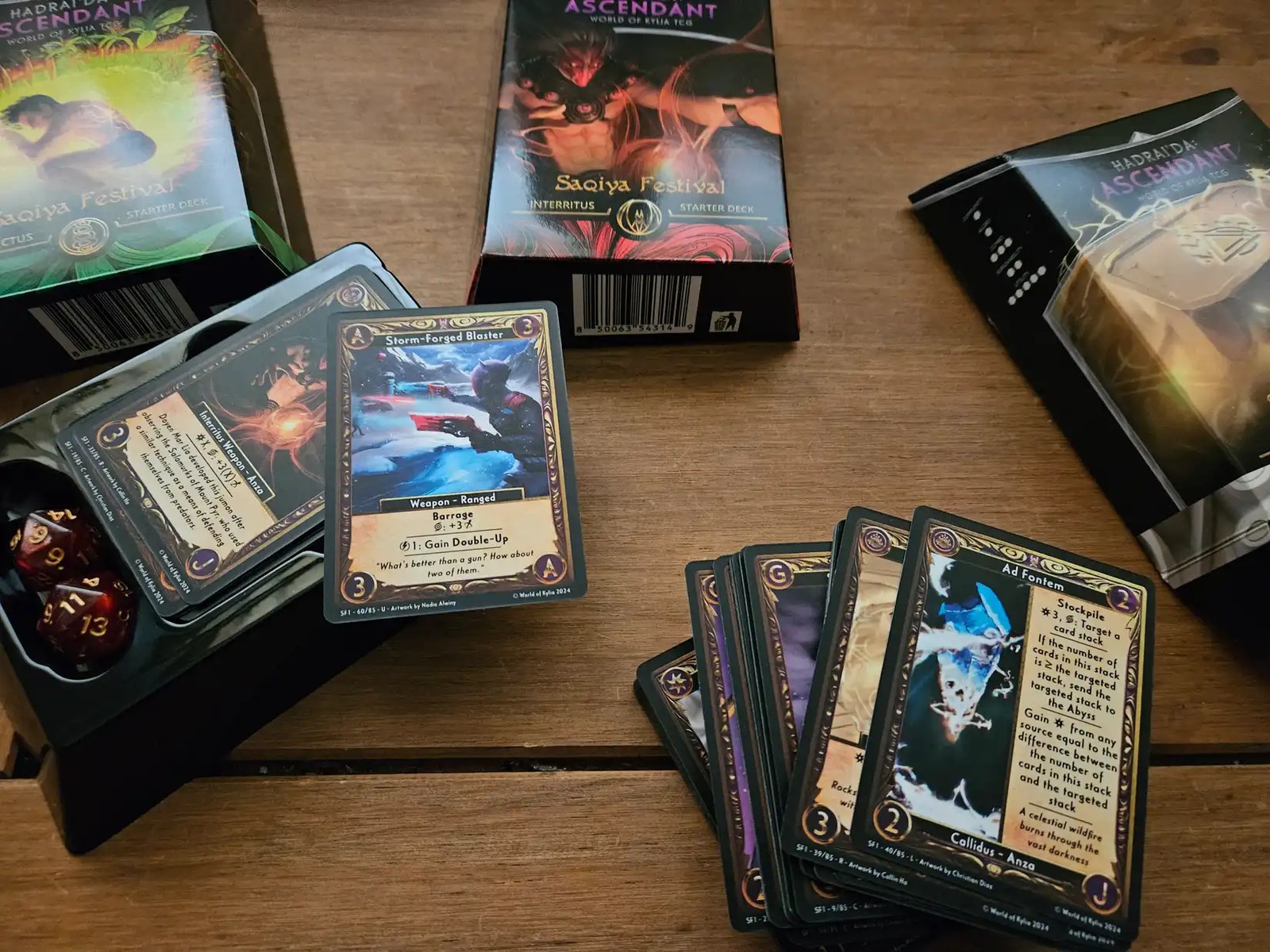
While early-game life totals feel nearly impenetrable, endgame creatures can deliver 20 or more points of damage in a single turn, making the late game a crucible of strategy. The author noted that the system’s depth comes at a cost: mechanics such as Speed remain under-explained, and players may spend their first few games consulting the manual. A QR code on the back of each box links to a handy PDF to ease that onboarding.
Notably, the author’s first game against Lambert-Crittenden was won through a combination of consistently higher dice rolls and a timely use of Pocket Sand, underscoring how the randomness of the system can favor the lucky as well as the skilled.
Looking Ahead
At its current stage of development, Ascendant leans heavily into the lore of the World of Kylia over a tightly written narrative, with the broader animated project still in the works. For players seeking a new entry into the competitive TCG space, the title offers a fast, forgiving, and mechanically distinct alternative to the established titans on display at PAX West. With multiple contenders now visibly competing for the genre’s crown, Ascendant’s dice-driven approach represents a promising direction for the future of tabletop card games.



1 comment