A Gamescom demo of Total War: Warhammer 40,000 has left reviewers grappling with the same question that has defined the series for two decades: how do you win a battle when thousands of units clash across a sprawling battlefield? For one journalist, the answer arrived in the form of an overwhelming Ork horde that reduced a small Space Marine detachment to rubble — a humbling lesson in positioning that the game’s developers say is central to the experience. The demo, played at the German trade fair, offered a rare glimpse of the grand strategy title from Creative Assembly, though it also highlighted the challenges of evaluating a slow-burn strategy game through the medium of a conference showcase.
Grand strategy games are built for armchair generals, not conference attendees with limited time. They are not designed to be played in short bursts, which makes the demo format a difficult lens through which to judge the final product. During roughly an hour of play, the journalist managed only 20 minutes of the battle tutorial, 20 minutes of the campaign tutorial, and 20 minutes in a scenario where their Space Marine army faced an Ork assault that proved decisive. Despite the defeat, the experience reinforced the game’s core philosophy: positioning matters more than the traditional rock-paper-scissors matchup that dominates other strategy titles.
A Battlefield Built for Ranged Combat
Unlike other entries in the Total War franchise, nearly every soldier in Warhammer 40,000 is armed with a gun, placing a premium on ranged combat. The maps also revive the cover system introduced in Empire: Total War, pairing this focus on ranged weapons with meaningful choices about where your forces deploy. Position your Space Marines in a covered position atop a hill and they will decimate any Ork Boyz attempting to charge up the slope. Reverse their placement and the same elite troops risk being overwhelmed by the very horde they were meant to repel.
“A lot of RTS games are more focused on the matchup,” battle product owner David Petry told me after the demo, referring to the rock, paper, scissors tactics of games like Age of Empires, where you use cavalry against archers, archers against infantry, and infantry against cavalry. “We care a lot about matchup, it’s really important. But positioning also really matters. Positioning is one of the most important things in Total War. It should almost trump match up.”
David Petry, Creative Assembly
The community reaction to such a demo is often mixed, given the difficulty of assessing a game through a rushed showcase. Yet the emphasis on positioning aligns with the series’ reputation for rewarding patient, well-planned play. As Petry noted, the game rewards those willing to invest time in their strategy rather than those seeking quick reflex-based victories.
Off-Map Support and Unit Specialisation
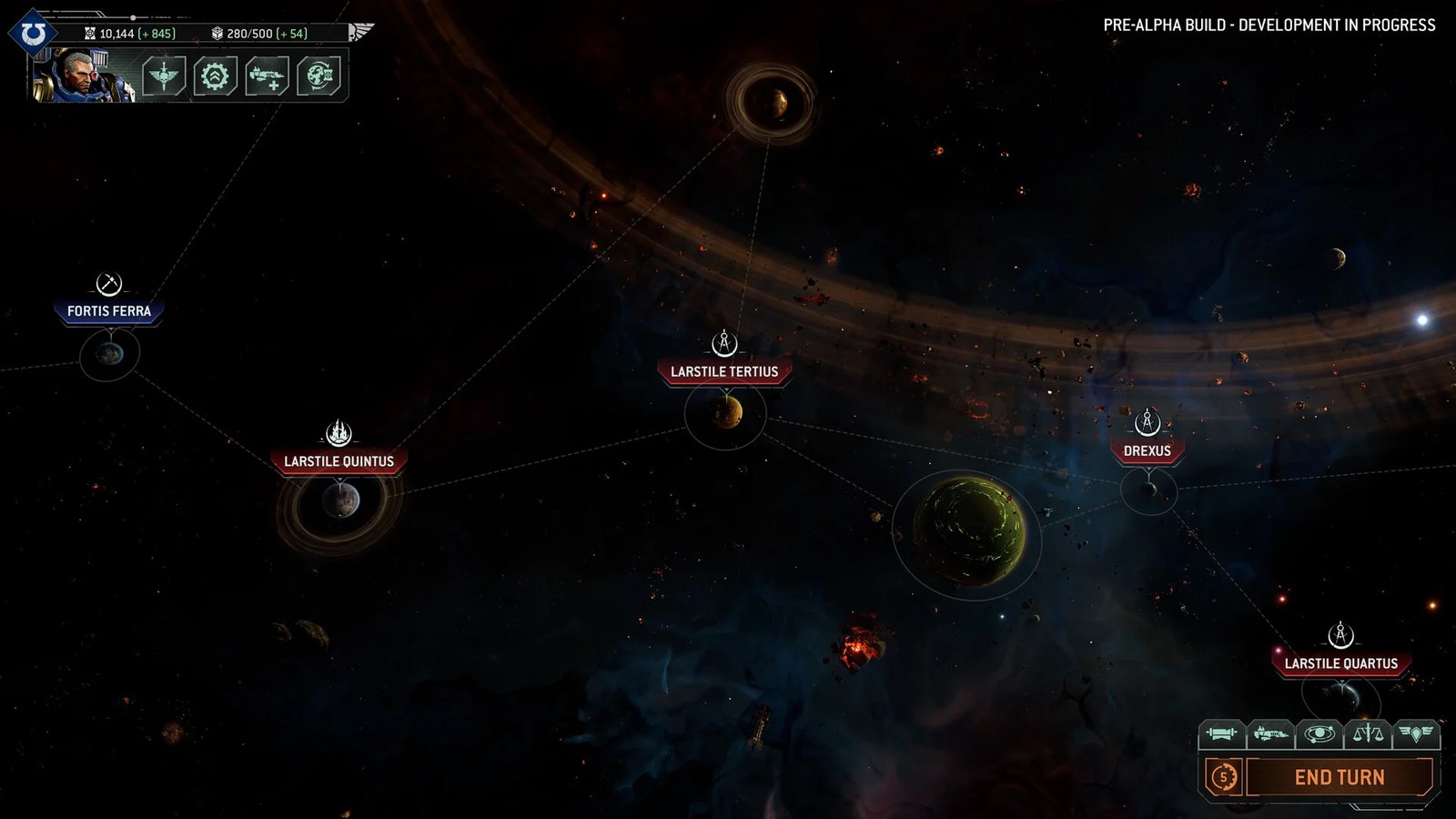
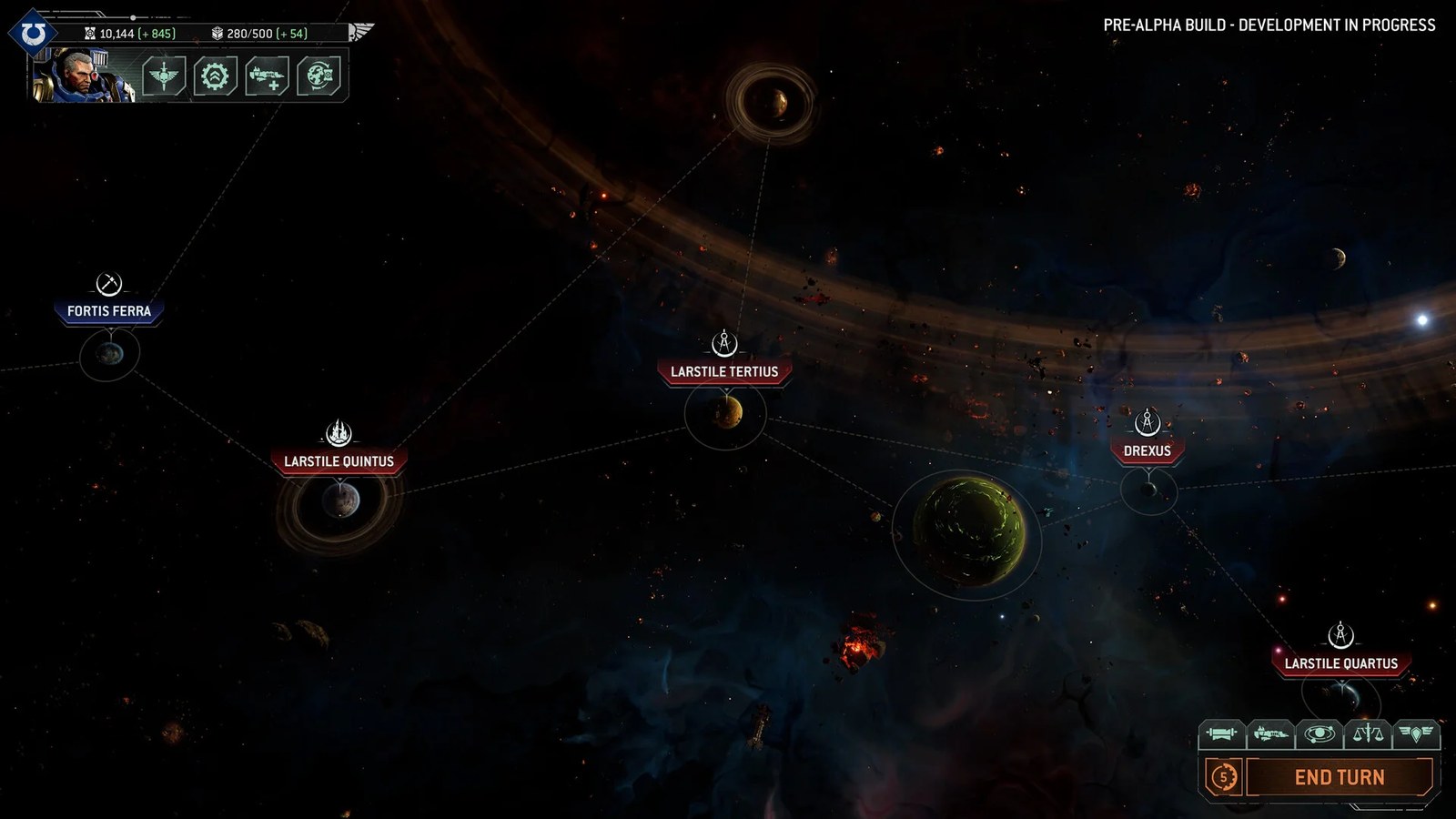
Beyond the tutorial stages, the campaign demo showed the familiar Total War loop of building bases, moving armies, and launching into battles — though the interplanetary elements that distinguish this title from its predecessors were not fully visible. The game introduces off-map support pieces, such as fleets in orbit capable of delivering bombardment, flesh-melting lasers, and strafing runs from gunships, as well as massive howitzers that fire cannon shots from miles away. These components are meant to “tee up the right stuff for a battle,” allowing players to deploy their assets where they are needed most.
Perhaps the most significant development is the ability to customise and specialise individual units throughout a campaign. Players can swap an Intercessor squad’s bolt rifles for shorter-range autobolters or longer-range stalker bolt rifles, assign different sergeants with unique abilities, and tune their forces toward different specialisations. “Throughout your campaign, you’re going to be able to upgrade your units and change their equipment in meaningful and punchy ways,” Petry said. “You can, for instance, replace your Intercessors bolt rifles with shorter range autobolters or longer range stalker bolt rifle. You can also give the unit different sergeants with different abilities.” This depth means players must retain each unit’s identity in their head, ensuring the right squad occupies the right position — a complexity that adds tactical richness but also steepens the learning curve.
As Petry stressed, each unit retains a “core function,” and specialisation will not pull them away from that entirely, though the finer details remain to be explored in future coverage. For now, the Gamescom demo has confirmed that Total War: Warhammer 40,000 is a game of patience, preparation, and positioning — where the Space Marines who survive are those who learned, the hard way, to think before they charge.



No comments