

Among the multiple branching paths of
, the Dietrich route is quietly emerging as one of the franchise’s most rewarding storytelling experiences — a revelation that may prompt players who began their journey with Leda’s path to reconsider a second playthrough. For fans of the original
, the appeal is especially strong, as Dietrich’s path is where much of the series’ broader lore and its most ambitious worldbuilding finally come into focus.
Fortune’s Weave, the sequel to Three Houses, structures its narrative around several distinct protagonist routes, each offering a different lens on the world of the Blazing Empyrea. While Leda’s path has drawn the majority of players with its vengeance-driven plot and a memorable band of companions, the Dietrich route delivers something different: a deeper, more mythic exploration of the game’s ancient history. For those who appreciated the Golden Deer path in Three Houses, Dietrich’s path offers the payoff that earlier content only teased.
A Fresh Perspective on the Series’ Ancient History
The core of Dietrich’s path lies in its treatment of the long-standing conflict between the Nabateans and the humans, along with the enigmatic Agarthans. Players who encountered the Agarthans in Three Houses — and the cryptic mention of Sothis arriving from space — may recall feeling that this lore was introduced too late, with little room for follow-up discussion. Dietrich’s route addresses exactly that gap, providing a full new perspective on the ancient war and a substantial amount of background on the Agarthans.
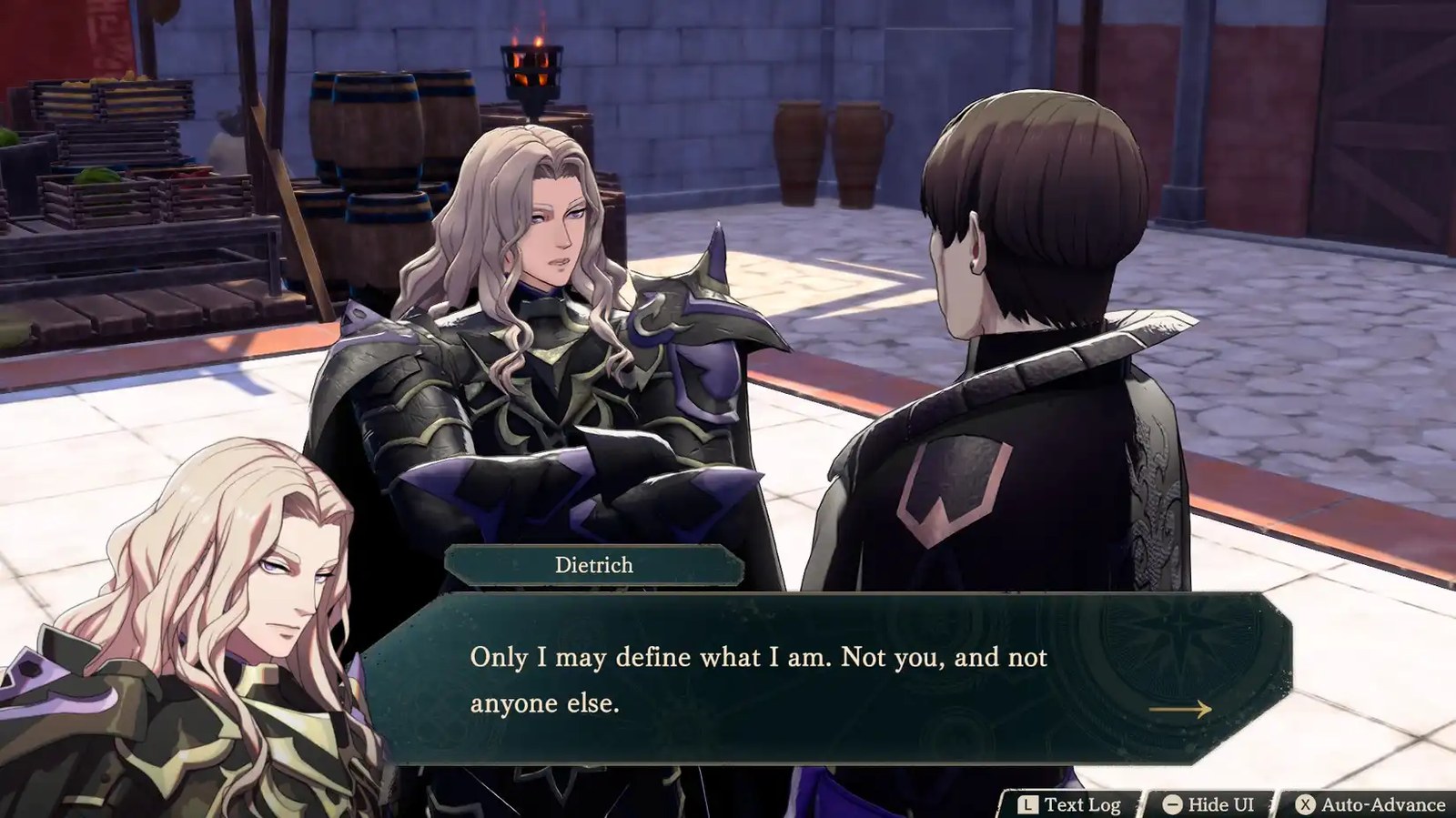
For players who only experienced the Black Eagle or Blue Lions routes, this material corresponds to the “Those Who Slither in the Dark” content. Crucially, the exposition is handled with restraint. There are no on-the-nose moments where a character points at the screen to confirm understanding, and the lore does not demand encyclopedic familiarity with Three Houses. Instead, each connection serves a genuine function within Fortune’s Weave’s larger narrative, illuminating the state of the Dagdan empire and a darker chapter in its history.
The Dagdan Empire and Its Shadowy Antagonists
Beyond its historical depth, Dietrich’s path offers a rare look at the Dagdan empire from behind the scenes. It is the only route in which the three primary antagonists appear together, scheming, arguing, and manipulating the fates of nations. This provides the shadowy counterpoint to Cai’s comparatively more sympathetic portrayal of the Dagdan pantheon, and it reframes the familiar “revive an evil god” storyline through a more personal lens.
Dietrich as a Character and a Queer Story
On a personal level, Dietrich proves to be a compelling protagonist despite an initial one-note impression. His character arc engages with the found-family trope while subverting its typical resolution: the family he discovers is not a warm, wholesome unit, but rather a group of deeply flawed individuals. The emotional core of the route lies in choosing to see the best in those he lives with and loving them despite their worst qualities — a structure critics have described as beautifully arranged.
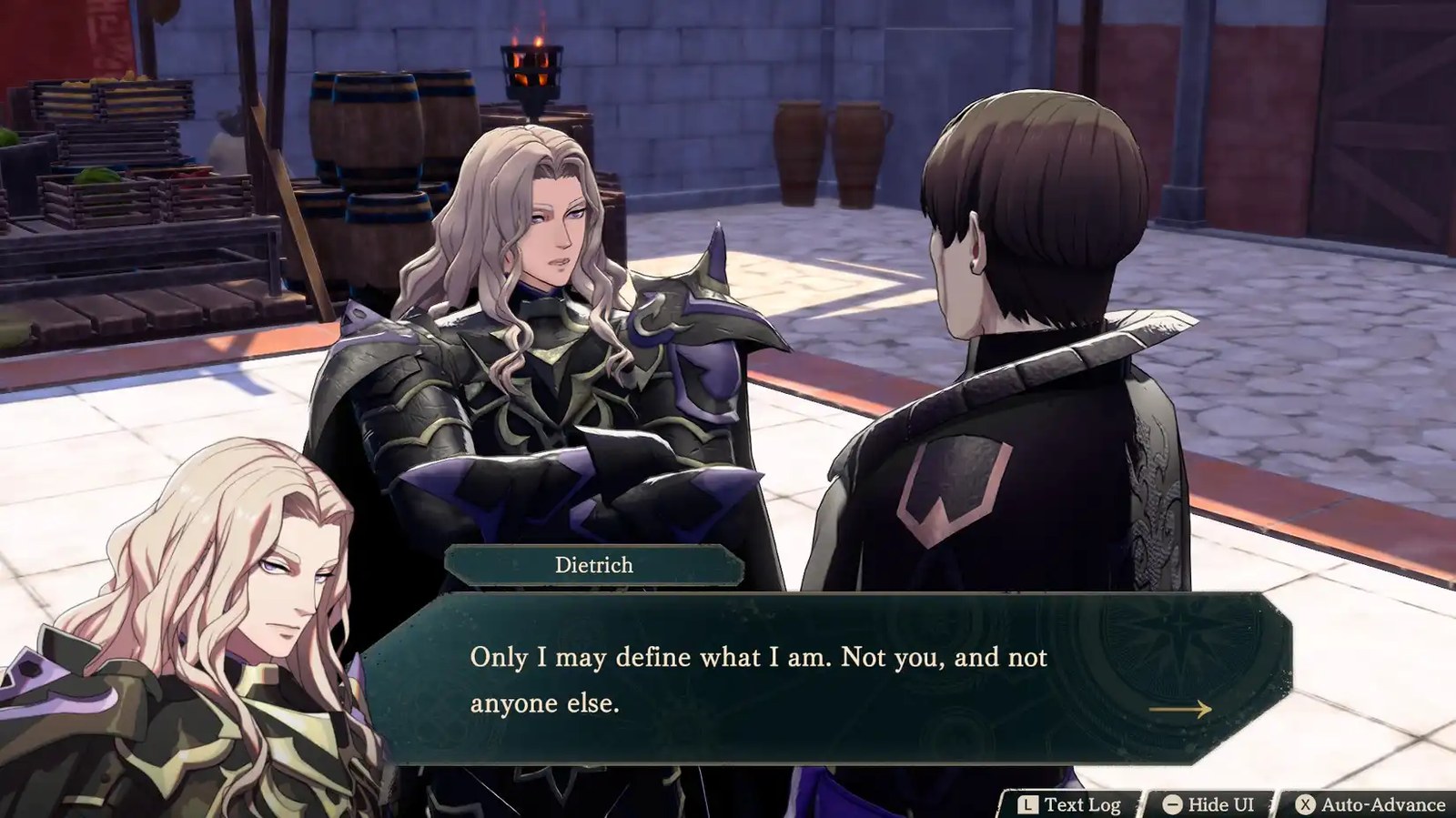
The route is also notable for its unapologetic embrace of queerness, marking a meaningful step forward for a series that has historically relied on innuendo and offensive stereotypes before only reluctantly incorporating inclusion in recent years.
Looking Ahead
As players continue through Fortune’s Weave, the decision to revisit Dietrich’s path may well pay off, revealing layers of the world that other routes leave only partially explored. For those drawn to the franchise’s lore and its evolving approach to representation, the Dietrich route stands as a strong reason to invest the time in a second playthrough — and to finally answer the question of what lies behind the computerized ghost elephant.



No comments