Fire Emblem: Fortune’s Weave’s Sparse Support Conversations Are a Feature, Not a Bug
September 24, 2026 · Gamer24H Editorial Team
After nearly two months with Intelligent Systems’ Fire Emblem: Fortune’s Weave, Polygon’s resident Fire Emblem writer is pushing back against the criticism that the game’s support conversations are too sparse — arguing that the truncated relationship chains are a deliberate design choice rather than a flaw. While some players have expressed disappointment at how few conversation partners certain characters have, the author contends that Intelligent Systems has cut out unnecessary time-fillers to focus on the chats that matter most to both the characters and the player. As the outlet’s own coverage notes, the fandom is divided on the matter, but this particular voice is firmly on the side of “it’s a good thing.”
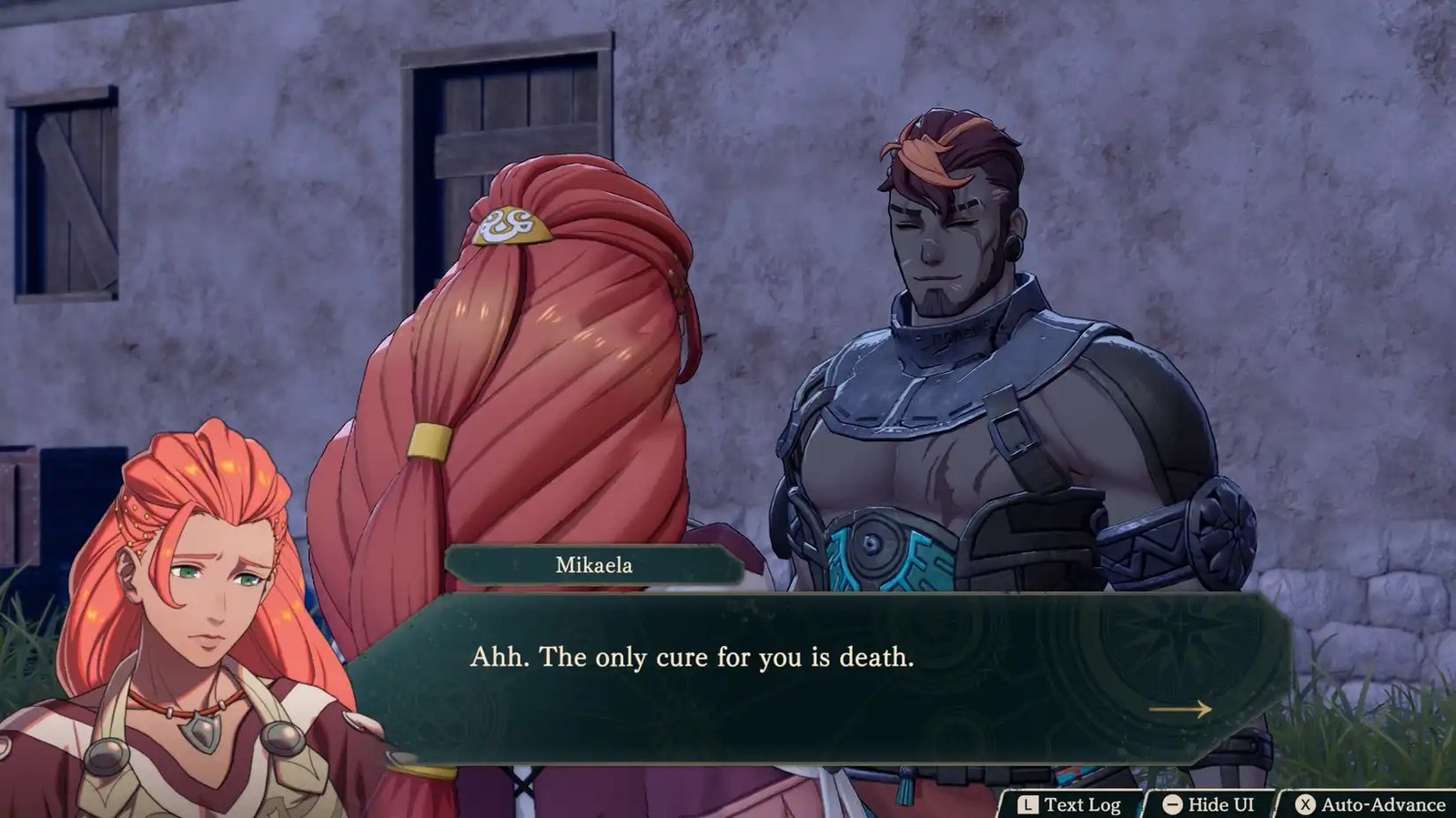
The debate has surfaced among players who have dived into the massive RPG and found themselves surprised by how little certain characters talk to one another. Beyond the four non-playable Flame Lords — Orchel, Talimun, Anatolia, and Bertrand — a couple of characters kept appearing in the comments of the dismayed: Guzran and Catania. Guzran likes training promising young greenhorns, but has no supports with anyone in Cai’s party. Catania lost everything in the Cydonia Massacre, a fact you learn from her character info sheet, but never acknowledges Leda’s existence. The writer uses these examples to make a broader point about how the game handles relationships.
Cutting the Filler to Keep the Meaning
The author draws a direct parallel between the game’s approach to support conversations and its approach to battles, quests, and dungeons. Just as completed quests on one cleared path are automatically completed on another, Intelligent Systems appears to have minimized filler material as much as possible across the board. That same philosophy extends to relationships and character development. The writer points to Goliath as a prime example: in one of his monthly dialogues, he explains that he has given up booze so he can buy books for his adopted brother. Give him alcohol as a gift and he is not thrilled, but give a book to this giant, meat-loving goofball — someone you’d automatically assume doesn’t read — and it makes him happy, presumably because he can send it to his brother.
Intelligent Systems is thinking closely about quality and logical connections. Making sure everyone can talk to, or fall in love with, as many other people as possible is not the important thing here.
Image: Intelligent Systems/Nintendo via Polygon
Polygon’s Fire Emblem writer
The reasoning behind specific support trees becomes clearer once you consider each character’s background. Take Guzran, for instance. He likes boasting to promising young greenhorns, but what would that look like with Cai and his posse — a bundle of strangers Guzran doesn’t know? He’d be boasting about his exploits, get ridiculed for it, and probably annoy Tialla. None of them need his training. That’s what Castor and Ultand are for. So Intelligent Systems wisely placed that boasting in his monthly dialogue and saved the meaningful conversations for people he actually knows, like Mikaela. The greenhorn he takes an interest in is Mu, Mikaela’s daughter — a connection that makes far more sense than Guzran mentoring a bunch of random 15-year-olds.
Similarly, given Leda’s close ties to the Cydonia Massacre, the absence of any conversation between her and Catania is easy to explain. Catania is six years older than Leda and was born to a knightly family, while Leda spent much of her childhood training in Kalla’s temple, away from Kassite. There is nothing to suggest Catania even knew Leda, let alone knew her well enough to recognize her two decades later when she reinvented herself as a traveling murder-bard. Catania wants to build a life of honor and serve a sterling lord; Leda is a wanted criminal whose true identity is sullied by the aspersions cast against her father. The writer cannot imagine a scenario where either of them would be friendly, nor one that tells us anything new about either character.
Looking Ahead
The logic holds up when applied to other odd or truncated support trees, such as Anatolia primarily talking with other White Egg characters, or Nuzzuo, who has just one support conversation — a single C-rank chat with Diego — despite his fascinating background as a former leader of a tribe that worshiped Balor. The Har Hali, his tribe, are feared and mostly keep to themselves, and Diego is the only Har Hali in Dagsion. Extending their chat would have told us little: that Diego was right, his parents disowned him, and he is alone in the world except for Orchel. His fear and certainty about how things would play out are sufficient.
Some of Nuzzuo’s monthly dialogue could have been support chats, such as where he talks about being surprised how people don’t like it when he appears without warning from the shadows. A silly support set between him and Halvin-the-scared-clown or Peter, focused on that, would have been filler using their fear as a comedy device. Using Peter’s fear of Ninae as a lens to explore her secret sadness and isolation is far more effective and unpredictable — and their first conversation completely changed how the writer viewed Ninae.
Perhaps Nintendo could have advertised this shift in character development ahead of time. Though, given the post-launch reactions, the writer is not surprised it kept this part of the game quieter. That attitude may change as more people start delving into the actual conversations instead of just seeing who can chat with whom. Fortune’s Weave is a better game for how it handles support, and the writer hopes it marks the start of a new trend for the series.





1 comment
[…] Article: Fire Emblem: Fortune’s Weave’s Sparse Support Conversations Are a Feature, Not a Bug → Kaynak: Eurogamer […]