

Long before Charlie Brown became the universal symbol of childhood melancholy, Charles Schulz was already sharpening the comedic instincts that would define one of the most enduring comic strips in American history. A fresh retrospective has spotlighted five standout strips from the 1950s — a decade when Schulz’s characters were smaller, rounder, and noticeably more “cutesy” than the versions fans know today — proving that the mastermind behind Peanuts was a genius from the very first panel. The comic strip debuted on October 2, 1950, and over the following ten years Schulz refined each character’s distinct look and personality, but the early years already contained sparks of brilliance that would inform the strip’s half-century run.
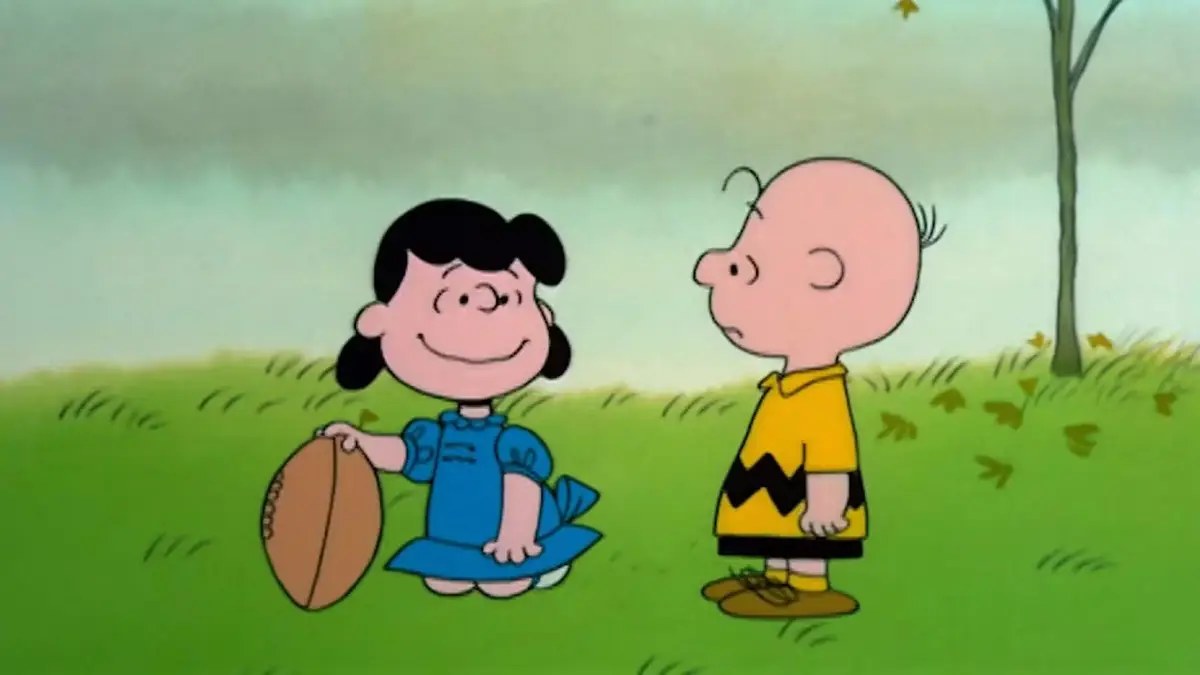
What makes these five selections remarkable is not just their humor, but the way they capture Charlie Brown’s defining traits — his perpetual underdog status, his existential dread, and his willingness to be the butt of cruel jokes — long before the character achieved his iconic silhouette. Each strip offers a window into Schulz’s creative evolution, revealing how the comedy matured from simple gags into the sophisticated, emotionally resonant humor that would captivate generations.
A Debut That Set the Tone
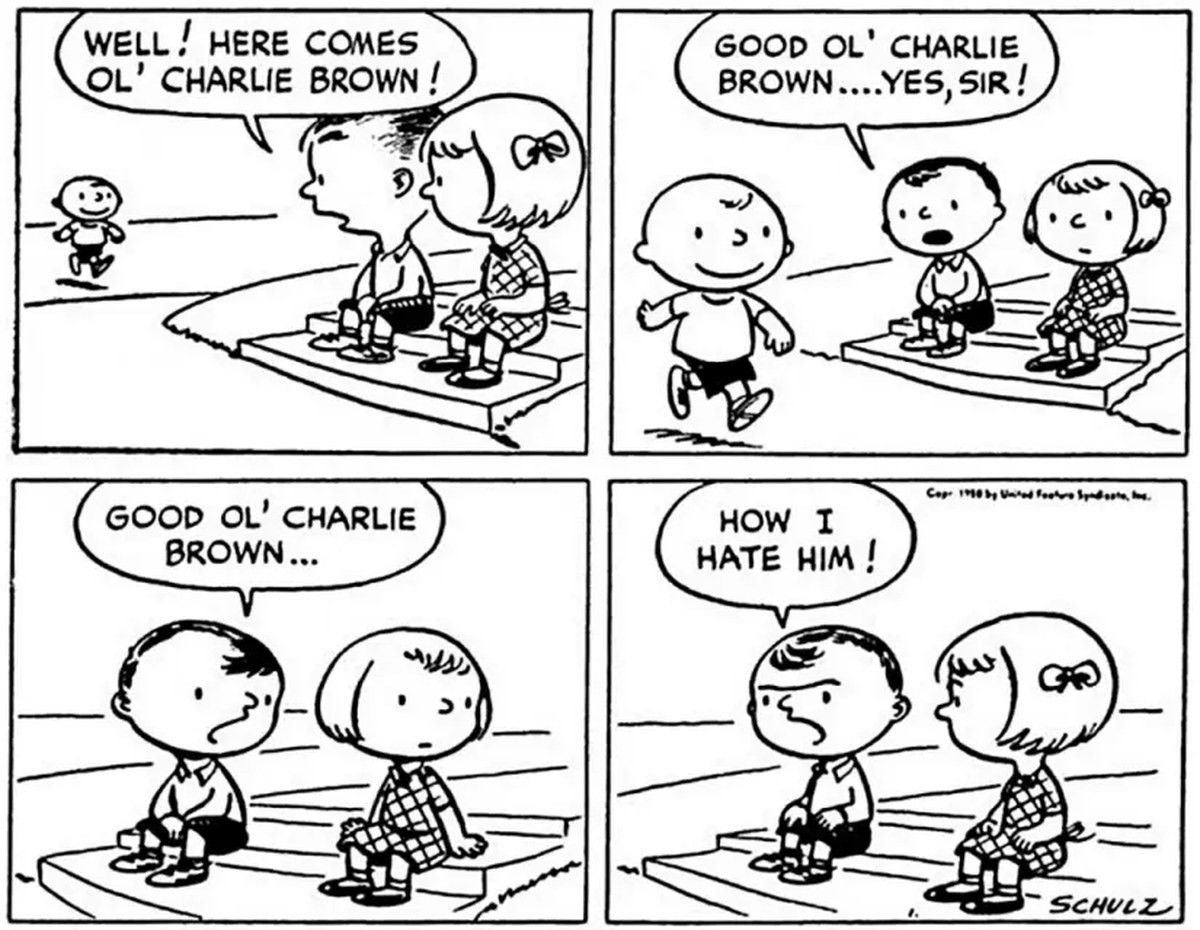
The very first Peanuts comic, published on October 2, 1950, introduces two now-forgotten characters, Shermy and Patty — not Peppermint Patty, but simply Patty. The two sit together as Shermy gushes about Charlie Brown’s arrival, only to reveal his true feelings once the boy is out of earshot: “How I hate him!” While Shermy and Patty would eventually be phased out in favor of other characters, the slow-burn sweetness leading to that harsh punchline remains brilliantly funny. The contrast of such a cute character delivering an unexplained, nasty remark about another child set the tone for Charlie Brown’s world: a place where he is consistently the chump other kids aren’t very nice to.
The Sad Sack’s Existential Dread
Just one month into Schulz’s legendary run, another strip captures Charlie Brown’s defining melancholy. Charlie Brown tells Patty, “The future frightens me!” She tries to reassure him, “I don’t see why… You’re young and full of life… You’ll probably live for another sixty years!” In reply, Charlie Brown says the most Charlie Brown things he can: “That’s what frightens me!” While the character didn’t quite look like himself yet, he sure did sound like himself, establishing the existential weight that would become a hallmark of the strip.
The Football Gag Takes Shape
By November 14, 1951, Schulz had already planted the seed for what would become the best recurring gag in Peanuts history: Charlie Brown missing the football. The strip shows Charlie Brown about to hit the ball, only for it to be pulled away at the last second, leaving him to fall flat on his back. Interestingly, it’s not Lucy holding the football here, but the similar-looking Violet, another character who would fade over the decades. The intent is also different: Lucy would eventually pull the football away out of cruel amusement, knowing Charlie Brown was a big enough blockhead to fall for the same trick repeatedly. Violet, however, drops the football out of fear she will be kicked — funny, but not nearly as funny as Lucy’s later sadism.
Christmas Before the Christmas Special
Thanks primarily to the 1965 TV special A Charlie Brown Christmas, the Peanuts characters would eventually become synonymous with the holiday season. But Schulz featured Christmas as a major theme well before that. In a Christmas Day Sunday strip from 1955, Charlie Brown asks for donations to buy his pal Snoopy a gift. He approaches Patty and Violet, who each give him a nickel and praise his idea — but once he walks away, they express their real feelings, with Patty saying “Boy, what a dope that Charlie Brown is!” and Violet replying “You can say that again!” Even on Christmas, Charlie Brown can’t catch a break.
A Decade of Refinement
By the end of the decade, Schulz’s characters had begun to look more like the Peanuts characters we all know and love, a transformation visible in his very last strip from the 1950s. Running on New Year’s Eve, 1959, the strip has Lucy insulting Charlie Brown repeatedly, with Charlie Brown complaining that it’s only 8:00 in the morning. “I can’t help it, Charlie Brown…,” replies Lucy, “You have so many faults it takes a whole day to list them!” — a funny, ingenious little joke by a man who changed American culture.
These early strips remind us that Schulz was never just drawing cute characters — he was crafting a world of emotional truth and timeless humor from the very first panel.
Charles Schulz, Peanuts creator
For fans revisiting these selections, the retrospective offers more than nostalgia; it provides a masterclass in how a comic strip can evolve while staying true to its core. The community response has been overwhelmingly positive, with longtime readers praising Schulz’s ability to distill complex human emotions into simple, unforgettable panels. As these strips continue to circulate, they serve as a reminder that the genius behind Peanuts was never in question — it was simply still being discovered.
Looking Ahead
While there are no official plans to release these strips in a new collection, the retrospective has reignited interest in Schulz’s early work. Fans and scholars alike are encouraged to explore the full archive of Peanuts comics, which remains available through Schulz’s official estate and various comic platforms. As Schulz’s legacy continues to grow, these five strips stand as a testament to his enduring brilliance — proof that even before Charlie Brown looked the way we know him, the genius was already there.



1 comment
[…] Article: Charles Schulz’s Genius Revealed in Five Forgotten 1950s Peanuts Comics → Kaynak: Polygon […]