The Fifth Element Is Leaving Netflix — and the Footage That Nearly Died on the Tarmac
September 23, 2026 · Gamer24H Editorial Team
Luc Besson’s sci-fi space opera The Fifth Element is set to disappear from Netflix at the end of September, but the film’s survival is a story that began with a near-fatal accident on the tarmac at Los Angeles International Airport nearly three decades ago. According to associate producer John Amicarella, the movie’s film negatives were flown from London to Los Angeles for post-production when part of the shipment spilled onto the runway and was run over by a forklift. When he arrived, Amicarella was handed trashcans full of what remained — including a sequence in which a blue-skinned alien opera singer performs an aria before being killed, and the hero’s quest to retrieve four elemental stones hidden inside her body. Somehow the footage was salvaged, the scene survived, and the movie went on to become one of the most distinctive blockbusters of the 1990s.
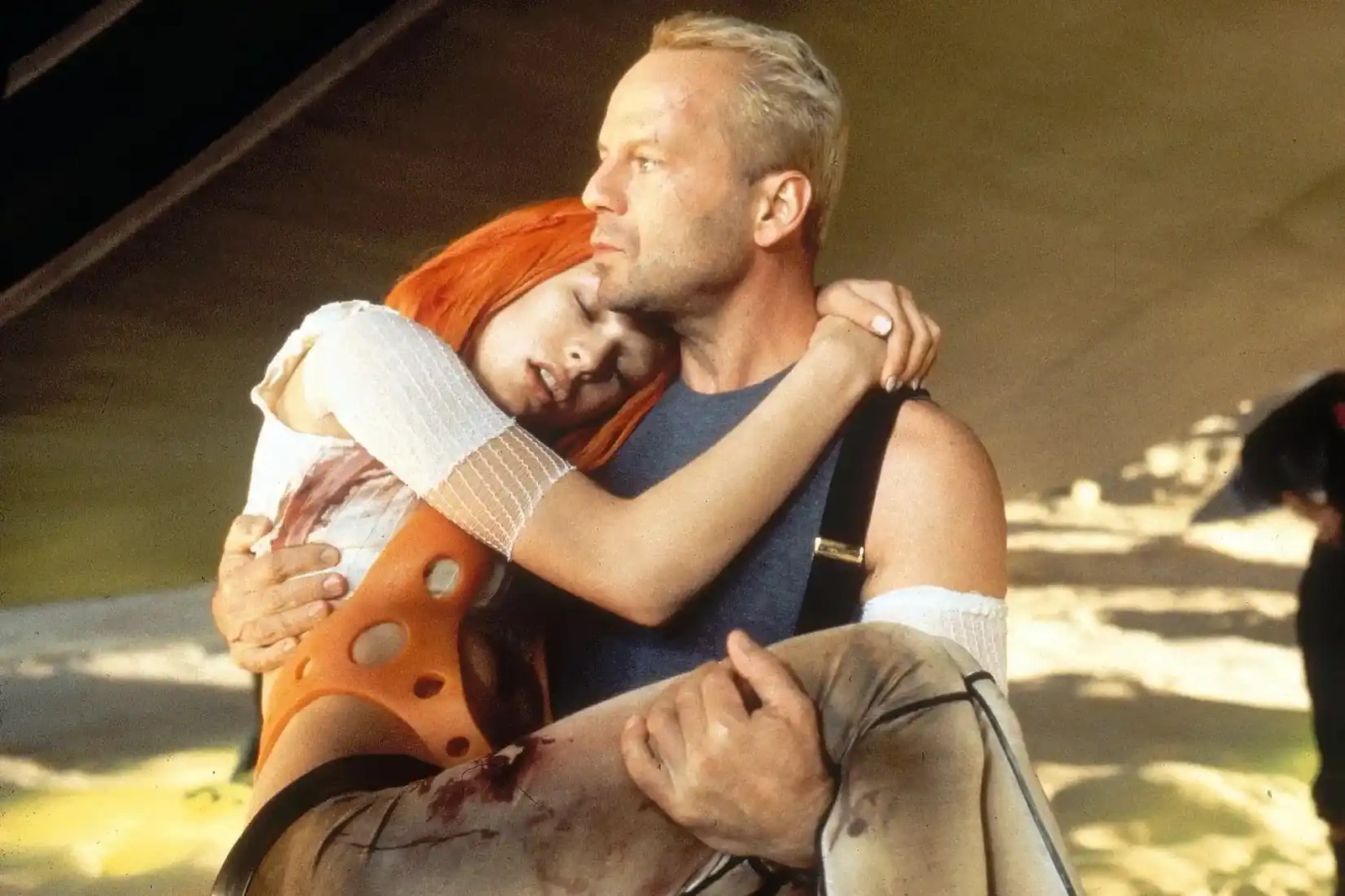
That lucky break is part of what makes The Fifth Element feel like it escaped from an alternate timeline. Set in the 23rd century, the film follows Korben Dallas (Bruce Willis), a former special forces soldier working as a flying taxi driver in a futuristic New York City, when a mysterious woman named Leeloo (Milla Jovovich) crashes through the roof of his cab. Leeloo is a divine being reconstructed into a human body — the titular Fifth Element and the only entity capable of activating four ancient stones representing earth, air, fire, and water. Together, they are humanity’s only defense against a cosmic evil that returns every 5,000 years. If the premise is already bizarre, the cast only amplifies it.
A Salvage Job on the Runway
The tarmac incident is a stark reminder of how fragile the film’s existence once was. The damaged footage included the opera-singing alien sequence, one of the movie’s most memorable moments, and the hero’s mission to recover the elemental stones. Despite the forklift damage, the reels were recovered and the scene was ultimately preserved. For a film that major studios today would struggle to greenlight — loaded with color, camp, practical effects, and big ideas — that lucky break is essential to its survival as a piece of cinema history.
When he arrived, Amicarella was presented with multiple trashcans filled with what remained.
Image: Columbia Pictures
John Amicarella, associate producer
That same philosophy extends to the performances. Willis provides the grounded center, while everyone around him operates at maximum intensity. Gary Oldman’s Zorg is menacing and ridiculous, sporting a half-shaved hairstyle with a sheet of plastic covering part of his skull and a soul patch on his chin. Chris Tucker’s Ruby Rhod, a flamboyant celebrity radio host in a leopard-print leotard, was originally supposed to be played by Prince. Even Jovovich’s Leeloo feels unlike most action heroines, moving through the film with a mixture of innocence and intensity befitting a godlike being reborn into an adult body.
Star Wars, but Make It Sexy
The movie is also surprisingly sexy in a way modern science fiction rarely offers. Leeloo spends a long stretch in a costume made of bandages that leaves little to the imagination, and everybody wears extravagant costumes designed by Jean-Paul Gaultier. At the McDonald’s of the distant future, the female “burger assistants” wear strapless red dresses with the golden arches framing their breasts, while the flight attendants show up in powder-blue, midriff-baring uniforms. Besson’s futuristic world is filled with eccentric, attractive, messy people, creating a universe that feels genuinely alive.
Part of what makes the film feel so refreshing today is its vibrant color palette. Audiences are conditioned to expect the sandy, muted tones of Dune or the dark, misty cyberpunk aesthetic of Blade Runner punctuated by neon. Yet this vision of the future is decidedly bright, even if it’s still violent and chaotic much of the time. Leeloo’s orange hair practically glows against the screen, and every frame is packed with bold colors, eccentric practical costumes, and strange little details. As Amicarella once described it, the movie feels like a collision between comic books, Salvador Dalí paintings, and heavy metal album art.
Looking Ahead
But for all its weirdness, camp, and spectacle, The Fifth Element endures because it has a surprisingly earnest heart. Beneath the opera-singing aliens, flying cars, and ancient prophecies, it’s ultimately a story about choosing hope in spite of humanity’s flaws. The movie’s climactic revelation isn’t that a bigger weapon will save the day — it’s that love is worth fighting for. That’s a corny idea, perhaps even an old-fashioned one, but it’s also the reason audiences continue to rediscover the film nearly three decades later.
If you’ve somehow never seen The Fifth Element, now’s the perfect time to fix that. And if you have seen it, it’s worth revisiting simply to remember a moment when blockbuster filmmaking felt a little stranger, a little riskier, and a lot more fun — before it vanishes from Netflix at the end of September.





1 comment
[…] Article: The Fifth Element Is Leaving Netflix — and the Footage That Nearly Died on the Tarmac → Kaynak: PC Gamer […]