Last year, I dove into both Tomb Raider 1’s superb remaster and Crystal Dynamics’ 2007 remake, Tomb Raider: Anniversary Tomb Raider: Anniversary. Both offered unique ways to experience Lara Croft’s iconic debut. Now, with Tomb Raider: Legacy of Atlantis on the horizon, I was eager to see what Flying Hog Games had in store. However, after a recent Gamescom preview, I’m not entirely convinced this remake is heading in the right direction.
A Familiar Setting, A New Interpretation
Unlike previous hands-on experiences Chris’ “strangely double-A” hands-on time with Legacy of Atlantis earlier this year, my Gamescom visit was strictly observational. Crystal Dynamics, overseeing the project for Amazon, showcased an “updated and reimagined” version of the Damocles Room sword puzzle, a key area from the original game.
The presentation began in one of Tomb Raider 1’s most memorable locations: the vertical chamber below the church. The imposing column provides a treacherous path to different gates. In the original, it required navigational skill and puzzle-solving. Legacy of Atlantis captures this spirit, with players navigating the chamber and solving puzzles to acquire keys (or gemstones in this version). The visuals are stunning, with light shafts illuminating the darkness and lush vegetation covering the stone. Alix Wilton Regan’s voice work as Lara Croft immediately sets a welcoming tone.
Beyond Visual Overhaul: The Controversial Additions
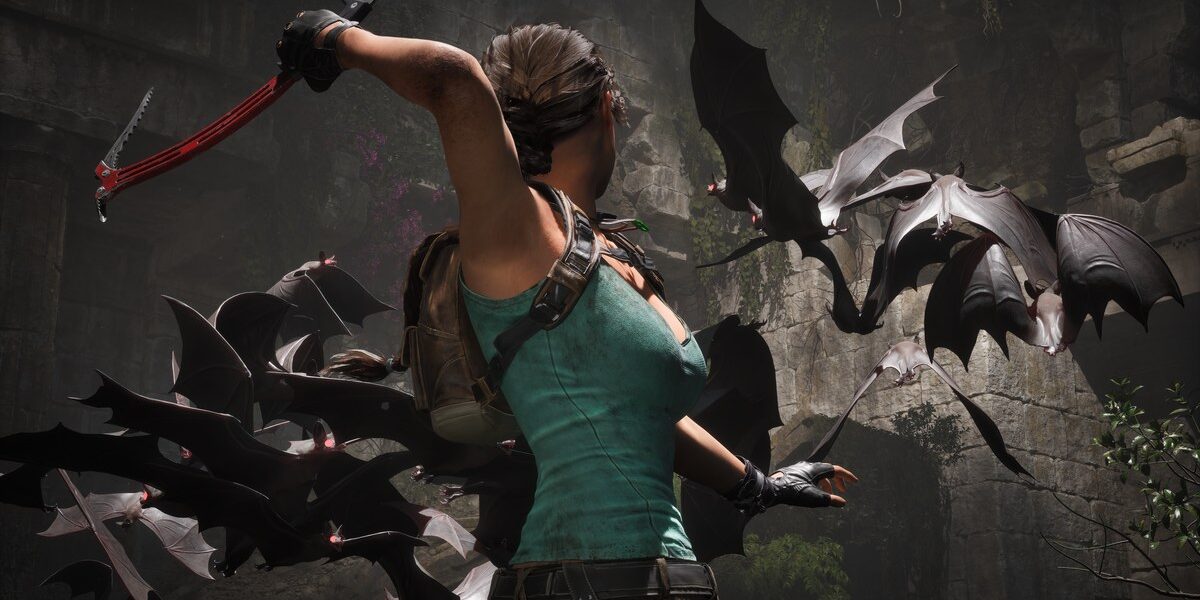
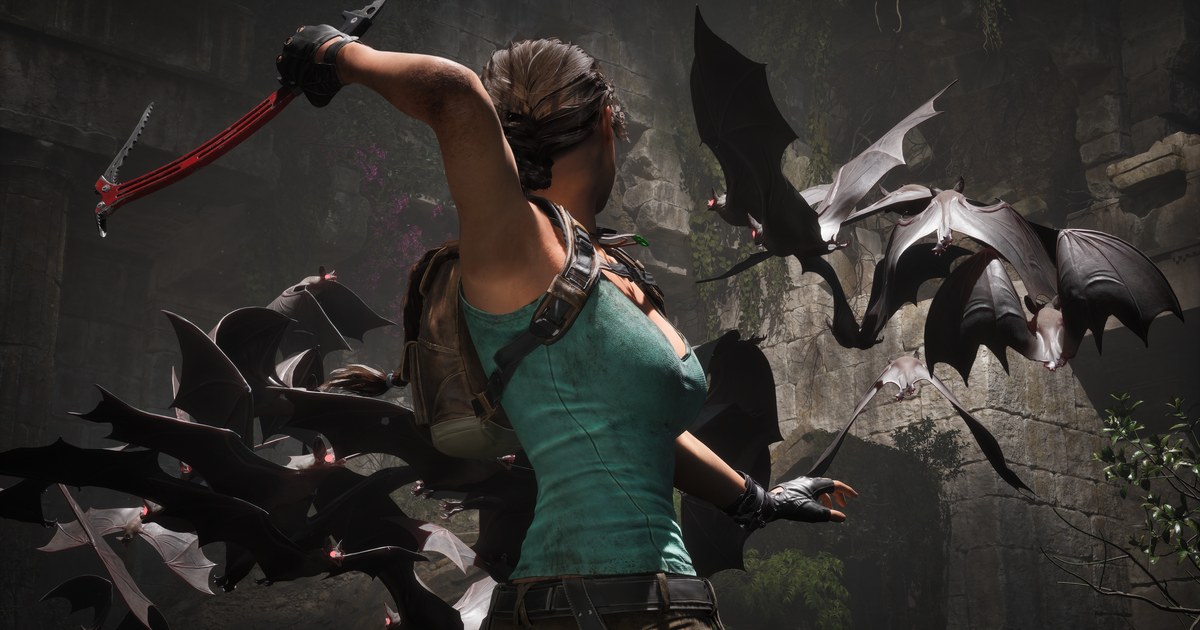
Crystal Dynamics experience director Jeff Adams explained that the goal is to “preserve what made these locations special” while also finding ways to surprise and delight players. The level’s bat enemies have been transformed into swarms with unpredictable movement patterns. However, Legacy of Atlantis also includes elements from the reboot trilogy, such as skill trees, crafting, and a scanner.
Lara can now collect environmental junk to craft items like food that grant boons. This leads to comical scenes of Lara pulling recipes for massive portions of stew and baked beans out of thin air. The scanner allows players to analyze the environment for “greater insight.” In one example, Lara scans a gate and explains that it’s shut and has four slots. While intended to ease less experienced players, this feels immersion-breaking.
A Scanner Darkly?
Adams notes that the scanner is “optional,” but it also has a secondary function: allowing Lara to learn about the world’s history, essentially turning her into a walking ChatGPT. While some additions look neat, like the enhanced enemy behavior during a leopard fight and the grappling hook’s new utility, other elements feel out of place.
The demo ended with a striking view: an ancient city built into the walls of a huge underground cavern, its buildings peering above lush foliage and towering waterfalls. This suggests more room for exploration than previously anticipated. The reimagined Sword of Damocles puzzle allows players to climb onto the swords after triggering them, or dislodge them by shooting – provided they’re using the Dead-eye skill.
QTEs and Concerns
One particular moment during the sword puzzle sequence involved three back-to-back QTEs, a mechanic that feels dated and unnecessary. While I love Tomb Raider and hope for a revival of its classic elements, this preview left me with concerns. The familiar action looks enjoyable, but the addition of crafting, scanning, and progression systems feels tired and outmoded. These elements detract from the experience and feel graceless, which is not what Lara Croft should be.
.png?width=2048&height=2048&fit=bounds&quality=85&format=jpg&auto=webp)
A Glimmer of Hope
Despite my concerns, there’s still hope for Tomb Raider: Legacy of Atlantis. The developers have preserved the beauty of classic Greek culture and fused it with a vast subterranean wilderness. The ability to climb on the swords after triggering them adds a new dimension to the puzzle, and the grappling hook offers new utility. There are also unlockable outfits for players who love customization.
The Verdict?
As Lara emerges from a gloomy tunnel, we’re met with an impressively sprawling vista: an ancient city built into the walls of a huge underground cavern, its elaborately arranged buildings peering above a canopy of thick, green foliage amid towering waterfalls. “We have preserved that beauty of classic Greek culture, but we’ve now fused it into this vast subterranean wilderness that you’re gonna get a chance to explore”, Adams notes, so there’s perhaps more room for deviation here than we were previously aware.
One particular moment during the sword puzzle sequence involved three back-to-back QTEs, a mechanic that feels dated and unnecessary. While I love Tomb Raider and hope for a revival of its classic elements, this preview left me with concerns. The developers have preserved the beauty of classic Greek culture and fused it with a vast subterranean wilderness. The ability to climb on the swords after triggering them adds a new dimension to the puzzle, and the grappling hook offers new utility. There are also unlockable outfits for players who love customization.
One particular moment during the sword puzzle sequence involved three back-to-back QTEs, a mechanic that feels dated and unnecessary. While I love Tomb Raider and hope for a revival of its classic elements, this preview left me with concerns. The developers have preserved the beauty of classic Greek culture and fused it with a vast subterranean wilderness. The ability to climb on the swords after triggering them adds a new dimension to the puzzle, and the grappling hook offers new utility. There are also unlockable outfits for players who love customization.





Comments
Be the first to comment.