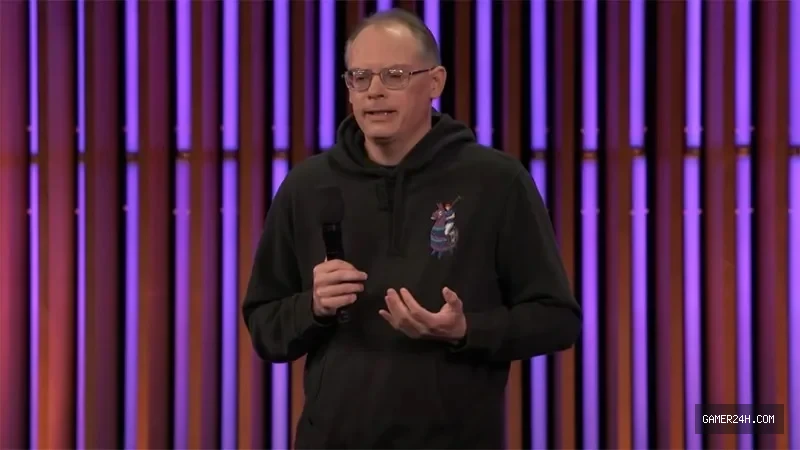
In a recent interview with PC Gamer, Epic Games founder Tim Sweeney appeared to focus on what he sees as over‑hyped challenges in the industry, suggesting that the real solutions lie in better integration across the major players.
He pointed out that the current social fabric of gaming is under strain, with users struggling to connect with friends across the fragmented landscape of consoles and PC platforms. According to Sweeney, the growth engine of today’s digital community hinges on seamless social interaction, yet the reality is far from that ideal.
To address this, Sweeney unveiled a proposal he calls “Team Open,” calling on the leading publishers and platform operators to collaborate and unify their systems. The goal is to eliminate the friction that forces players to rebuild friendships every time they switch from one game to another.
He explained that today’s ecosystem is a patchwork of isolated social networks—Xbox, PlayStation, Switch, Steam, and proprietary developer platforms—making it nearly impossible for a player to hop between titles without losing their social connections.
Sweeney argued that the underlying issue is not the lack of compatible text or voice infrastructure, but the siloed servers each platform runs. He likened the situation to the early days of email, where companies couldn’t communicate until a universal standard emerged, and suggested gaming needs a similar breakthrough.
In essence, his vision is a single, cross‑platform identity that lets players chat, share, and play together regardless of the hardware or game they’re on.
Has anyone ever told Tim Sweeney that Discord already exists? The remark almost feels like a playful nod to the platform itself.
Sweeney’s stance is a mixed bag. In the interview he acknowledged that the major publishers will never regain the monopolistic dominance they chased during the early console wars. “Everyone should realize that the value of connectivity outweighs staying isolated,” he said. Yet for Sweeney, collaboration doesn’t mean rolling back decisions such as refusing to port PlayStation titles to PC or reinstating Gears of War on the PS5—choices that would genuinely satisfy gamers. Instead, he envisions a “Voltron”‑style coalition where the industry’s giants allow players to share cosmetic items, outfits, and emotes across titles like Call of Duty and Fortnite. He added that if such items could operate universally, they would become far more valuable. The prospect of NFTs making a comeback in 2026 adds a curious twist.
All of this comes across as a case of sour grapes. The Epic Games Store remains unable to outpace Steam—or any other rival—and the usual response when a competitor is unbeatable is to seek partnership instead.
❓ Frequently Asked Questions (FAQ)
What is Epic’s "Team Open" proposal about?
Team Open is a call from Epic Games founder Tim Sweeney for major publishers and platform operators—such as Xbox, PlayStation, Switch, Steam, and others—to collaborate on a unified social layer that would allow players to maintain friendships and social connections across different games and platforms without having to rebuild them each time they switch titles.
How would Team Open address the current cross‑platform social fragmentation?
By creating a shared social infrastructure that runs on a common set of servers and APIs, Team Open would eliminate the siloed social networks that currently exist on each platform. This would let players use a single identity, friend list, and communication tools across all games and consoles, reducing friction and making it easier to hop between titles while keeping their social connections intact.
What could be the broader impact of a unified social layer on game marketing and monetization?
A unified social layer could streamline community building, making it easier for developers and publishers to target players across ecosystems. It could also open new monetization models—such as cross‑platform subscription services or shared in‑game economies—by providing a consistent user base and reducing the cost of managing separate social systems for each platform.
News Source: Kotaku



Comments
Be the first to comment.